
U.S.-Iran conflict a live stress test; credible current account, currency management key imperatives for FY27: CEA Nageswaran
ADVERTISEMENT
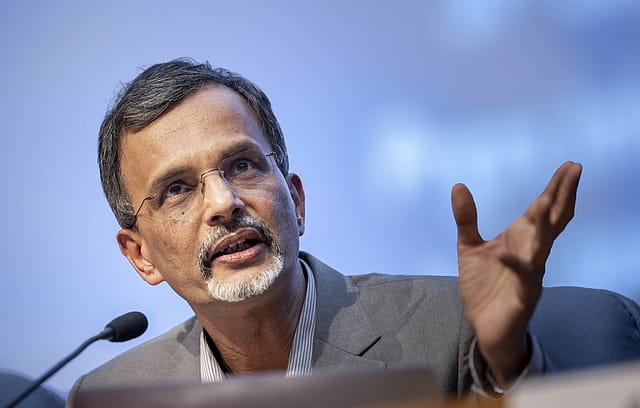
Chief Economic Advisor (CEA) V Anantha Nageswaran on Tuesday said the crisis in the Middle East has emerged as a “live stress test“ for balance of payment rather than a temporary shock, and management of the current account and currency are the key imperatives for FY27.
“The crisis in West Asia has emerged as a live balance of payment stress test with implications for inflation, current account deficit and rupee. Managing current account credibly, financing it and improving further currency depreciation are the central macroeconomic imperatives of FY27,” Nageswaran said at the CII Annual Business Summit yesterday.
Addressing the session on Fractured Global Economy, Shifting Faultlines: Geopolitics, Geoeconomics and the Emerging Economy Imperative,” Nageswaran said the global economy is experiencing a profound shift driven by four structural changes: geo-economic fragmentation, technology bifurcation, the energy transition premium, and the permanent repricing of geopolitical risk.
For India, the West Asia crisis has been considerably disruptive considering that 87% of the country’s crude oil is imported, nearly 60% of LPG imports come from the Gulf region, while 38% of India’s yearly remittances are received from Gulf countries. He suggested a strategic rethinking of fiscal consolidation and infrastructure investment amidst shifting global dynamics.
The CEA also maintained that advanced economies may not necessarily facilitate India’s rise without resistance.
“Hence India's strategic ascent hinges on long-term structural reforms, technological self-reliance, and resilient supply chains—areas that cannot be deferred. India’s response has been to diversify its footprint in multiple geographies as exemplified by the nine recent trade agreements which signal proactive engagement. These agreements should be implemented on the ground and regulatory challenges should be narrowed, based on shared interest,” he said.
“Sustained progress requires that India should press ahead on reforms including fiscal consolidation, infrastructure investment and continuation of existing reforms,” he added.