
US pushes for ‘fair, reciprocal’ trade deal as USTR Greer, Piyush Goyal advance negotiations in New Delhi
ADVERTISEMENT
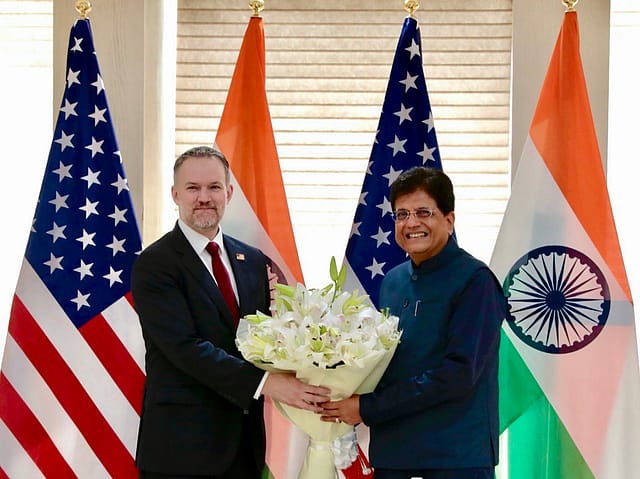
The United States has reiterated its commitment to securing a “fair, reciprocal” trade agreement with India as senior officials from both countries intensified negotiations on an interim trade pact that could lay the groundwork for a comprehensive Bilateral Trade Agreement (BTA).
In a post on X on Tuesday, the US Embassy in India stated that US Trade Representative (USTR) Ambassador Jamieson Greer met Union Commerce and Industry Minister Piyush Goyal in New Delhi to advance discussions on the proposed interim agreement.
“The United States remains focused on securing a fair, reciprocal trade deal that opens markets for American exporters and delivers benefits to both nations,” the embassy said.
Trade deal gathers momentum
The high-level meeting at Vanijya Bhawan focused on accelerating negotiations on both the interim arrangement and the broader BTA. Greer was accompanied by US Ambassador to India Sergio Gor and a senior American trade delegation.
The meeting assumes significance as India and the US seek to deepen economic ties while addressing longstanding market access concerns across sectors including agriculture, manufacturing, digital trade, medical devices and industrial goods. Earlier, Goyal had indicated that Greer would visit India beginning June 21 for discussions aimed at advancing the trade agenda.
US Ambassador Sergio Gor also underscored the importance of the ongoing negotiations. “Great to be with Minister @PiyushGoyal and @USTradeRep Ambassador Greer today in New Delhi. Ongoing discussions on finalizing the trade deal between the US and India,” Gor said in a post on X.
In a separate post, Gor welcomed Greer’s visit and said the proposed agreement would “unlock new economic opportunities for both countries and significantly deepen the U.S.-India economic partnership.”
$500-billion trade ambition in focus
The negotiations come against the backdrop of rapidly expanding economic ties between the two countries. India and the US are among each other’s largest trading partners, with bilateral goods and services trade exceeding $190 billion in recent years. During Prime Minister Narendra Modi’s visit to Washington in 2023, the two countries set an ambitious target of more than doubling bilateral trade to $500 billion by 2030.
The proposed interim agreement is expected to address a range of issues, including tariff rationalisation, market access, customs facilitation and regulatory cooperation, while paving the way for a more comprehensive trade pact in the future.
While both sides have made progress on several fronts, differences remain over tariffs, agricultural access, digital trade rules and regulatory standards. Washington has long sought wider access for American exporters, while India has pushed for greater market opportunities for labour-intensive sectors and improved mobility for skilled professionals.