
Andhra Pradesh eyes role in global nuclear economy, says Nara Lokesh
ADVERTISEMENT
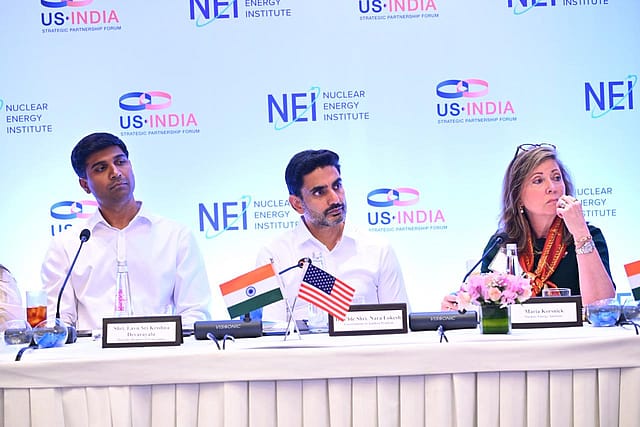
Andhra Pradesh is positioning itself as a long-term player in India’s nuclear and clean-energy buildout, with IT and education minister Nara Lokesh saying the state wants to become a “reliable long-term ally” in the global nuclear economy. Speaking at the U.S. Executive Nuclear Mission to India summit in Delhi, he tied Andhra’s ambitions to rising electricity demand from artificial intelligence, industrial decarbonisation and the need for stronger clean-energy infrastructure.
Nuclear push
Lokesh said Andhra Pradesh is no longer treating nuclear energy only as a power-generation issue, but as an industrial ecosystem opportunity. He pointed to the state’s ports, logistics network, industrial corridors and implementation capacity as advantages for global partnerships in manufacturing, supply chains, engineering and advanced energy infrastructure. World Nuclear News had already reported in December 2025 that the proposed lead unit of BARC’s 5 MWt high-temperature gas-cooled reactor could be built at BARC’s Vizag R&D campus in Andhra Pradesh, making the state part of India’s first small modular reactor rollout.
Andhra also remains on NPCIL’s project map through the Kovvada nuclear power project, which is listed as a planned 6 x 1000 MWe site in the state. That gives Andhra a rare mix of research, experimental and large-scale project relevance in the national nuclear pipeline.
Clean energy target
Lokesh linked the nuclear pitch to Andhra Pradesh’s broader clean-energy strategy. The state is targeting ₹10 lakh crore of investment across renewable energy, storage, green hydrogen, transmission and grid modernisation under its Integrated Clean Energy Policy, according to the government. The policy framework also envisions a large industrial buildout in solar, wind, pumped storage and battery storage, alongside manufacturing ecosystems.
The clean-energy pitch is also being paired with digital infrastructure. Visakhapatnam is being developed as a major AI hub, and a Google-backed AI infrastructure project in Vizag has already been described as a $15 billion investment linked to clean power, transmission and energy storage needs. That overlap matters because data centers and AI compute are expected to increase power demand sharply, making Andhra’s energy pitch more compelling.
Lokesh said India’s engineering depth and Andhra’s execution capacity together create a “compelling proposition” for international collaboration in nuclear technology, especially as small modular reactors and next-generation systems open up opportunities beyond electricity generation. He said the state is ready to work with trusted global partners on technology transfer, manufacturing, supply chains, research, skilling and workforce development.
The larger policy backdrop is favourable. India has been expanding its nuclear programme, with the government citing 8,780 MW of installed capacity and a bigger pipeline under implementation and pre-project activity.