
Aviation fiasco: High stakes week ahead as parliamentary panel summons DGCA, MoCA, airline operators among others
ADVERTISEMENT
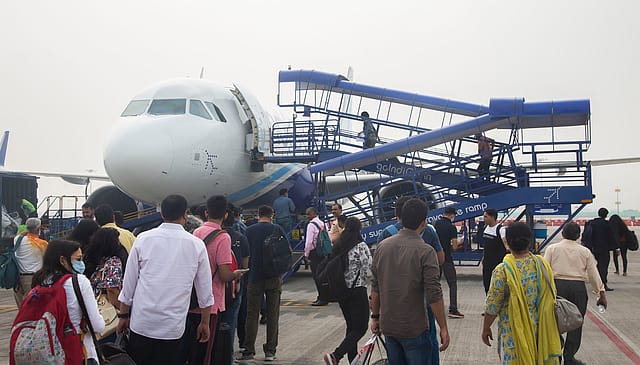
A parliamentary standing committee on transport, tourism, and culture led by JD(U) MP Sanjay Jha has summoned civil aviation ministry and related stakeholders on December 17, 2025.
The meeting will review the impact of the revised FDTL (flight duty time limitation) norms, the recent air traffic management disruptions, including the recent technical glitch faced by the air traffic control (ATC) system at Delhi IGI (Indira Gandhi international) airport in November this year, and the GPS (global positioning satellite) spoofing/GNSS (global navigation satellite system) interference incidents reported at IGI airport and other major airports.
The review meeting is divided into four broad sessions:
Discussions around pilot availability, duty time compliance, operational stress issues with members from ALPA India (which represents Indian pilots at the IFALPA -- international federation of airline pilots' association), ICPA (Indian commercial pilots' association), IPG (Indian pilots' guild)
Operational disruptions, delays, diversions, and GNSS interference reports with airline operators
Recent ATC (air traffic control)/GPS spoofing disruptions, ATC preparedness, and passenger-handling measures with the AAI (airports authority of India)
Briefing on revised FDTL norms and issues relating to it with officials from the ministry of civil aviation, and the DGCA
"The ongoing IndiGo crisis has brought renewed scrutiny to the legal and regulatory framework governing civil aviation in India, particularly in areas such as Flight Duty Time Limit (FDTL) compliance, fatigue management, and responses to emerging threats like GPS spoofing. Under the Aircraft Act, 1934 and Aircraft Rules, airlines bear primary liability for non-compliance with FDTL norms, and repeated violations, especially those linked to pilot fatigue, can attract penalties, licence actions, and heightened civil liability if passenger safety is compromised. Where DGCA directives or court-mandated norms are flouted, stakeholders may even explore contempt proceedings, especially if prior judicial orders on safety or workforce protection are in place. At the regulatory level, the situation underscores the need for stronger DGCA enforcement through mandatory fatigue-risk reporting, independent audits, and stricter penalties for concealment or delayed reporting of safety incidents," said Aniket Ghosh, partner, King Stubb & Kasiva, Advocates and Attorneys.
"On the consumer side, while India lacks a mature class-action culture, the Consumer Protection Act does allow collective complaints or representative suits, particularly when systemic operational failures lead to widespread flight disruptions, financial loss, or distress to passengers. The rise of GPS spoofing incidents adds another layer of responsibility: although airlines are not directly culpable for such external threats, they are legally bound to implement mitigation protocols, file mandatory occurrence reports, and ensure safe decision-making failing which liability may arise under safety-breach standards. Non-reporting or under-reporting of spoofing events can also trigger regulatory action, as DGCA’s safety reporting obligations are strict and non-negotiable. Overall, the IndiGo episode highlights the urgent need for enhanced compliance culture, robust oversight, and legal accountability mechanisms to protect passengers and uphold aviation safety," Ghosh added.
The parliamentary standing committee had on August 20, 2025, stabled a report before the parliament on the 'overall review of safety in the aviation sector', the committee had flagged some of the issues in the context of the crash of Air India 171 flight in June.
In its report tabled on August 20 in Parliament on the ‘overall review of safety in the aviation sector’, the committee had flagged some of the above issues in the context of the crash of the Air India 171 flight in June. The report has identified several key areas that require systematic improvement to ensure safety and sustainable growth for India's civil aviation sector. The committee had recommended focusing on fatigue management of flight crew.
“This includes ensuring strict compliance with updated FDTL regulations for pilots and promoting mental health awareness and support for both flight crews and ATCOs, as outlined in recent DGCA circulars,” the committee had said in its report. It was also recommended that the DGCA would be given full administrative and financial autonomy. The committee in its report, highlighted that India's primary civil aviation regulator is "currently grappling with a profound and persistent shortage of technical and regulatory personnel." Out of the sanctioned 1,063 posts, only 553 are currently filled at the DGCA, the committee noted in its report.
"This deficit is not a mere administrative statistic; it is a critical vulnerability that exists at the very heart of India's safety oversight system, occurring precisely at a time when the sector's unprecedented growth demands more, not less, regulatory vigilance and capacity. While the Ministry has expressed an intention to increase the staffing level to approximately 850 within the next six months, the current gap remains a matter of grave concern", the committee's report said.