
Disaster management demands new thinking: Rohini Nilekani
ADVERTISEMENT
Climate-related disasters are no longer one-off incidents. While one hears about havoc caused by cyclones, floods and landslides during monsoons every year, extreme heat during summers has become a way of life too. In fact, 85% of districts in India are exposed to floods, droughts and cyclones. Around 40% of districts have witnessed hazard-type reversals - flood-prone areas turning drought-prone and vice-versa. What do frequent climate disasters lead to? The extent of annual income that poor households can lose from a single disaster event could be as high as 85%. There is almost a 20%-25% jump in school absenteeism due to climate disasters resulting in significant learning loss.
The worst sufferers in climate-related disasters are women and children. They suffer 14 times more than men. What’s worse is that it takes close 19 years for a poor household to recover from a major climate shock and today, we are talking about climate disasters becoming more frequent. Rohini Nilekani Foundation Philanthropies, in a recent report titled ‘Resilience – Moving beyond surviving climate disasters to supporting communities to thrive’, has stressed on the importance of moving from reactive relief to proactive resilience building.
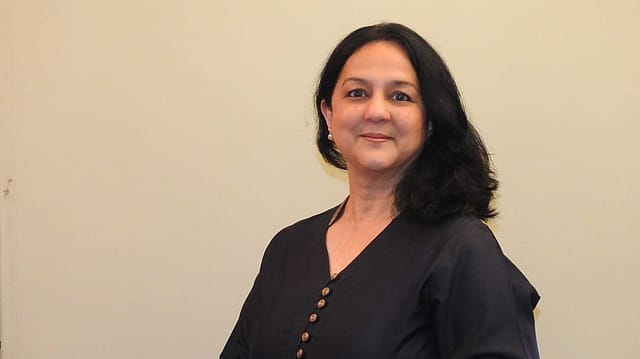
In an interview with Fortune India, chairperson, Rohini Nilekani, says, India has, to its credit, built a formidable disaster response capability over the last two decades - saving lives through early evacuations, stronger institutions and faster relief. However, just saving lives is no longer enough. She says, disaster management demands new thinking.
Excerpts:
What kind of a rethink does modern day disaster require?
We need a mental model shift. Climate change is not coming, it came years ago, quietly slipped into our lives and into the lives of vulnerable communities. It has now become a routine. Hence, we have to put processes and capacities in place. We are good at response, but that isn’t enough anymore. If we want to be Viksit Bharat, if we want everyone to thrive, then we have to change the way we do things and think about things.
If we continue to invest primarily in response, we will remain trapped in an exhausting cycle of relief; what we need instead is an imagination of longer-term resilience, where communities are not passive recipients of aid, but architects of how they adapt, rebuild, and secure their futures with agency, equity, and dignity. This point cannot be overemphasized. Contextual, locally-led preventive action, clearly understood roles and responsibilities when disaster does strike and a hopeful road map for recovery are essential.
For this, samaaj (society, communities), sarkaar (Government) and sanstha (corporates, CSRs etc) have to work in sync. In this new normal, the state - the sarkaar at all levels will remain indispensable. There is no substitute for public legitimacy, scale and systems. But the first mile is where samaaj networks step in - neighbours, women’s collectives, local volunteers, community institutions and civil society organisations that move quickly, translate warnings into action and keep recovery from collapsing into abandonment.
You don’t have to wait for the monsoon for floods, you don’t have to wait for high summer for heat. It requires a new thinking for the new normal.
When you talk about building disaster resilience what kind of interventions can the Government bring in and how can the communities and organisations step in?
The Samaaj can show the government what they need differently – help construct policies better so that the loss and damage can be understood better and the risk can be shared better.
As public infrastructure is getting built, it has to be risk resilient infrastructure. Putting in an additional $1 for climate resilient infrastructure is going to give you $15 in return. I have spoken to many government officials who love to talk about the new public infrastructure they are building. But when I ask them whether they have done climate modelling for risk they don’t have an answer. None of them have done any climate modelling. Yes, we need public infrastructure, but it has to be disaster resilient. Otherwise, we will land into 2050 with a host of multi-crore stranded assets. That’s for the sarkaar to rethink.
The bazaar will have to rethink anyway because work or productivity is going down. If you can’t work six-seven hours a day because of heat wave conditions, it is going to be counter-productive.
The report talks about civil society innovations that help in building an ecosystem of resilience. Can you give us some details?
Some of our partners such as SEEDS are looking at the entire lifecycle of disasters. It is not just narrowly confined to how can we save life post a disaster, but can we prepare them in anticipation of a climate disaster. They have a digital disaster wallet to create a system for loss and damages that can be anticipatory and can identify households at a granular level much before the disaster has struck.
It first bifurcates a disaster-prone region into districts and then pre-identifies households which are vulnerable. This is only possible because technology is working hand-in-hand with communities on the ground. There is a deep layer of trust that SEEDS has already established with these communities from years of working. They are able to pre-identify the risk in a particular district and then create disaster wallets which kick in anticipatory funding for loss and damage that could happen after a disaster strikes. They authenticate your assets and when disaster strikes and you claim for loss and damage, there is already an authentication number of your assets. Even if the Government doesn’t give 100%, a certain amount will kick in much more smoothly.
We are supporting SEEDS to do a district pilot in Cuddalore in Tamil Nadu. It will be like a sandbox for all the innovations. We will invest in community capacity building with clear roles – if a disaster strikes, who will do what – what will the local government do, what can women’s groups do, how can we get the youth involved, how do we protect the vulnerable communities. The pilot will do scenario-based planning and on top of that will be parametric insurance, there will also be granular weather-based information.
We are designing this model for scale. It is an invitation for philanthropy - they can watch, believe and then invest in other districts.
How open are philanthropist to support disaster resilience?
Philanthropy is growing but it is not bold enough or thinking where is the buck going to be 10 years from now. Whether you are in education or livelihood, skilling or health there is a climate change adjacency you have to address anyway. So, why not look at everything with a resilience framework. What do I need to support now, so that the future shock and exposure can be reduced and harm can be reduced. That’s the call to action we have clearly made in the report.
Unfortunately, there is some kind of disaster fatigue in India. Earlier when floods happened in Assam people used to send lakhs immediately, now since there are so many disasters, they are feeling the pinch and not giving as much money. Just when we need empathy to ramp up, the empathy muscle shouldn’t get tried.