
Explained: What the new VB–G RAM G Act means for rural India and how wage rules are changing
ADVERTISEMENT
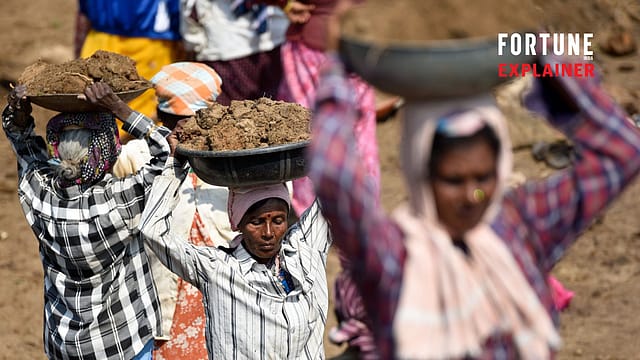
Nearly 20 years after becoming India’s flagship rural employment programme, the Mahatma Gandhi National Rural Employment Guarantee Act (MGNREGA) has officially given way to a new framework, the Viksit Bharat – Guarantee for Rozgar and Ajeevika Mission (Gramin) Act, 2025 (VB–G RAM G Act).
The government has notified revised wage rates under the new law with effect from July 1, 2026, coinciding with its nationwide rollout. Along with expanding guaranteed employment, the new framework introduces higher wage rates and seeks to reshape rural income support through a revised employment guarantee structure.
What is the VB–G RAM G Act?
The VB–G RAM G Act replaces MGNREGA as India’s national rural employment guarantee programme. While retaining the core objective of providing wage employment to rural households, the new legislation aims to strengthen livelihoods, improve purchasing power, and align rural development with the government’s broader Viksit Bharat agenda.
One of the most key changes is the expansion of guaranteed employment from 100 days under MGNREGA to 125 days annually for every eligible rural household.
What changes in wages?
The Centre has simultaneously announced revised wage rates across all 34 states, Union Territories, and wage regions, making it one of the most extensive revisions under the national rural employment programme.
The headline reform is the introduction of an interim base wage of ₹300 per day, ensuring that no notified wage under the programme falls below this level. Before the revision, several states had wage rates below ₹300, with the lowest notified wage at ₹241 per day. Under the revised structure, every affected state has been brought up to the new benchmark.
As a result, the national average notified wage has increased from ₹298.8 per day under MGNREGA to ₹327.4 per day under the VB–G RAM G framework, translating into an average increase of ₹28.6 per day. Overall, the average wage increase across the country exceeds 10%.
Why is the ₹300 benchmark important?
The introduction of the ₹300 interim base wage marks a first for India’s national rural employment programme.
The government says the move is designed to improve income security and reduce long-standing regional disparities in rural wages. By establishing a nationwide floor, the revised structure attempts to ensure that workers in lower-income regions benefit more significantly.
According to the notification, 21 states, UTs, and administrative units directly benefit from being brought up to the new minimum wage level.
Which states gain the most?
The revised wage structure has been designed to ensure that states with historically lower wage levels receive the largest increases.
Among the biggest beneficiaries are Arunachal Pradesh and Nagaland, where wage revisions are close to 24.5%. Substantial increases have also been notified for Uttar Pradesh, Uttarakhand, Bihar, Jharkhand, Assam, Tripura, West Bengal, Chhattisgarh, Madhya Pradesh, and Odisha, among others.
The government says this approach supports more balanced regional development while narrowing historical wage gaps.
What happens to states that already had higher wages?
States where wage rates already exceeded the new ₹300 benchmark have also received upward revisions under the prescribed wage determination methodology.
Following the latest notification, Haryana now has a notified wage rate of ₹409 per day, Goa ₹406 per day, Kerala ₹401 per day, and Sikkim’s high-altitude Gram Panchayats ₹450 per day. Under the previous structure, only one wage region had crossed the ₹400 threshold.
How were the new wages determined?
The government says the revised rates were calculated using a transparent and objective formula that combines annual wage indexation with the newly introduced interim base wage. The aim is to create a fairer and more predictable wage system while reducing historical imbalances in rural wage levels.
Union Rural Development and Agriculture & Farmers Welfare Minister Shivraj Singh Chouhan described the commencement of the new law as a historic step towards building prosperous villages and achieving the vision of Viksit Bharat.
According to the minister, the government has combined expanded employment guarantees with higher wages and deliberately directed larger increases towards states where wage levels were historically lower.
What could this mean for rural India?
The government expects the combination of 125 days of guaranteed employment and higher wage rates to strengthen rural livelihoods and increase purchasing power.
The revised framework is also likely to support local demand, create durable rural assets, and promote more inclusive and sustainable growth.