
India’s next financial leap hinges on household savings, trusted markets: DEA Secy
ADVERTISEMENT
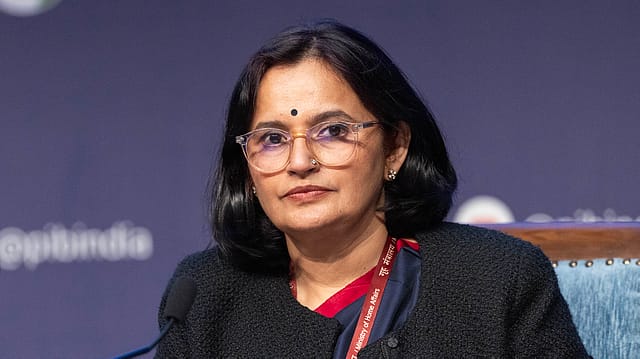
India’s next phase of financial development will depend not only on deepening its capital markets but also on bringing a larger share of domestic household savings into the formal financial system, Department of Economic Affairs Secretary Anuradha Thakur said at the 13th SBI Banking & Economics Conclave.
Thakur said India has already built stronger institutions and increasingly transparent capital markets, but becoming a global financial centre would require sustained reforms and greater trust in the country’s financial ecosystem.
“Our capital markets are increasingly becoming more transparent and attractive to global investors while initiatives such as the GIFT-IFSC are creating the foundations for an international financial centre,” Thakur said.
Household savings remain a key opportunity
While India's financial markets have expanded substantially, Thakur said there remains substantial room to channel household savings into the financial system.
“Domestic household savings, for instance, have a considerable scope to be channelled into our financial system,” she said.
The comments come as India seeks to deepen its financial markets and expand the role of domestic and global capital in financing economic growth.
Thakur said the broader lesson from the history of global financial centres is that economic size alone does not determine financial leadership.
“Global leadership is not simply a function of economic size,” she said.
Instead, financial centres emerge over time as institutions, markets and financial systems develop sufficient credibility for others to rely on them.
Building trust is key to global financial ambitions
Thakur pointed to London and New York as examples of financial centres that developed over decades rather than emerging overnight.
“Global financial centres are not achieved in a single step,” she said, adding that India still has “pieces of the journey ahead”.
She said the country’s institutions have strengthened, markets are deepening and reforms are making it easier for businesses to invest and operate.
The development of GIFT-IFSC is part of this broader effort to create the foundations for an international financial centre in India.
“It is built when institutions, markets, financial systems and the nation become sufficiently trusted that others choose to rely upon them,” Thakur said.
From economic size to global influence
Thakur also placed India's financial ambitions within the broader evolution of the country's global economic role.
She said India's trajectory in global economic governance is moving “from greater voice to greater shaping of global agendas”, supported by its growing economic weight and expanding engagement with international institutions.
According to Thakur, India's ability to attract and retain global capital will ultimately depend on the strength of its institutions, the depth of its markets and the trust placed in its financial systems.
“The foundations are steady and our path is robust,” she said, while acknowledging that the journey towards greater global financial leadership would take time.