
MeitY launches NIDAR 2.0 to develop indigenous drone technologies; students challenged to build autonomous systems on India’s VEGA chip
ADVERTISEMENT
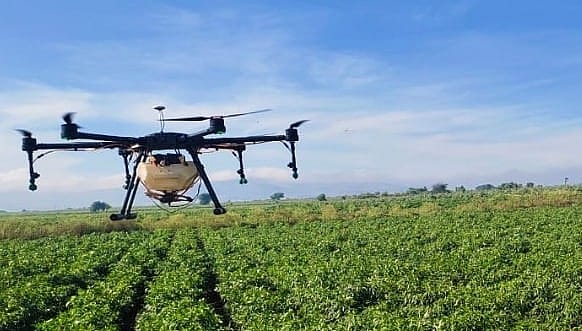
The Ministry of Electronics and Information Technology (MeitY), in collaboration with the Drone Federation India (DFI), on Monday launched the second edition of the National Innovation Challenge for Drone Application and Research (NIDAR 2.0) under the SwaYaan initiative, shifting the focus from drone applications to indigenous drone electronics and autonomous systems.
Launched at Electronics Niketan in New Delhi, the challenge aims to encourage students to build smarter drones powered by India’s indigenous VEGA processor, developed by the Centre for Development of Advanced Computing (C-DAC) under MeitY’s Digital India RISC-V (DIR-V) programme.
Building the ‘brain’ of Indian drones
Launching the challenge, MeitY secretary S. Krishnan said NIDAR 2.0 marks a significant evolution in India’s drone innovation ecosystem.
“NIDAR 2.0 takes our students from just flying drones to building the drone’s brain. When the drone’s brain runs on India’s own VEGA processor, we are not just training engineers. We are laying the foundation of a self-reliant drone industry,” he said.
Krishnan added that the VEGA processor has been developed under the DIR-V programme to reduce India’s dependence on foreign chip designs and the associated licensing costs.
Two-track challenge to boost innovation
The challenge has been divided into two tracks. Under the Drone Innovation track, student teams will develop fully autonomous swarm drones capable of locating survivors and delivering medical supplies in disaster-hit areas without relying on external communication networks. Teams will also design drones capable of navigating GPS-denied indoor environments for industrial inspection.
The Component Innovation track focuses on designing indigenous flight controllers and autopilot systems built around the VEGA processor using Indian electronic components. Following technical evaluations, the top 100 teams will receive two VEGA processor development kits each for testing and integration.
Higher prize pool and startup support
To encourage wider participation, the prize pool has been increased to over ₹65 lakh, up from ₹40 lakh in the inaugural edition. Winning teams will also receive startup incubation support, corporate internships, software assistance and cloud computing credits to help commercialise their innovations.
According to MeitY, the first edition of NIDAR attracted 3,448 students from 22 states, four Union Territories and 109 cities, with 93 teams reaching the grand finale and 24 teams sharing prize money worth ₹40 lakh.
The ministry noted that civilian and defence drones share much of the same core technology, adding that innovations emerging from NIDAR 2.0 could strengthen both sectors while advancing the government’s vision of Atmanirbhar Bharat and Viksit Bharat @2047.