
Safe, seamless, strategic: How Indian travellers are rewriting summer holidays in 2026
ADVERTISEMENT
Geopolitics, risk perception, and a growing preference for controlled, experience-led environments are decisively reshaping Indians’ outbound and domestic travel in summer 2026. As conflicts, geopolitical turbulence, and tightening border protocols disrupt traditional long-haul circuits, Indian travellers are “recalibrating” toward destinations and properties that offer a mix of proximity, predictability, and premium, self-contained experiences, say industry experts.“
The shift is not merely reactive—it is structural, with implications for how hospitality brands position themselves and how travel decisions are made,” informs Subhash Goyal, member, National Tourism Advisory Council, Ministry of Tourism.
Industry data underscores the scale of this shift. India’s outbound tourism market—valued at roughly $23.4 billion in 2026—is projected to grow at over 11% annually in the coming decade, according to estimates by the World Travel & Tourism Council. More telling, however, is the behavioural pivot. Surveys by Booking.com and Expedia Group find that over 60% of Indian travellers now prioritise safety, flexibility, and ease of access over destination novelty, while research from Bain & Company and Google shows nearly half are willing to spend more on fewer, higher-quality, curated trips.
“There is also a clear move toward consolidation. Multi-city itineraries are giving way to longer stays in a single destination, with travellers seeking depth over breadth. Booking patterns show average trip durations inching upward, while the number of stops per itinerary is shrinking,” adds Goyal.
The rise of the ‘secure luxury enclave’
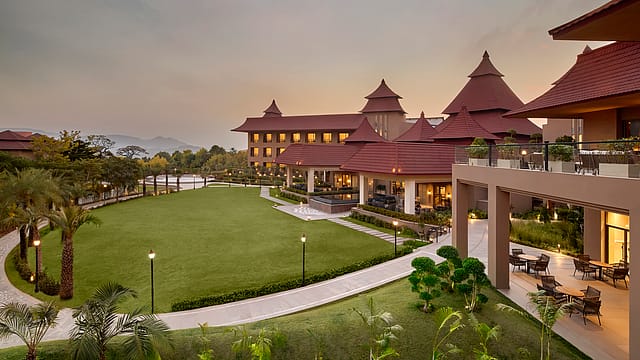
A defining trend this summer is the emergence of “secure luxury enclaves”—hospitality environments designed to function as complete ecosystems. Travellers are actively choosing resorts where accommodation, dining, wellness, and recreation are integrated, reducing dependence on external logistics and exposure to uncertainty, shares Kamaljit Singh, general manager at The Westin Jaipur Kant Kalwar Resort & Spa.
The hotel exemplifies this shift clearly. Located on the quieter fringes of Jaipur and spread across expansive grounds, the property is designed less as a hotel and more as a contained destination. Its inventory of rooms, suites, and villas is built around space—large layouts, private balconies, and landscaped views that create a sense of openness while maintaining seclusion. Villas with plunge pools and private sit-outs are particularly appealing to families and long-stay guests seeking privacy within a structured environment.
The resort’s real strength, however, lies in its programming. Wellness is central, anchored by the Heavenly Spa, open-air yoga spaces, and fitness zones that encourage longer, restorative stays, explains Singh. Dining is varied and immersive, with a mix of global cuisine and regional Rajasthani fare, which allows guests to experience local flavors without leaving the property. Cultural evenings, curated activities, and family-focussed amenities—from kids’ play zones to outdoor recreation—reinforce the idea of a self-sufficient ecosystem. “Guests today are not looking to step out constantly. They want a place where everything is curated, safe, and seamlessly available,” Singh observes.
Close-to-home comfort: Domestic destinations gain ground
Domestic travel has emerged as a key beneficiary of this shift. Faced with global headwinds, Indian travellers are gravitating toward destinations that are easier to access, logistically simpler, and operationally more predictable, says Sunil Kumar, president, Travel Agents Association of India, adding that within this segment, boutique and low-density properties are gaining traction.
Sisodia Bagh, a luxury boutique resort in Jaipur, represents this quieter, more intimate form of luxury. Unlike large-format resorts, it prioritises atmosphere over scale. Its design draws from Mughal-Rajput aesthetics—arched corridors, frescoed interiors, carved details, and garden courtyards that evoke a sense of heritage and calm.

Rooms are fewer but more distinctive, often opening out to landscaped gardens or private verandas. The pace of the stay is deliberately slow. Guests spend time in shaded walkways, enjoying al fresco dining, or simply absorbing the stillness of the setting. Service is personalised and intuitive, with staff tailoring experiences to individual preferences rather than following standardised formats.
“For travellers fatigued by crowded itineraries and over-scheduled holidays, our kind of properties offer a different proposition: immersion without intensity. The appeal lies not in doing more, but in experiencing more deeply within a controlled, comfortable setting,” elaborates Abhishek Pareek, the property’s manager.
Short-haul, high-assurance: The new international sweet spot
While long-haul travel faces disruption, short-haul international destinations are thriving. Ease of access, minimal visa friction, and cultural familiarity are driving demand, particularly among Indian travellers seeking a balance between novelty and comfort.
Travel experts note that neighbouring Asian countries like Vietnam, Cambodia, Indonesia, Thailand, and Nepal have emerged as winners in this category. The Ramada hotel chain, with over 850 locations across 63 countries, exemplifies this best. The Ramada Encore by Wyndham Kathmandu illustrates how international hospitality brands are adapting to new demands from travellers.
Situated in the vibrant Thamel district, the award-winning hotel offers immediate access to markets, cafés, and heritage zones, while maintaining a calm, well-managed internal environment. Rooms are contemporary and spacious, designed for comfort after a day of exploration. Large windows, warm lighting, and modern amenities create a sense of familiarity that reduces travel fatigue. The rooftop is a standout feature—offering sweeping views of the city and becoming a natural gathering point for dining and relaxation.
Wellness facilities, including a spa and fitness centre, add another layer to the experience, allowing guests to balance exploration with downtime. “Service consistency plays a critical role here. Travellers frequently cite attentive staff, efficient operations, and a sense of reliability that enhances overall comfort,” says Mahesh Phuyal, general manager at Ramada Encore Kathmandu.
“You can step out into the energy of Kathmandu and return to a space that feels calm and organised. That balance makes all the difference,” shares Rohit Prakash, a Delhi-based entrepreneur who stayed at the hotel last year.
Urban hotels reinvented as self-contained retreats
Urban hospitality is also evolving in response to these behavioural shifts. Business hotels are increasingly positioning themselves as hybrid environments that cater to both work and leisure within a single space. The Radisson Blu Plaza in Hyderabad’s Banjara Hills reflects this transition well. Located in one of India’s busiest technology hubs in the southern city, the hotel caters to corporate travellers, weekend guests, and staycation seekers alike. Its rooms combine functionality with comfort—ergonomic workspaces alongside plush bedding and contemporary interiors.
The property’s defining feature is its ability to layer experiences, elaborates general manager Sandeep Joshi. Rooftop pools and lounges create a sense of escape above the city, while multiple dining venues offer culinary variety without requiring guests to step out. The spa and wellness facilities support longer stays, particularly for travellers blending business with leisure, he adds.
This model of “urban containment” is increasingly resonating with travellers, the hotelier shares adding that guests increasingly prefer hotels where meetings, meals, relaxation, and recreation can all be accessed within the same environment. “It reduces logistical complexity and enhances the sense of control—two factors that have become central to travel decision-making,” he elaborates.
Island escapes and the all-inclusive safety premium
At the premium end of the market, island destinations continue to lure Indian travellers—but with a more defined set of expectations. Privacy, exclusivity, and seamless experiences are now non-negotiable. The Maldives has emerged as a clear winner in this category.
The award-winning Sun Siyam Iru Veli resort, located on Dhaalu Atoll, captures this shift. The resort’s all-villa format ensures a high degree of privacy, with each unit featuring a private pool, direct beach or lagoon access, and expansive indoor-outdoor living spaces. The design blends contemporary luxury with tropical elements, creating an environment that feels both indulgent and relaxed.
The all-inclusive model is central to its appeal for Indian travellers. Meals, beverages, and a wide range of activities are pre-curated, eliminating the need for constant planning or decision-making. Guests can move effortlessly from dining to snorkelling excursions, from spa treatments to sunset cruises, without logistical friction.
Dining is diverse, spanning fresh seafood, international cuisine, and curated culinary experiences. The spa, often set against the backdrop of the ocean, adds a strong wellness dimension to the stay. Traveller feedback on TripAdvisor consistently highlights the seamlessness of the experience.
Industry experts say this new trend reflects a broader willingness among Indian travellers to spend more on fewer but higher-quality experiences—particularly when those experiences deliver both luxury and predictability. A clear pattern is also emerging: the prioritisation of experience over itinerary. Travellers are moving away from multi-destination holidays toward single-location stays that offer depth and immersion.
“We used to plan trips around what we wanted to see. Now we plan them around where we want to stay,” says Sunidhi Mehta, a Delhi-based model who vacationed at Sun Siyam recently.
Flexibility, safety, and the new decision matrix
At the core of this transformation, say industry stakeholders, is a new decision-making framework built around safety, flexibility, and experience quality. Travellers are scrutinising cancellation policies, service standards, and on-ground reliability more closely than ever.
Hotels are adapting with flexible bookings, customised packages, and enhanced service protocols. For the hospitality industry, these shifts present a clear opportunity. Summer travel for Indians in 2026 is no longer driven by aspiration alone; it is shaped by calculation. They are seeking not just escape, but experiences that are seamless, immersive, and predictable.