
Best Investments 2026: The best equity fund manager

This story belongs to the Fortune India Magazine January 2026 issue.
ADVERTISEMENT
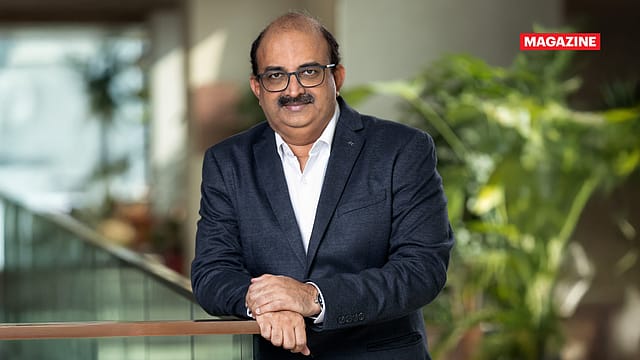
For Sailesh Raj Bhan, president and CIO, equity investments, Nippon India Mutual Fund, it’s all about picking up “quality growth companies” at “reasonable and sensible” prices. “We do not wish to overpay for growth,” says Bhan, who manages Nippon India Large Cap Fund and Nippon India Multi Cap Fund.
“Our general approach over the years has been buying growth. But value is also important to us. We love the growth companies, but growth is not perpetual. And we won’t overpay at exorbitant valuations. So, valuation is certainly an important anchor while at the same time we ensure there is no compromise on the quality of the companies,” says Bhan.
“That is what we have been doing through the cycles. For about 22 years, I have been doing this at Nippon. There will be phases of excessive valuations and corrections, providing opportunity to play the full cycle.”
But then, how does one deploy this philosophy in the current markets, which have remained sideways for over a year but still valuation concerns persist? Bhan says the sheer size of the domestic equity markets offers pockets of opportunities. “The beauty is that this is such a large market that you can manoeuvre a bit and find your spaces of reasonable opportunities.”
One such space, in his view, is the large-caps. “Over the last 12-18 months, our preference has been to buy extraordinarily good companies at relatively better prices. There was a set of forgotten blue chips, traditional large companies, largest banks, and non-banking financial companies (NBFCs). Now, correction is happening across market segments and we are tapping some interesting opportunities,” says Bhan.
On mid-caps, Bhan points out that valuations are not attractive, but a positive factor for both mid- and small-caps was the absence of any macro challenges in the country at this point of time. “The good aspect of the mid- and small-caps space is that there is no major macro issue in India at present. There is no balance sheet problem, and no corporate debt issue. But since the starting valuation is higher, one needs to take a long-term view with systematic approach.”
For investors, especially in the mid- and small-cap segments, Bhan suggests the SIP (systematic investment plan) route of investing with a horizon of three to five years.