
Economic Survey 2026: Here’s how Dalal Street reacted over the past 5 years
ADVERTISEMENT
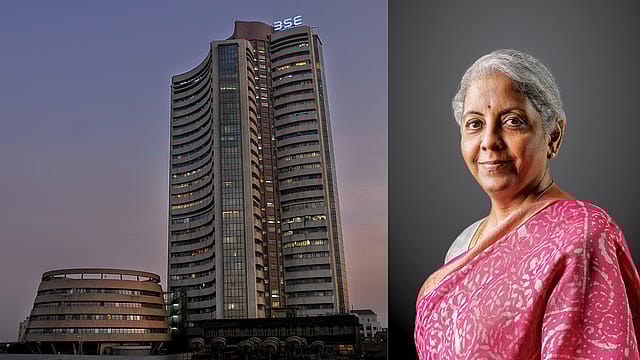
The Indian equity markets have generally responded positively to the presentation of the Economic Survey in recent years, with benchmark indices closing higher on a majority of occasions as investors assess the government’s growth outlook and macroeconomic signals.
Traditionally tabled in both Houses of Parliament by the Union Finance Minister a few days ahead of the Union Budget, the Economic Survey reviews economic performance over the past 12 months and outlines the broad direction for future reforms.
Data from the past five years show that equity benchmarks—the Sensex and the Nifty50—ended higher on three out of five Economic Survey days, reflecting cautious investor optimism when the survey points to a growth-oriented economic trajectory.
On January 31, 2025, the Sensex and the Nifty50 ended on a strong note, rising over 1%, after Finance Minister Nirmala Sitharaman projected India’s real gross domestic product (GDP) growth for FY26 in the range of 6.3–6.8%.
The market response in 2024, however, was more muted. On July 22, 2024, both the Sensex and the Nifty50 traded flat through the session, fluctuating within a narrow range as investors adopted a wait-and-watch stance amid global uncertainties and ahead of key policy cues.
A similar pattern was seen in 2023, when the markets remained largely unchanged on January 31, with benchmark indices trading flat and showing intra-day volatility as participants balanced the survey’s outlook against external headwinds.
The markets had reacted more decisively in 2022, buoyed by supportive economic signals. On January 31, 2022, the Sensex climbed 1.42% to close at 58,014.17, while the Nifty50 advanced 1.39% to end at 17,339.80, as investors responded positively to the growth narrative laid out in the survey.
In 2021, markets also closed higher on January 29, marking another instance of a favourable reaction to the Economic Survey as the economy showed early signs of recovery from the pandemic-led disruption.
What D-Street expects from Budget 2026
With the Union Budget set to be tabled on February 1, market participants are tempering expectations of big-bang announcements, though hopes remain for selective relief on equity taxation. D-Street is abuzz with speculation around possible tweaks to capital gains taxes and the securities transaction tax (STT). With foreign institutional investors continuing to pare exposure to Indian equities, the government could look at easing some tax frictions to boost market sentiment.
Sunny Agrawal, Head of Fundamental Research at SBI Securities, said there is a reasonable chance of a reduction in long-term capital gains (LTCG), a higher exemption limit for capital gains, or a cut in STT on cash market transactions. The aim would be to encourage long-term investing while discouraging excessive speculation. STT currently generates about ₹20,000–21,000 crore annually, making it one of the highest implicit costs for equity investors.
Brokerages expect the finance ministry to prioritise continuity and fiscal discipline. JM Financial said the focus is likely to remain on widening the tax base rather than sweeping rate cuts, warning that disruptive changes or sharp cuts in capital expenditure could weigh on growth.
Motilal Oswal highlighted stocks and sectors that could benefit, spanning infrastructure, defence, financials and consumption-linked themes. Key beneficiaries include Larsen & Toubro, ABB, Siemens, Bharat Electronics, UltraTech Cement, Polycab, Titan and PN Gadgil.
(DISCLAIMER: The views and opinions expressed by investment experts on fortuneindia.com are either their own or of their organisations, but not necessarily that of fortuneindia.com and its editorial team. Readers are advised to consult certified experts before taking investment decisions.)