
SEBI proposes allowing FPIs access to non-agri commodity derivatives to deepen liquidity
ADVERTISEMENT
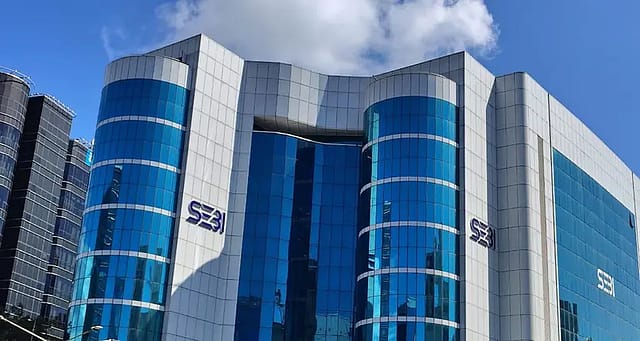
The Securities and Exchange Board of India (SEBI) on Tuesday proposed widening foreign portfolio investors' (FPIs) access to India's exchange-traded commodity derivatives market, including allowing them to participate in physically settled non-agricultural commodity contracts, subject to a new safeguard mechanism.
FPIs may get access to physical-settlement contracts
Under the existing framework, FPIs can participate in cash-settled non-agricultural commodity derivatives and indices comprising such commodities. SEBI is now seeking stakeholder views on allowing FPIs to participate in non-cash-settled, or physically settled, non-agricultural commodity derivatives.
The proposal covers non-agricultural commodities such as crude oil, natural gas, gold, silver and base metals, whose prices are closely linked to global benchmarks.
SEBI said allowing FPIs into these contracts could “broaden the participant base, enhance liquidity and market depth, improve price discovery and strengthen convergence between the derivatives and physical markets.”
The regulator added that the move could facilitate “greater integration of India's commodity derivatives market with international commodity markets” and support the development of Indian commodity contracts as credible price-discovery venues.
Crude oil, natural gas options already seeing more liquidity
SEBI said foreign participation has already contributed to deeper liquidity in parts of India's commodity derivatives market.
“There has been a notable rise in liquidity in Crude oil and Natural Gas options,” the regulator said, adding that there has also been a considerable rise in overall open interest, with FPIs contributing a “meaningful and growing share” and enhancing market depth.
Separately, SEBI is seeking views on allowing FPIs to participate in non-agricultural index derivatives irrespective of whether the underlying contracts are cash-settled or not. The Commodity Derivatives Advisory Committee (CDAC) has agreed with the proposal and recommended allowing such participation.
FPI positions could be automatically transferred
The key challenge with physically settled contracts is the delivery obligation. SEBI noted that FPIs may not be permitted to take or make physical delivery because of the absence of a permanent establishment in India. It also noted that FPIs would be required to obtain GST registration to buy or sell commodities in India.
To address this, SEBI has proposed a two-tier safeguard mechanism.
FPIs would have to square off or roll over their positions before the start of the tender period, with the compulsory exit requirement kicking in three days before expiry. If an FPI does not voluntarily exit, the open position would be transferred to a designated trading member (TM) or trading-cum-clearing member (TCM).
Under the proposed framework, the transfer would take place at the exchange's closing price or daily settlement price. Once the transfer is executed, the FPI would cease to have any further right, title, obligation or exposure relating to the position, including the tender or delivery process.
SEBI proposes risk absorption charge for trading members
SEBI has also proposed a “Proprietary Risk Absorption Charge” for cases where an FPI fails to voluntarily square off or roll over its position and the position is transferred to a TM or TCM.
The charge may be incorporated into the onboarding agreement and would compensate the trading member for the “proprietary risk, margin, and position-limit burden” it assumes as a result of the involuntary transfer. The charge would be over and above any service fee agreed for carrying out the transfer.
The proposed framework also allows a trading member up to two trading days to bring any transferred position back within applicable position limits if the transfer causes its proprietary account to breach those limits.
The consultation paper was issued on August 11, 2026, with SEBI inviting public comments on the proposals until September 1, 2026.