
Future of securities market hinges on policy foresight, not just tech and capital: Sebi chairman
ADVERTISEMENT
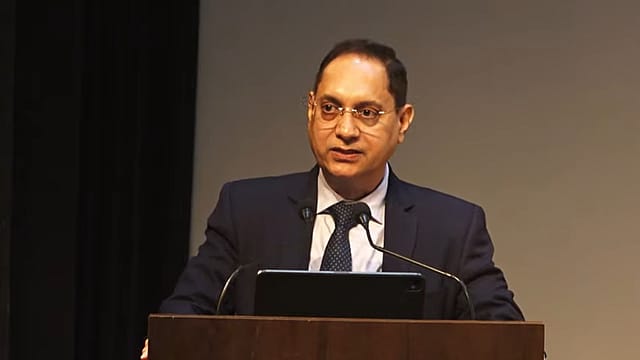
The future of India’s securities market will not be shaped merely by technology and capital flows, but by the quality of analytical capabilities and the foresight of policy choices, Sebi Chairman Tuhin Kanta Pandey said on Wednesday.
Speaking at the Sixth Annual International Research Conference on Securities Market (2025–26) organised by Sebi and the National Institute of Securities Markets (NISM) in collaboration with IIM Mumbai, Maharashtra National Law University, Mumbai, and NSE, Pandey underscored the growing importance of research, data and evidence-based policymaking in an increasingly complex market ecosystem.
“Our markets today are faster, more complex and far more data-intensive than ever before. In such an environment, innovation, inclusion and resilience cannot be pursued in isolation — they must advance together,” he said.
Pandey said India’s securities markets have moved “from scale to sophistication” over the past decade. Market capitalisation has risen from around ₹100 lakh in FY15 to over ₹470 lakh currently. The corporate bond market has also expanded steadily, signalling a maturing ecosystem where long-term financing is increasingly market-driven.
Investor participation has widened significantly, with the number of unique investors rising to about 140 million from 38 million in March 2019. Assets under management of the mutual fund industry have grown from about ₹12 trillion in FY16 to ₹81 trillion as of January 2026. Investments through alternative investment funds (AIFs) have expanded from nearly ₹0.2 trillion in FY16 to over ₹6.5 trillion by December 2025.
“These numbers show a structural shift. Our securities markets today play a central role in financing enterprises, supporting MSMEs and startups, and channelising household savings into productive investments,” he said.
Highlighting the growing role of technology, Pandey noted that trading, clearing, settlement and surveillance are now deeply digital. The regulator is increasingly leveraging supervisory technology (SupTech) and regulatory technology (RegTech) tools to monitor risks and compliance.
Artificial intelligence and advanced analytics can strengthen surveillance, detect misconduct and deepen understanding of investor behaviour, he said, while cautioning that innovation is not risk-free. “Algorithmic markets can create feedback loops, AI models can introduce bias, and technology can amplify errors at speed. These are real and growing concerns,” he added.
Pandey stressed the need for rigorous research on market microstructure in digital environments, AI-driven risks and behavioural changes arising from technological adoption. “Innovation must be accompanied by understanding; otherwise speed can outpace safety,” he said.
On data accessibility, he said SEBI has taken steps to improve the ease of access and usability of publicly disclosed market data. Stock exchanges, clearing corporations and depositories have been mandated to put in place data-sharing policies for research and analysis.
Viewing market data as a public good, he said responsibly governed and shared data can support better policy design and supervision. He also referred to SEBI’s recent investor survey covering over 90,000 households, the findings and underlying data of which have been placed in the public domain for wider research use.
Pandey highlighted NISM’s efforts to strengthen the research ecosystem, including plans to set up Centres of Excellence such as a Centre for Regulatory Studies. These centres are envisaged as global knowledge hubs to support advanced research and provide inputs to regulators and market institutions.
SEBI is also sharpening its focus on policy-oriented and actionable research and has initiated steps towards regulatory impact assessment to evaluate policy outcomes based on evidence, he said.
“As markets grow in size, they grow in complexity. It places a responsibility on us to build markets that are deep, trusted and resilient,” Pandey said, expressing confidence that the conference would strengthen the bridge between academic research and real-world market practice.