
NSE files for IPO after decade-long wait; SBI leads shareholder exit, LIC opts out
ADVERTISEMENT
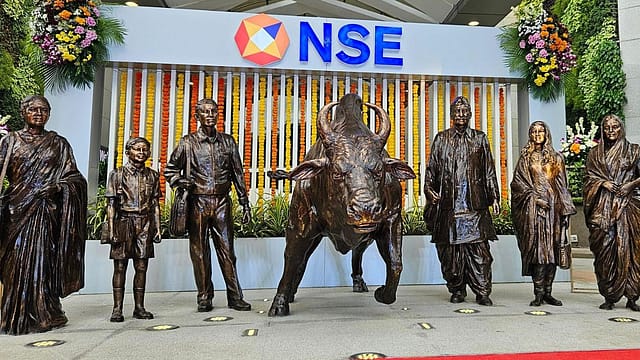
After more than a decade of anticipation and regulatory hurdles, the National Stock Exchange of India (NSE) has finally taken the decisive step towards becoming a publicly listed company. The country's largest stock exchange, which is also India's most widely held unlisted company with more than 2 lakh shareholders, has filed its Draft Red Herring Prospectus (DRHP) with market regulator Sebi on June 17, setting the stage for what could become one of the biggest and most closely watched public offerings in India’s capital market history.
The proposed initial public offering is entirely an offer for sale (OFS) of up to 14.89 crore equity shares, representing nearly 6% of NSE’s paid-up equity capital. Since no fresh shares are being issued, the exchange itself will not receive any proceeds from the issue as the funds raised will accrue to the selling shareholders.
Given NSE’s estimated valuation of around ₹5 lakh crore in the unlisted market, analysts expect the IPO size to be approximately ₹30,000 crore. If achieved, it would rank among the largest IPOs ever in India, since the Hyundai Motor India IPO of around ₹27,000 crore in 2024.
The share sale comes nearly ten years after NSE first sought to go public in 2016. Regulatory concerns, governance issues, and the infamous co-location controversy had kept the listing plan on hold for years.
SBI leads shareholder exit; LIC opts out
The OFS will see several prominent institutional shareholders pare their stakes in the exchange. While Life Insurance Corporation of India (LIC), one of NSE's key investors, has opted not to participate in the IPO, a number of other financial institutions and global investors are monetising part of their holdings.
State Bank of India (SBI) is set to be the largest seller in the issue, offering nearly 2.48 crore shares. It is followed by Mauritius-based MS Strategic, which plans to offload around 1.6 crore shares, and Canada Pension Plan Investment Board (CPPIB), which will sell close to 1.19 crore shares.
Among the other major shareholders participating in the OFS, Aranda Investments (Mauritius) will divest approximately 1.12 crore shares, while Bank of Baroda and Stock Holding Corporation of India will each sell about 1.1 crore shares. Public sector insurers are also reducing their exposure, with GIC Re and New India Assurance offering over one crore shares each. National Insurance Company and United India Insurance Company will sell roughly 60 lakh shares apiece as part of the offering.
35% of IPO reserved for retail investors
As per the DRHP filed with the Sebi, the exchange has reserved 50% of the net offer for qualified institutional buyers (QIBs), 15% for non-institutional investors (NIIs), and remaining 35% for retail investors. Up to 5% of the post-offer paid-up capital has also been reserved for eligible employees.
The IPO arrives at a time when NSE stands at the centre of India’s rapidly expanding capital market ecosystem. Incorporated in 1992, the exchange revolutionised Indian securities trading by introducing electronic trading, improving transparency, and widening investor participation across the country. Over the last three decades, it has evolved into a vertically integrated financial market infrastructure institution with businesses spanning trading, clearing, settlement, indices, market data, analytics, and international exchange operations.
NSE today dominates virtually every major segment of India’s capital markets. According to the DRHP, the country’s largest exchange unique registered investor base expanded at a compounded annual growth rate of 26.9%, rising from 30.87 million investors in March 2020 to 129.1 million investors by March 2026. Investors trading through the exchange now span more than 99% of India's postal codes, highlighting the deepening penetration of capital markets into smaller towns and cities.
Beyond trading, NSE has steadily diversified its revenue streams. Its subsidiaries operate across clearing and settlement services, index licensing, data analytics, mutual fund registry services and international exchange operations through GIFT City.
On the financial front, NSE reported revenue from operations of ₹16,601 crore in FY26, compared with ₹14,780 crore in FY24. Net profit rose to ₹10,302 crore from ₹8,305 crore over the same period.
(DISCLAIMER: The views and opinions expressed by investment experts on fortuneindia.com are either their own or of their organisations, but not necessarily that of fortuneindia.com and its editorial team. Readers are advised to consult certified experts before taking investment decisions.)