
PhonePe vs Paytm: Decoding the battle for profits and valuation supremacy
ADVERTISEMENT
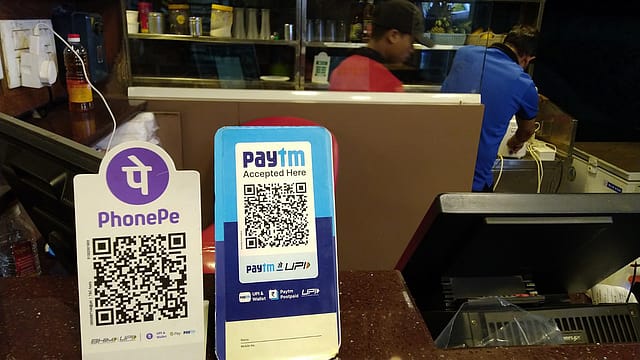
India’s financial services sector is entering an exciting phase, with PhonePe’s proposed initial public offering (IPO) being touted as one of the most closely watched fintech listings since Paytm’s market debut in 2021. Backed by marquee investors including Walmart, General Atlantic and Tiger Global, PhonePe has emerged as a household name in digital payments, driven by its leadership in the unified payments interface (UPI) ecosystem.
The digital payments major secured Sebi approval and filed an updated draft red herring prospectus (UDRHP) in January 2026. The company is reportedly targeting an IPO launch in April. The proposed issue will be entirely an offer for sale (OFS) of 5.06 crore shares by existing shareholders such as Walmart, Microsoft and Tiger Global, with no fresh capital being raised.
PhonePe is aiming to raise around ₹12,000 crore at an estimated valuation of about $15 billion (₹1.35 lakh crore). At this valuation, it would become India’s largest listed fintech company, surpassing One97 Communications, the parent of Paytm , which had a market capitalisation of around ₹76,000 crore as of February 6, 2026.
A recent Bernstein report compares PhonePe’s payments-led business model with Paytm’s broader super-app strategy, arguing that the two companies now represent “very different outcomes” within the same fintech ecosystem.
PhonePe leads on consumer scale
Bernstein noted that PhonePe remains significantly ahead in terms of consumer scale, despite having relatively limited diversification into lending and other non-payment businesses. The company commands the largest share of UPI transactions by both volume and value.
PhonePe’s monthly active customers (MACs) increased from 161 million in FY23 to 197 million in FY24, rising further to 230 million in FY25 and 238 million in the first half of FY26. In contrast, Paytm’s MAC base grew more modestly from 90 million in FY23 to 96 million in FY24, before declining sharply to 72 million in FY25 and recovering marginally to 75 million in H1 FY26.
However, the gap narrows considerably on the merchant side. Both companies have built almost identical registered merchant bases. PhonePe’s merchant count rose from 35 million in FY23 to 39 million in FY24, increasing to 45 million in FY25 and 47 million in H1 FY26. Paytm’s merchant base expanded from 34 million in FY23 to 41 million in FY24, reached 44 million in FY25, and matched PhonePe at 47 million in H1 FY26.
Diverging profitability trajectories
PhonePe has made steady progress towards profitability, supported by stable contribution margins and a sharp reduction in indirect costs. Bernstein noted that indirect costs declined from 173% of revenue to 100% in FY25, reflecting improving operating leverage.
“PhonePe’s scale in UPI payments is beginning to translate into operating leverage,” Bernstein said.
“PhonePe’s payments leadership is now delivering cost efficiencies, with incremental transaction growth coming at relatively low marginal cost,” the report added, noting that the company’s focus on payments and financial services distribution has improved revenue quality.
Bernstein also highlighted that PhonePe’s revenue scale is now comparable to Paytm’s, despite lower exposure to lending and other non-payment verticals.
“PhonePe’s ₹40,000 crore revenue in H1 FY26 is broadly comparable with that of Paytm. However, revenue classification differs between the two companies, as certain streams categorised under payments for PhonePe are recorded as market revenue for Paytm,” the report said. “Even after adjusting for these differences, Paytm continues to have a more diversified revenue mix.”
“Overall, Paytm is ahead on the monetisation and profitability journey, having recently achieved PAT breakeven,” it added.
For H1 FY26, PhonePe reported revenue from operations of ₹3,918.47 crore, with 82% derived from payments and 12% from lending and insurance distribution. The company posted a restated net loss of ₹1,444.42 crore for the six-month period, while reporting adjusted EBITDA of ₹253.91 crore. Its net worth stood at ₹9,539.02 crore as of September 30, 2025, according to its DRHP.
While PhonePe has reportedly achieved adjusted EBITDA breakeven, it remains loss-making at the profit-before-tax level. Revenue growth has also been affected by regulatory changes related to credit card-based rent payments and government restrictions on real-money gaming, segments that accounted for about 29% of revenue in FY23 but declined to around 15% in H1 FY26.
Paytm, meanwhile, reported a sharp turnaround in H1 FY26, marking its transition towards sustained profitability following regulatory challenges earlier in 2024. The company posted its first-ever consolidated net profit of ₹123 crore in Q1 FY26, followed by a second profitable quarter with a net profit of ₹21 crore in Q2 FY26, taking total H1 FY26 profit to ₹144 crore.
Revenue growth remained strong, with Paytm reporting a 28 per cent year-on-year increase to ₹1,918 crore in Q1 FY26 and a 24 per cent rise to ₹2,061 crore in Q2 FY26. Growth was driven by higher merchant subscriptions, increased gross merchandise value and expansion in financial services distribution. The company reported EBITDA of ₹214 crore, with a margin of 7 per cent, as of September 30, 2025, and maintained a cash balance of ₹13,068 crore, providing financial flexibility for future growth.
(DISCLAIMER: The views and opinions expressed by investment experts on fortuneindia.com are either their own or of their organisations, but not necessarily that of fortuneindia.com and its editorial team. Readers are advised to consult certified experts before taking investment decisions.)