
Markets this week: Indian equities face fresh tests as FPI selling, crude and US tariff risks weigh on sentiment
ADVERTISEMENT
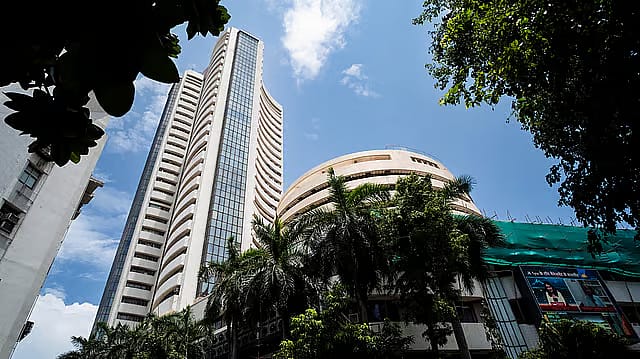
Indian equities are likely to remain volatile this week as investors weigh renewed foreign portfolio investor (FPI) selling, elevated crude oil prices, high US bond yields and fresh uncertainty over India-US trade ties. The NSE IPO listing on September 24 and a string of domestic and global economic data will add to the market’s list of near-term triggers, according to market analysts.
Markets extended their losses for a sixth consecutive week, with the truncated week ending lower as elevated crude oil prices and rising global bond yields weighed on investor sentiment. The BSE Sensex declined 0.65% to close at 74,294.46, while the Nifty fell 0.22% to settle at 23,346.40. Midcap and smallcap indices ended largely unchanged after a choppy week, following several weeks of outperformance.
FPIs have returned to selling Indian equities after briefly turning buyers in July and August. According to NSDL data, FPIs sold ₹23,676 crore through exchanges between September 1 and 19. At the same time, foreign investors continued to participate in the primary market, investing ₹2,703 crore so far this month and taking their total primary-market investment in 2026 to ₹48,550 crore.
“The trend of FPI investment through the primary market has been continuing in September also,” said V K Vijayakumar, Chief Investment Strategist at Geojit Investments. He said the divergence between the primary and secondary markets partly explains the ongoing strength of India’s IPO market despite weak equity-market performance.
FPI selling back in focus
FPI selling is emerging as a key headwind for the market. According to Bajaj Broking, FPIs were net sellers for the fifth consecutive week, offloading ₹7,620 crore during the week ended September 19. DIIs, meanwhile, remained strong buyers, with net purchases of ₹11,232 crore, cushioning the impact of foreign outflows.
For September so far, FPIs have sold ₹7,041 crore, while DIIs have bought ₹36,219 crore. The Nifty has fallen around 3% from its August-end level.
Dheeraj Gaur, Chief Investment Strategy Officer at Choice Wealth, said the latest flow data does not yet point to a meaningful turnaround in foreign selling. FPIs sold ₹3,106 crore, ₹588 crore and ₹3,164 crore in the cash market on September 15-17 before turning buyers with purchases of ₹600 crore on Friday.
“The final numbers make it clear – there’s no real turnaround yet. We need to see more green days before calling this anything other than a tough stretch,” Gaur said.
Crude, US yields remain key risks
Crude oil prices and US Treasury yields are likely to remain key macro variables for Indian equities. Brent crude had surged towards $110 a barrel last week, while the US 10-year Treasury yield remained close to the 5% mark.
Elevated oil prices pose a risk to India’s import bill, inflation, the rupee and corporate margins, while higher US yields can make emerging-market assets relatively less attractive and weigh on foreign flows.
Ajit Mishra, SVP, Research at Religare Broking, said global cues would remain important, with investors closely tracking developments in US-Iran tensions, crude oil prices and US Treasury yields. Fresh developments on tariffs could also add to market uncertainty, he said.
The US House of Representatives has passed a Russia sanctions bill that would give President Donald Trump the power to impose tariffs of up to 100% on countries purchasing Russian oil and gas, potentially affecting major importers such as India and China. The development could have implications for global trade and energy flows.
India is among the major buyers potentially exposed to the measure, although the legislation does not automatically impose such tariffs, leaving their actual implementation and scope uncertain.
On the domestic front, Mishra highlighted infrastructure output, HSBC Flash Composite PMI, manufacturing and services PMI and foreign exchange reserves data as key releases to watch during the week.
“The market is likely to remain cautious as geopolitical developments and their impact on crude oil, global bond yields and other global factors, including fresh tariff-related developments, continue to influence near-term direction,” Mishra said.
NSE listing in focus
The ₹22,562-crore NSE IPO will be another major event for the market this week, with the stock scheduled to list on September 24.
The issue was fully subscribed in two days, highlighting strong institutional demand even as foreign investors continued to sell in the secondary market. The listing will provide an early read on investor appetite for large primary-market offerings amid broader market weakness.
Domestic data, global cues to watch
On the domestic front, investors will track infrastructure output, the HSBC Flash Composite PMI, manufacturing and services PMI data and foreign-exchange reserves.
Global markets will take cues from US PMI data, Treasury yields, the dollar and developments around the US-Iran situation. The week also comes with several US economic releases, including flash manufacturing and services PMI, jobless claims, new-home sales and durable-goods orders.
“Going ahead, sustained FII selling and global headwinds are likely to keep markets volatile, though steady domestic institutional buying should continue to limit the downside,” said Pabitro Mukherjee, Deputy Vice President-Research at Bajaj Broking.
With crude, yields, geopolitics and trade risks all in play, market participants are likely to remain focused on external cues even as strong domestic institutional flows provide a counterbalance to foreign selling.
(DISCLAIMER: The views and opinions expressed by investment experts on fortuneindia.com are either their own or of their organisations, but not necessarily that of fortuneindia.com and its editorial team. Readers are advised to consult certified experts before taking investment decisions.)