
Nifty Bank Index tumbles over 3% as RBI tightens forex exposure norms; HDFC, ICICI, Axis, SBI drag
ADVERTISEMENT
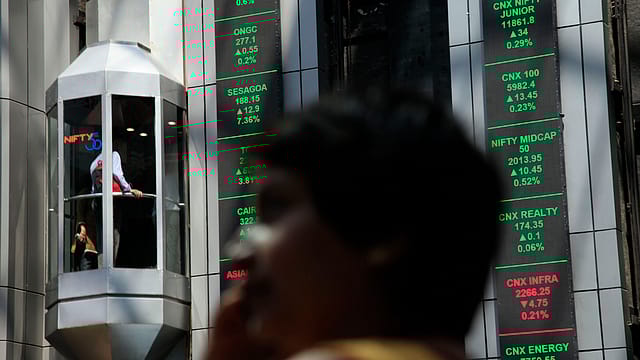
Indian benchmark indices extended their losses on Monday, with the BSE Sensex and NSE Nifty declining another 1.5% in intraday trade, dragged lower by banking and financial stocks. The sell-off comes as the conflict in West Asia entered its fifth week and Brent crude prices surged past $115 per barrel, intensifying global risk-off sentiment.
The Nifty Bank index emerged as the top sectoral laggard, plunging as much as 3.1% during the session after falling 2.67% on Friday, in line with the broader market weakness. The sharp decline was triggered by a fresh regulatory directive from the Reserve Bank of India (RBI), as investors reacted to tighter norms governing banks’ foreign exchange exposures.
RBI tightens forex exposure norms
The central bank’s directive, issued late Friday, mandates lenders to cap their net open rupee positions in the foreign exchange market at $100 million by the end of each business day, with compliance required by April 10. While the move aims to curb excessive risk-taking in currency markets and strengthen systemic stability, it has raised concerns about its near-term impact on banks’ treasury income and trading flexibility.
Market participants interpreted the measure as a constraint on banks’ ability to take large proprietary positions in the forex market - an important contributor to non-interest income.
All banking stocks in red
All 14 constituents of the Nifty Bank index traded in negative territory, led by heavyweights such as HDFC Bank , ICICI Bank , State Bank of India , and Axis Bank .
Exchange data showed that shares of HDFC Bank declined 1.8%, while ICICI Bank fell 1.5%. Axis Bank dropped 3.7%, and State Bank of India, the country’s largest lender, slipped nearly 3%.
The sell-off was even more pronounced in mid-tier and public sector banks, with IndusInd Bank, Union Bank of India, and Canara Bank falling more than 4% each. Bank of Baroda also declined nearly 4%, reflecting broad-based risk aversion across the banking space.
The RBI’s move comes at a time when banking stocks are already under pressure. The Nifty Bank index has fallen over 16% in the past month, weighed down by global risk-off sentiment, sustained foreign institutional investor (FII) outflows, and concerns over stretched valuations following a prolonged rally.
Analysts noted that while the directive is prudent from a regulatory standpoint, limiting currency risk and potential balance sheet volatility, it could weigh on profitability in the near term. Treasury operations have been a key earnings driver for several banks, especially during periods of currency volatility. A cap on open positions may reduce opportunities for forex trading gains, thereby impacting overall income.
Rupee rebounds sharply
At the same time, the move signals the RBI’s intent to maintain tighter oversight of financial market exposures amid an uncertain global backdrop. With geopolitical tensions and currency volatility rising, regulators appear keen to pre-empt systemic risks.
Following the RBI’s action, the rupee staged a sharp recovery, gaining 128 paise from its all-time low to trade at 93.57 against the US dollar in early trade on Monday. At the interbank foreign exchange market, the domestic currency opened stronger at 93.62 and extended gains to 93.57, rebounding from Friday’s record closing low of 94.85, when it had fallen 89 paise.
VK Vijayakumar, Chief Investment Strategist at Geojit Investments, said, “The unwinding of large dollar positions is aiding rupee appreciation. However, while the RBI’s move will curb excessive speculation in the futures market, it may not be sufficient to arrest currency weakness stemming from a widening trade deficit and current account deficit, driven by elevated crude prices and sustained FPI outflows.”
(DISCLAIMER: The views and opinions expressed by investment experts on fortuneindia.com are either their own or of their organisations, but not necessarily that of fortuneindia.com and its editorial team. Readers are advised to consult certified experts before taking investment decisions.)