
Retail investors’ stake in NSE-listed firms slips to 4-year low in Dec quarter
ADVERTISEMENT
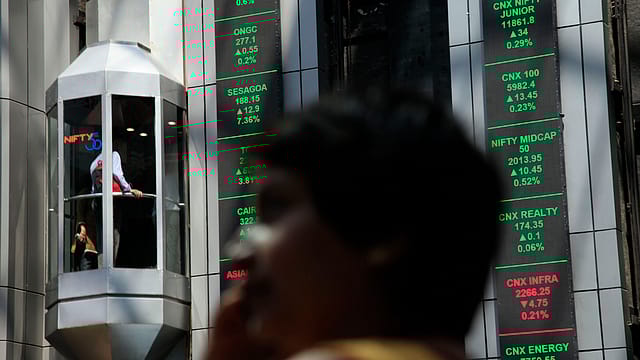
Retail investors’ ownership in NSE-listed companies declined to a four-year low in the December quarter, even as domestic mutual funds and other institutional investors continued to increase their share, as per primeinfobase.com, an initiative of PRIME Database Group.
The share of retail investors (individuals with up to ₹2 lakh shareholding in a company) fell to 7.25% as on December 31, 2025, from 7.45% at the end of the September quarter. High net worth individual (HNI) ownership also declined to 2.03% from 2.09%, taking the combined share of retail and HNI investors to a three-year low of 9.28%. Individual investors were net sellers of equities worth ₹57,404 crore during the quarter, the data showed.
In contrast, domestic mutual funds (MFs) continued to strengthen their presence in the equity market, narrowing the gap with FIIs. The difference in shareholding between MFs and FIIs declined by 24 basis points during the quarter to 5.50% as on December 31, 2025. The gap has nearly halved over the last three years from 10.51% as on December 31, 2022.
FII shareholding slips to 13-year low
The data also revealed that FII shareholding slipped to a 13-year low of 16.60% as on December 31, 2025, compared with 16.68% a quarter earlier. Mutual fund ownership rose to a fresh all-time high of 11.10%, up from 10.94%, marking the tenth consecutive quarter of increase.
According to Pranav Haldea, managing director of PRIME Database Group, the ownership balance in Indian equities is increasingly tilting towards domestic investors, reflecting the market’s growing self-reliance. He said mutual funds, supported by steady retail inflows through systematic investment plans, are likely to overtake FIIs in terms of ownership in the coming quarters.
“This trend started with demonetisation in 2016 and accelerated during Covid years. MFs, flush with retail money coming through SIPs, invested ₹1.06 lakh crore during the quarter on a net basis with FII outflows at ₹11,765 crore (outflow of ₹42,090 crore in secondary market and inflow of ₹30,325 crore in primary market) during the quarter,” he said.
According to Haldea, FIIs were for years the largest non-promoter shareholder category in the Indian market, with their investment decisions exerting a strong influence on market direction. That dynamic has now changed. DIIs, along with retail and HNI investors, are playing a strong countervailing role, with their combined share reaching an all-time high of 28% as on December 31, 2025. While FIIs remain an important constituent, their dominance over the Indian capital market has diminished.
MF investments ₹1.06 lakh crore in Dec quarter
During the December quarter, mutual funds made net investments of ₹1.06 lakh crore, while FIIs recorded net outflows of ₹11,765 crore. FII selling of ₹42,090 crore in the secondary market was partially offset by ₹30,325 crore of inflows into the primary market.
Domestic institutional investors (DIIs) also raised their shareholding to a new peak of 18.72% as on December 31, 2025, from 18.28% in the previous quarter, backed by net investments of ₹2.09 lakh crore. DIIs had overtaken FIIs in ownership terms in the quarter ended March 2025.
Besides mutual funds, insurance companies, alternative investment funds (AIFs) and portfolio management services (PMS) recorded net purchases of ₹21,490 crore, ₹367 crore and ₹1,205 crore, respectively, during the quarter, Haldea said.
Sector-wise, both DIIs and FIIs increased their exposure to financial services during the quarter, while trimming allocations to consumer discretionary stocks.
On the promoter front, private promoter shareholding edged up marginally to 40.76% from 40.73%, with net purchases of ₹22,742 crore during the quarter. However, total promoter ownership declined to a five-year low of 49.73% as on December 31, 2025, as government promoter holding fell to 8.96% from 9.28%.
Promoters, FIIs and DIIs simultaneously raised their stake in 19 companies during the quarter, including Anand Rathi Wealth, Kajaria Ceramics, JK Tyre & Industries, HEG, Ashapura Minechem, DCB Bank and Suprajit Engineering.
(DISCLAIMER: The views and opinions expressed by investment experts on fortuneindia.com are either their own or of their organisations, but not necessarily that of fortuneindia.com and its editorial team. Readers are advised to consult certified experts before taking investment decisions.)