
Sensex sinks 1,000 pts, Nifty drops 300 pts below 24,900; 703 stocks hit 52-week lows
ADVERTISEMENT
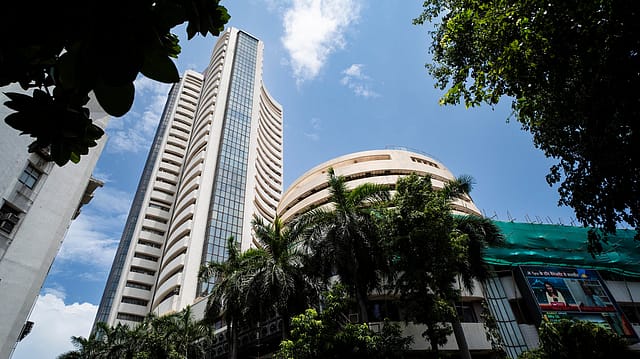
Indian equities saw sharp selling pressure in opening trade on Monday, tracking escalating geopolitical tensions in the Middle East and a spike in crude oil prices, with investors turning risk-averse amid fears of prolonged regional instability.
The BSE Sensex fell as much as 1,025 points, or 1.26%, to 80,261, while the Nifty50 declined 317 points, or 1.25%, to 24,861 level. The broader market also witnessed stress in early trade, with the midcap 100 and smallcap 100 indices dropping up to 0.8% in the first hour of trade. The total market capitalisation of BSE-listed companies dropped by around ₹3 lakh crore to ₹459.38 lakh crore.
703 stocks hit 52-week lows
Market breadth, indicating overall strength, was negative, underscoring the intensity of the sell-off amid escalating geopolitical tensions and firming crude prices. Out of 3,875 stocks traded on the BSE, as many as 2,999 declined, while only 719 advanced and 157 remained unchanged.
The stress was further evident in the number of stocks hitting their 52-week extremes. While just 58 shares touched fresh one-year highs, a sharp 703 stocks slipped to 52-week lows, signalling deep risk aversion among investors and aggressive unwinding in mid- and small-cap counters.
The sell-off was broad-based, with heavyweight stocks such as Reliance Industries , ICICI Bank , Axis Bank , Larsen & Toubro , Asian Paints and Bajaj Finance trading in the red. L&T emerged among the top losers, sliding over 4%, while Asian Paints and InterGlobe Aviation also witnessed sharp cuts.
Sectorally, most indices traded with losses. Nifty Realty fell 1.7%, Nifty Oil & Gas declined 1.8%, while auto, private bank and PSU bank indices slipped over 1% each. Metals were an outlier, with the Nifty Metal index gaining nearly 0.5%, supported by selective buying in Tata Steel and related counters.
Geopolitical tensions cloud near-term market outlook
VK Vijayakumar, Chief Investment Strategist at Geojit Investments, said uncertainty linked to the war in West Asia will loom large over markets in the near term. “The major risk from the market perspective is the energy risk arising from the surge in crude. Indications are that a sharp spike in crude by, say, 20 per cent is likely only if the Strait of Hormuz is closed, obstructing oil transport. There is no official confirmation of this yet,” he noted.
According to him, if Brent crude remains around $76 per barrel, equity markets may stay weak but are unlikely to witness a major crash. He cautioned against panic selling, saying history shows that markets tend to recover from geopolitical crises within months. “Data from crises during the last many decades tell us that an event like the present crisis will not have any impact on the market six months later. Investors should refrain from selling and watch how things evolve,” he said, advising gradual accumulation of quality stocks in domestic consumption themes such as banking, automobiles, capital goods and defence.
Echoing similar concerns, Ponmudi R, CEO of Enrich Money, said markets are poised to remain cautious as the U.S.–Iran confrontation deepens and reverberates across the Middle East. Crude prices have firmed amid escalating hostilities, while shipping activity through Iranian waters and the Strait of Hormuz has reportedly slowed due to heightened security risks.
Given that the corridor accounts for nearly a fifth of global oil flows, even temporary disruptions and rising war-risk premiums could delay trade movements across Asia, including key importers such as India and China. “For investors, the concern is less about immediate shortages and more about duration risk—how long elevated freight, insurance and energy costs persist,” he said.
The reported killing of Iran’s Supreme Leader, Ayatollah Ali Khamenei, along with senior military and intelligence officials, marks a dramatic escalation that alters the conflict calculus. Leadership decapitation increases the probability of prolonged retaliation and internal instability, making it harder for markets to price risk.
For India, elevated crude prices could inflate the import bill, widen the trade deficit and renew pressure on the rupee. Sectors reliant on imported raw materials—such as chemicals, electronics, auto components and broader manufacturing—may face margin pressures. Aviation, logistics, paints, tyres and export-oriented businesses are also vulnerable to higher freight and insurance costs.
While steady domestic institutional inflows continue to cushion foreign outflows, analysts believe the geopolitical overhang and trade-flow disruptions may keep markets volatile and range-bound, with a downside bias until clearer signs of stabilisation emerge.
(DISCLAIMER: The views and opinions expressed by investment experts on fortuneindia.com are either their own or of their organisations, but not necessarily that of fortuneindia.com and its editorial team. Readers are advised to consult certified experts before taking investment decisions.)