
After a golden year, what’s in store for gold in 2026?
ADVERTISEMENT
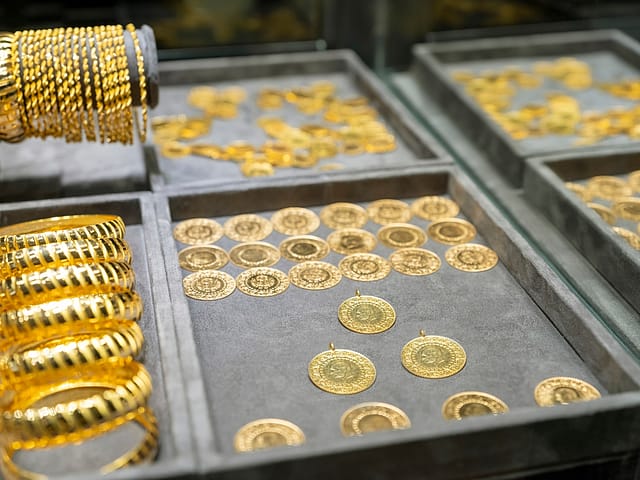
Gold delivered a record-breaking rally in 2025, generating close to 75% returns—its highest annual performance since 1979—in rupee terms. This exceptional run made it one of the best-performing asset classes last year and attracted investors into gold exchange traded funds (ETFs) in a big way. According to data from the Association of Mutual Funds in India (AMFI), as of December 2025, gold ETFs crossed 1.02 crore folios with Assets Under Management (AUM) exceeding ₹1,27,900 crore, more than double that of around 64,000 and ₹44,500 crore, respectively, recorded a year earlier. This showcases the rising demand for gold in portfolios and the increasing preference for gold-backed ETFs as a way to invest in gold.
Let’s take a step back and examine the drivers behind gold’s remarkable rise, which continue to support its relevance.
The global environment has been marked by heightened macroeconomic uncertainty following the U.S.’s decision to increase import tariffs in January 2025. These measures have upended established trade flows, increased uncertainty around global commerce, and pushed up input prices. Such conditions have reinforced gold’s appeal as a hedge against uncertainty and inflation.
Geopolitical tensions across Europe, the Middle East, and South America have disrupted global peace and stability, increased investor risk aversion, and drawn flows toward safe-haven assets such as gold. At the same time, sanctions and the increasing leverage of the dollar in international policy have encouraged global central banks to diversify their foreign exchange reserves. This shift has been a strong structural driver of gold, with central bank purchases totaling around 634 tonnes through the third quarter of CY25, according to data from the World Gold Council.
From an opportunity cost perspective, the conditions are favourable for gold. With U.S. inflation easing and signs of weakness in labour markets, the Federal Reserve cut U.S. interest rates by 75 basis points in 2025. Lower interest rates bode well for non-yielding assets like gold. These rate cuts, along with concerns of rising U.S. debt levels, fiscal policy uncertainty, and tariff-driven disruptions, have weighed on the dollar index, which moved from close to 110 at the start of the year to roughly 98 by 2025-end. A weaker dollar is price-accretive for gold.
Concerns about a potential Artificial Intelligence (AI)-led equity bubble in the U.S. markets and possible spillover effects in global markets have prompted investors to diversify into gold. In India, broader stock markets saw negative to flat returns in 2025, further encouraging portfolio diversification. Gold’s strong momentum has, in turn, attracted additional flows, reinforcing performance.
This combination of macroeconomic uncertainty, geopolitical risk, lower opportunity costs, stock market volatility, and price momentum, which has contributed to a particularly supportive environment for gold. Such conditions are commonly associated with a constructive, medium-term backdrop for the metal. Periodic price corrections may occur, and historically these phases have often been viewed by long-term investors as potential accumulation opportunities.
With domestic prices currently hovering around ₹1,40,000 per 10 grams of 24-carat gold, physical ownership has become increasingly expensive for many investors. Gold ETFs help address this challenge. Typically, each unit of a Gold ETF represents 0.01 grams of gold, making it possible to invest in smaller lots with smaller amounts.
Gold ETFs, being backed by physical gold, closely track gold prices. The returns are then passed on to investors after deducting costs. Unlike physical gold, which is often associated with purity concerns and opaque pricing, gold ETFs assure investment in 24-carat gold. ETF unit prices are determined in a real-time, transparent manner on the exchanges where ETF units are listed. These instruments offer T+1 liquidity to investors with a few clicks and are regulated by the Securities and Exchange Board of India (Sebi).
Given the expected volatility in equity markets going forward and gold’s negative correlation with equities, gold ETFs may serve as a portfolio diversifier. A staggered or phased approach to building exposure can help manage timing risks in volatile markets. A 10-15% exposure to gold can help improve risk-adjusted returns and enhance portfolio diversification in an increasingly uncertain world, subject to the investor’s goals and risk profile.
(The author is principal-investment strategy, ICICI Prudential AMC. Views are personal.)