
Analysing luxury watches as an asset class
ADVERTISEMENT
When we discuss about investments in various asset classes. Who comes to mind? It’s Warren Buffet, isn’t it? His two golden rules that are carved on the annals of investments management are:
Rule No. 1: Never lose money.
Rule No. 2: Never forget Rule No. 1.
His value investing philosophy could be conservative but is precious and timeless. You can’t ‘lose to grow’. You can only ‘gain to grow’. Selection of an asset class depends on a retail investor’s financial goal, risk appetite, and investment horizon.
As a country we are in the middle-income trap aiming to escape it by 2047 with a ‘Viksit Bharat’ objective. Can retail investments in new asset classes help this cause? To an extent, yes. This would contribute to social mobility and shift the economy from being investment-driven to more innovation driven. The World Bank suggests that economies in the middle-income trap must encourage financial literacy, wealth creation among all sections of society, and investments in various asset classes. This will propel investment, infusion and innovation, which could lead nations to escape the trap quicker.
Today, financial literacy and subsequent retail investments in diversified asset classes is not an option. It’s a necessity to promote economic growth and per capita income. Some of the traditional asset classes like gold, real estate, fixed deposits, government bonds, public provident fund, corporate bonds, equities, debt instruments, mutual funds, SIP, and National Saving Certificates have been widely popular among Indians for quite some decades now. New asset classes such as real estate investment trusts (REIT), Specialised Investment Funds (SIF), and alternative investment funds are gaining traction. According to the Reserve Bank of India’s latest annual report, net financial savings in FY24 climbed to 5.1% of the gross national disposable income (GNDI) vis-à-vis 4.9% in the previous fiscal.
The relative share of investment in financial assets has grown as against the growth in real estate in recent years. According to RBI estimates, the relative share now stands at 70:30 in favour of real estate investments. There seems to have been a cultural shift towards investments in financial assets among Indian post Covid-19.
At a recent CEO talks event organised by the Birla Institute of Management Technology (BIMTECH), Swarup Mohanty, Vice Chairman & CEO of Mirae Asset Investment Managers (India), highlighted how the expansion of technology after Covid-19 has had a very positive impact on the financial investment culture in the country. According to him, with the country poised to become the third-largest economy by 2030, investment in capital markets could be one of the most effective ways to contribute to the growth of the economy.
In this context, we also need to appreciate ‘risk aversion’ as a moderate cultural trait among Indians. Therefore, the goal of our retail investors has always been to maximise financial returns with reduced or moderate risks.
Now, let’s examine investing in luxury watches, which is growing as an emerging asset class globally. The global pre-loved market—which stood at $24.38 billion in 2023—is projected to reach $45.01 billion by 2030, says Grand View Research. It further says that the Indian pre-owned luxury watches market, which stood at $405.3 million in 2023, is projected to reach $861.8 million by 2030 with a CAGR of 11.4%. In fact, Tier II and III cities in India are witnessing a significant growth in the pre-loved luxury watch market. According to Gopal Asthana, CEO of Tata CLiQ, sales of luxury watches have nearly doubled.
According to a 2024 Deloitte survey, consumers buy pre-loved luxury watches for reasons as shown below:

A larger 54% of pre-owned consumers are therefore ready to pay a significantly higher price to buy their desired watch. No wonder that it is emerging as a new asset class.
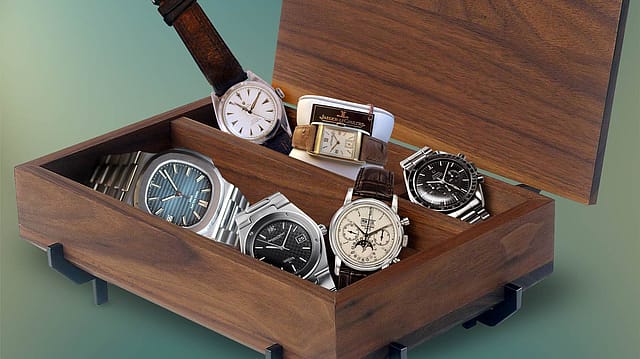
Swiss luxury watches are sought after all over the world. Key references that have universal demand are Patek Philippe Nautilus and Aquanaut collections, Audemars Piguet Royal Oak, Rolex Daytona and Submariner, Omega Speedmaster and Seamaster. For women, some of the most sought after brands include Cartier, Bulgari, Patek Philippe, Jaeger-LeCoultre, Breguet, and Omega.
Though return on investment (RoI) in luxury watches has cooled in the last two to three years, yet the promise of a bounce-back is very high if we dig into history. According to a BCG report, key models from Patek Philippe, Rolex and Audemars Piguet exhibited a 20% return YoY between 2018 and 2022. According to Knight Frank, the projected value of a $1 million investment made in 2005 across the weighted basket of assets in the overall Knight Frank Luxury Investment Index (KFLII) would be $5.4 million by the end of 2024.
According to industry insights and various luxury reports, the average returns are between 5% and 9% while some key models from Rolex, Patek , Richard Mille and Audemars Piguet give high returns varying between 10% and 30%.
The graph below shows the global evolution of different asset classes between 2019 to 2024.
Leaving aside some high-end models of marquee brands, the average healthy financial RoI may not be higher than equities, yet the benefits of diversifying the individual wealth portfolio are many.
There is no possible asset class which grows in value with progressive use of the product except perhaps high-end real estate. Some top-end luxury watch models escape the law of diminishing marginal utility. Apart from the tangible economic value, this asset class also provides an intangible perception of status. It’s also the most stable asset class over a long-term horizon. According to industry experts and luxury watch retailers, the pre-owned price of some key models has never depreciated in the past 50 years. So, stability mitigates risk.
The other big benefit is that the value of a luxury watch is not co-related to economic scare, recessions, or pandemics. It is not linked to the stock markets. In fact, in 2021-2022, during the pandemic, the value of luxury watches fell by an estimated 8%, say experts, compared to a fall of 19% in the S&P 500. This asset class is therefore highly resilient. Liquidity is also very high in case of luxury watches, considering the scarcity and rarity value of the high-end models.
The value of luxury watches grows with scarcity, rarity, and exclusivity. This is an emerging asset class that offers vintage value, healthy returns, reduced risks, safety, high liquidity. However, one must get in touch with credible luxury and fashion experts and consultants to seek their advice on which brands and models to focus on and where to buy them, so as to safeguard authenticity and build trust.
(The author, a Professor at the Birla Institute of Management Technology (BIMTECH), Knowledge Park 2, Greater Noida, is a former business head-India of Swatch & CK (W+J). He is also the author of the book, The Luxe Dip – A Glimpse into the Basics of Luxury. Views are personal.)