
Budget 2026: Expectations of the renewable energy industry
ADVERTISEMENT
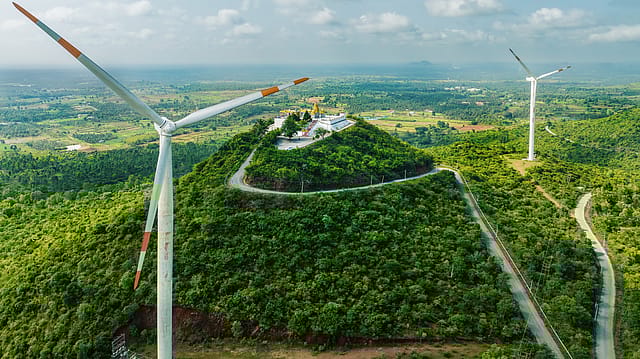
Renewable energy in India continues on a strong growth trajectory, supported by focussed policy, regulatory and fiscal initiatives of the Government of India. The sector is steadily progressing towards achieving national green energy and net-zero goals and the industry deeply appreciates the government’s sustained commitment across generation, transmission, and manufacturing in this industry.
For Union Budget 2026, the renewable energy industry expects continued policy momentum along with targeted strategic interventions to enable long-term self-sufficiency, cost competitiveness, and energy security across the entire green energy value chain.
Here are the key expectations of the industry from the upcoming Budget:
1. Focus on in-house technology and equipment development
The government should place strong emphasis on in-house development of cutting-edge solar technologies, enabling India to achieve self-reliance in a shorter timeframe and indigenise next-generation technologies.
In addition to this critical aspect, solar, cell and module manufacturing equipment should be brought under the PLI framework. This support may subsequently be extended in a phased and structured manner to wafer and ingot manufacturing equipment. India already possesses strong equipment manufacturing capabilities across multiple industrial sectors. Leveraging these capabilities, coupled with indigenous technology development, can rapidly position India as a globally competitive and self-reliant solar manufacturing hub.
2. Clarity on delayed PPAs and PSAs
As of January 2026, over 45 GW of renewable energy capacity in India is facing large delays in signing Power Purchase Agreements (PPAs) and Power Sale Agreements (PSAs), with developers. This uncertainty has raised serious concerns among investors and lenders. The industry requests the government to provide clear confirmation in the Budget that these PPAs and PSAs will be signed expeditiously. Such assurance will significantly improve sectoral sentiments and catalyse increased inflows of both equity and debt into India’s renewable energy sector.
3. Strengthening green transmission infrastructure
The industry appreciates the increased budgetary allocation and policy focus on green energy corridors. Continued emphasis with higher allocations and faster execution is critical to ensure timely grid connectivity for upcoming renewable capacity.
Additionally, procedures and guidelines at the state level for grid connectivity and charging infrastructure should be further streamlined to ensure faster approvals, seamless evacuation, and immediate power injection upon physical commissioning of projects.
4. PLI for BESS manufacturing
“Solar and BESS manufacturing” to be re-categorised into “Infrastructure” category of RBI for ease of financing and re-financing. A dedicated PLI scheme for BESS manufacturing—similar
to solar—should be introduced, encouraging local integration of components such as containers, HVAC systems, cabling, Fire-fighting systems. Only lithium-ion cells, which are currently not manufactured at scale in India, should be permitted for import under this scheme.
5. Approved list of BESS integrators (ALBI)
An approved list of BESS integrators, on the lines of ALMM for solar modules, should be introduced. This will ensure grid-connected BESS assets meet quality and safety standards, minimise systemic risks to the electricity grid and improve investor and lender confidence.
6. Lower cost of capital and priority sector lending
India is estimated to require $200+ billion in investments by 2030 to meet its clean energy targets. Access to competitively priced capital will be critical. The industry requests the inclusion of renewable energy projects under Priority Sector Lending and re-introduction of lower TDS rates on interest for ECBs and rupee-denominated bonds. These measures will materially reduce financing costs and accelerate project deployment.
7. Extension of ALMM for solar cells
Considering manufacturing of solar cells in the country is still picking up and with an increasing demand for solar cells and supply demand mismatch, the government should consider exceeding its target to introduce ALCM for cells for a further period of two years.
8. Extension of ISTS waiver
Interstate charges on power transmission through ISTS connectivity are waived till 2025. This should be further extended over the next five years to give a steeper boost to C&I segment which has large ISTS opportunities.
9. Concessional corporate tax rate for manufacturing
The concessional 15% income tax rate for new manufacturing entities in the renewable energy sector should be reintroduced in Budget 2026 and to be extended for a minimum of five years.
10. Exclusion from deemed dividend tax
Renewable energy companies should be excluded from deemed dividend tax provisions in cases where loans or advances are provided by SPVs to shareholders. This will enable optimal capital utilisation within project groups.
11. Reduction of GST on BESS
Lower GST on BESS and related products from existing 18% to 5%. BESS enables grid stability and allows more RE to be integrated into the grid. Lower GST will accelerate adoption, encourage domestic manufacturing, support job creation, exports, and emissions reduction.
12. GST exemption on corporate guarantees
Exemption of GST on Corporate Guarantee for renewable energy companies wherein Corporate Guarantee is provided by Holding Company to lenders in respect of funding obtained by SPVs.
(The author is Executive Director and CFO, AMPIN Energy Transition. Views are personal.)