
Budget 2026 is India’s opportunity to prioritise customs reforms to be a reliable global trading partner
ADVERTISEMENT
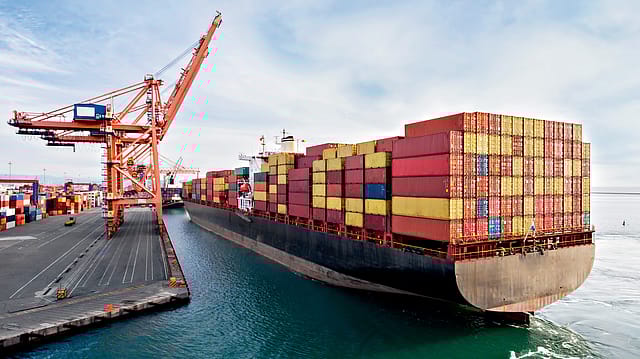
The global economy has entered a phase in which volatility is no longer episodic but structural. Supply chains continue to be reshaped by geopolitical realignments and geoeconomic fragmentation is exerting sustained pressure on growth trajectories. Economic decisions are no longer driven primarily by marginal cost advantages, but by whether a jurisdiction offers regulatory continuity, enforceable rules, and predictable state behaviour.
As India positions itself for deeper integration into global trade, customs administration has assumed significant strategic importance. At a time when several economies are leaning towards ad-hoc trade interventions, India’s ability to anchor economic decision-making by offering regulatory certainty and ease of doing business becomes critical. Notably, finance minister Nirmala Sitharaman, on December 6, 2025, announced that a comprehensive overhaul of India’s customs framework would be the “next big reform”.
This is the significant policy signal. Over the past few years, there have been several trade facilitation initiatives. Yet, evolving trade patterns, rising compliance costs, and persistent procedural bottlenecks did warrant the next phase of customs reforms. Some of the anticipated measures could be around the following areas:
1. India’s export control & licence approval framework: It would benefit from closer alignment with global regimes. In high-technology trade, regulatory delays frequently result in commercial displacement. Measures such as deemed approvals for low-risk exporters, clearer treatment of intangible technology transfers, digitally verifiable end-use certification, and expanded general authorisations for inter-company transfers can reduce friction while preserving legitimate security objectives.
2. Authorised Economic Operator (AEO) programme: It requires recalibration. Conceived as a trust-based facilitation tool, its effectiveness has been diluted by inconsistent interpretation and delays. Introducing statutory timelines for disposal, providing for provisional continuation of benefits during renewal, and issuing uniform guidance on the treatment of pending disputes would help restore confidence in the programme. The time is ripe for an AEO 2.0 program.
3. Digital interface for structured stakeholder consultation mechanisms: As India expands its free trade agreement network, structured stakeholder consultation mechanisms using a digital interface would allow industry to
identify problematic tariff lines, regulatory barriers in partner jurisdictions, and compliance burdens arising from sanitary, phytosanitary, and technical standards.
4. Single-window compliance: The promise of single-window compliance remains a key ask. Multiple regulators continue to issue overlapping non-tariff measures, resulting in a fragmented compliance landscape. Considering that Section 11(3) of the Customs Act already provides a framework for consolidation, it is necessary to operationalise this provision through a comprehensive notification.
5. DRI guidelines: Issuance of guidelines for the Directorate of Revenue Intelligence (DRI) for handling pure commercial cases (non-smuggling and narcotics, etc.,). While DRI plays a crucial role in protecting revenue, clearer guidelines for handling purely commercial customs matters would further improve predictability. Introducing structured, DGGI-style norms with defined scope and timelines would help distinguish routine trade disputes from serious offences and reduce uncertainty for compliant businesses.
6. Special valuation branch process: The special valuation branch process, which applies to related party imports, merits rationalisation. Prolonged provisional assessments and open-ended investigations create uncertainty and block working capital. A risk-based approach, under which only genuinely complex cases are referred, and routine related-party transactions are cleared through post-clearance audit, would significantly enhance predictability without diluting oversight.
Finally, as recently observed in GST 2.0 reforms, tariff rationalisation and simplification are not merely a technical tax reform but a strategic economic intervention. By simplifying duty structures, correcting distortions, and aligning tariffs with its policy objectives, India can not only strengthen its manufacturing base but also enhance economic competitiveness. Thus, a tariff rationalisation will be a cornerstone of any meaningful customs reform agenda.
As India navigates an age of sustained global volatility and shifting economic alliances, customs reforms will play a defining role in shaping economic resilience. The Union Budget presents an opportunity to modernise customs procedures, strengthen institutional capacity, and consolidate compliance pathways, thereby positioning India as a reliable and efficient trading partner in the global economy.
(Jaising is partner and indirect tax leader; Shah is director; and Kushe is assistant manager at Deloitte India. Views are personal.)