
Building India’s logistics growth story with women at the centre
ADVERTISEMENT
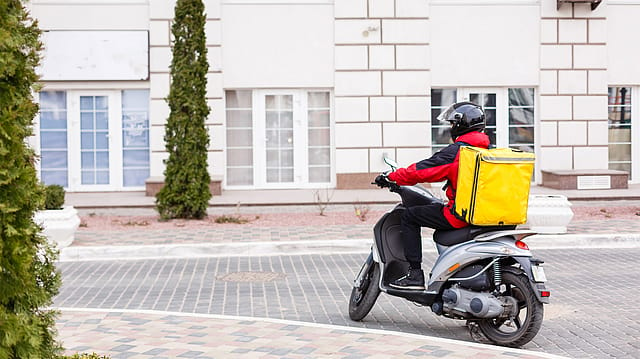
Every day across India, women are entering parts of the urban workforce where they were once almost entirely absent. Some are navigating city streets on two-wheelers for the first time. Some are learning to use digital maps independently. Some are balancing delivery shifts between college classes or caregiving responsibilities. For years, delivery and logistics work was rarely imagined as a livelihood opportunity for women, but today, that perception is slowly beginning to change. This shift is not happening through one dramatic moment, but through thousands of individual journeys unfolding quietly across our cities every day.
Take Jyoti Goswami from Ahmedabad. Before becoming a delivery partner, Jyoti worked as a caretaker at a homeless shelter while helping support her family alongside her mother, who runs a small tea stall. Because the family did not own a vehicle, her everyday mobility depended entirely on someone else being available to help.
Things began changing when she enrolled in Zomato’s Women Riding Initiative in 2025. In just eight days, she learnt to ride an electric two-wheeler independently and soon after, she began delivering orders across the city on a rental EV.
Today, Jyoti contributes to her family’s earnings, manages errands for her mother’s tea stall herself, and is slowly saving towards her dream of opening a small restaurant one day. But perhaps the biggest transformation has been less visible: it lies in the sheer confidence that comes from learning to navigate the city independently, managing her own schedule, and occupying public spaces with greater ease and assurance.
Stories like Jyoti’s reveal that the shift towards women’s participation in urban last-mile logistics is deeply personal, not just economic. The ability to move independently through a city, earn on flexible schedules, and manage responsibilities on one’s own terms can fundamentally reshape how women experience both work and everyday life.
Unlike many conventional roles, roles in urban last-mile logistics can often accommodate the realities of women’s daily lives more flexibly. Some women work for a few hours between personal commitments. Some prefer operating within neighbourhoods familiar to them. Others value the ability to step away temporarily and return again without navigating rigid workplace structures.
Yet despite these possibilities, women continue to remain underrepresented, occupying only 1-5% of roles across much of the logistics ecosystem including urban last-mile logistics. For many, participation is shaped less by one large obstacle and more by the accumulation of several smaller frictions. Delivery work is still seen as something only men do and families often worry about women travelling independently across cities or interacting constantly with strangers in unfamiliar public environments. Often, before a woman herself decides whether she can participate, the ecosystem around her has already decided whether the role is socially acceptable.
Changing this perception is critical to expanding participation.
The visibility of women participating confidently across roles in urban last-mile logistics whether as delivery partners, warehouse workers, or micro-fulfillment centre workers has the power to gradually normalise the sector for more women and their families. Awareness campaigns, community engagement, and stronger representation can all help shift the narrative from ‘unconventional’ to ‘aspirational’.
But social acceptance alone is not enough.
Independent mobility and digital familiarity remain uneven; for example, men remain 13.7 percentage points more likely than women to carry out UPI transactions, according to a 2025 study by Ashoka University’s Centre for Economic Data and Analysis. Something as routine as using navigation systems, managing app-based workflows, or handling digital payments can feel intimidating for first-time female workers. This is where initiatives like two-wheeler riding training, digital literacy support, and financing assistance become critical to reducing entry barriers. Beyond just technical skills, these supportive onboarding environments create a safe space for women to ask questions, learn gradually, and build confidence.
Furthermore, the perception of safety influences decision-making at every stage. Features such as SOS support, emergency helplines, rest points, and the ability to choose preferred operating areas are essential. But safety and comfort are ultimately determined by the cumulative effect of thoughtful features and considerations embedded into platform design and made available by the broader ecosystem.
Well-lit streets, reliable public transport, clean public washrooms, safe waiting spaces, and access to drinking water are not special accommodations for women, they are fundamental civic infrastructure that every citizen deserves. Women need these facilities not because they are women, but because they are citizens, workers, and taxpayers navigating cities that have historically been designed around male patterns of movement and work.
Yet, when these basics are missing, women often bear the highest cost of that absence. Something as simple as access to clean public toilets can determine whether women feel comfortable spending long hours navigating public spaces. In fact, 64.4% of women reported controlling bladder usage and reducing water intake daily because of inadequate access to toilets, says a 2019 report by ActionAid India. Everyday infrastructure conditions shape not just comfort, but also dignity, participation, and continuity in urban life.
Recognising some of these realities, we aimed at creating dedicated rest points for delivery partners between deliveries. Today, through collaborations with restaurant partners, delivery partners have access to over 3,500 rest points across India, offering water, shade, seating and washroom facilities. To expand this network, strategic collaborations with TVS and Shell have unlocked additional rest points at select service stations and fuel pumps. Designed to support the broader gig economy, these rest points are entirely platform agnostic and accessible to delivery partners across all platforms, regardless of their association with the platform.
Similar rest point models have since emerged across parts of the ecosystem, including government-led gig worker rest spaces in Tamil Nadu.
Improving women’s participation in urban last-mile logistics is not just about increasing representation within a single sector; it is about building cities that are responsive to how women experience mobility, safety, and public spaces. For women like Jyoti, this shift is about becoming comfortable navigating public spaces independently and participating more visibly in the economic life of cities.
The entire ecosystem including policymakers, urban local bodies, competing platforms, and community leaders, must collaborate to design infrastructure, policies, and training programmes that actively dismantle these everyday frictions. When we build inclusive ecosystems, we do not just reshape the future of urban logistics; we unlock a more inclusive, resilient, and thriving economy for everyone.
(The author is Chief Sustainability Officer, Eternal Group. Views are personal.)