
From resilience to scale: The next chapter of India’s MSME story
ADVERTISEMENT
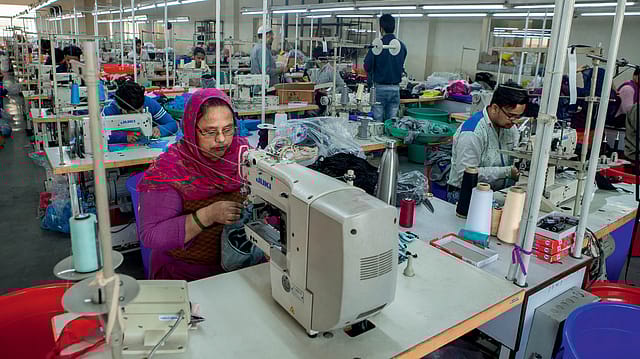
India’s MSME sector stands at a defining moment. For decades, these enterprises have demonstrated remarkable resilience withstanding economic cycles, supply chain disruptions, and evolving market dynamics while continuing to generate employment, foster entrepreneurship, and drive inclusive economic growth. Today, however, the conversation is no longer merely about resilience. It is about scale, competitiveness and preparing Indian businesses to become an integral part of global value chains.
India’s MSME sector has evolved into one of the strongest pillars of the nation’s economy. Today, the sector contributes over 31% of India’s GDP, accounts for nearly 49% of the country’s exports, generates around 35% of manufacturing output, and supports the livelihoods of more than 32 crore people through over 7.4 crore enterprises. These figures reflect not merely the scale of the sector but its central role in India's vision of becoming a developed nation by 2047.
Growth Amid Global Uncertainty
India’s MSME sector has demonstrated remarkable resilience in the face of geopolitical uncertainties, supply chain disruptions and volatile commodity prices. Despite these global headwinds, India’s strong economic fundamentals and supportive policy measures have enabled businesses to sustain growth and continue investing with confidence.
Timely government interventions, including enhanced access to institutional credit through initiatives such as the Emergency Credit Line Guarantee Scheme (ECLGS), helped enterprises navigate challenging periods and strengthen business continuity. As the economic landscape stabilises, the focus is naturally shifting from resilience to scale. The next phase of growth will be driven by greater formalisation, technology adoption, productivity and stronger integration into global value chains.
An Enabling Policy Environment
Over the past few years, the Government of India has introduced several reforms aimed at making MSMEs more competitive, formalised and financially empowered. The revision of MSME classification limits in Union Budget 2025 has removed a long-standing growth barrier, allowing enterprises to expand operations without immediately losing policy benefits. Similarly, the enhancement of the Credit Guarantee Scheme, increased credit guarantee cover, customised credit cards for micro enterprises, and continued support through initiatives such as Udyam Registration, the Prime Minister’s Employment Generation Programme (PMEGP), the Credit Guarantee Fund Trust for Micro and Small Enterprises (CGTMSE) framework, and PM Vishwakarma have significantly strengthened access to institutional finance.
While policy creates the enabling environment, access to timely and responsible finance remains the catalyst that allows businesses to realise their aspirations. We are witnessing this transformation first hand. Entrepreneurs today are no longer approaching banks solely for working capital requirements. Increasingly, they are seeking financing for capacity expansion, automation, technology adoption, modern equipment and business diversification. This reflects growing confidence among India's MSMEs and their ambition to compete on a much larger scale.
As a bank deeply rooted in semi-urban and rural India, we understand that every MSME is unique. Beyond providing credit, relationship banking plays a crucial role in understanding local businesses, seasonal cash flows and regional opportunities, enabling entrepreneurs to make informed growth decisions.
India’s Global Opportunity
The external environment continues to present both opportunities and challenges. Geopolitical uncertainties, supply chain realignments and fluctuating commodity prices have reinforced the importance of building resilient businesses. At the same time, these developments have positioned India as an increasingly preferred manufacturing and sourcing destination.
Trade agreements such as the India-EFTA Trade and Economic Partnership Agreement and the recently concluded India-UK Comprehensive Economic and Trade Agreement are expected to create new opportunities for Indian exporters and manufacturers. For MSMEs, this represents a significant opportunity to expand beyond domestic markets and integrate with global supply chains.
However, global competitiveness requires more than market access. It demands investments in quality, technology, sustainability, governance and financial discipline. This is where financial institutions have an important role not merely as lenders, but as long-term partners in enterprise development.
The Road Ahead
India’s next decade of growth will not be shaped solely by large corporations. It will increasingly be driven by millions of entrepreneurs building businesses across villages, towns and emerging cities. Their ability to innovate, create employment and strengthen local economies will define India’s economic trajectory.
As lenders, policymakers and industry stakeholders, our collective responsibility extends beyond financing businesses. We must build an ecosystem that encourages entrepreneurship, rewards innovation and enables enterprises to scale sustainably. We remain committed to this vision. By combining responsible lending with deep local relationships and an understanding of the evolving needs of MSMEs, we aspire to be a trusted partner in their growth journey.
When India’s MSMEs grow, India’s economy grows with them. The next chapter of India’s growth story will undoubtedly be written by its entrepreneurs, and it is our collective responsibility to ensure they have every opportunity to succeed.
(The author is Managing Director & CEO, Capital Small Finance Bank. Views are personal)