
From workspaces to experiences: Why hospitality will shape the future of flex offices
ADVERTISEMENT
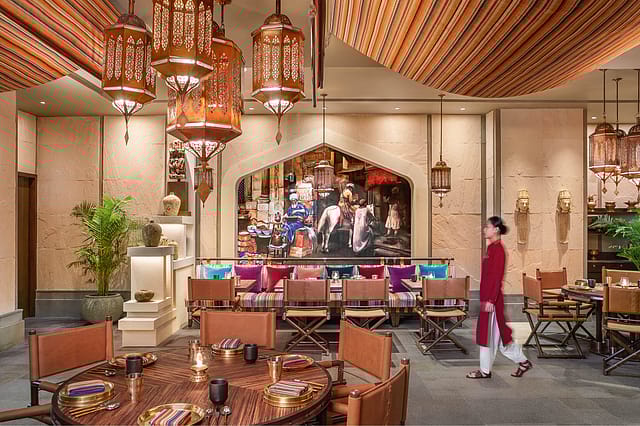
For most organisations today, and very likely tomorrow, the central challenge is talent. The competition is no longer just for headcount, but for high‑quality talent that can adapt, innovate and stay. The work of retaining these people, embedding culture in a hybrid world and converting all of this into performance is becoming harder, not easier. All roads eventually lead to one question: are we creating conditions in which our best people can do their best work?
In that context, the office is no longer a static asset or a line item on the P&L. It has become part of an organisation’s talent and culture infrastructure. Decisions about where and how people work now directly influence who we can hire, how quickly teams become productive and whether high performers choose to stay. The workplace has moved from being a facilities issue to being a strategic one.
This is where flexible offices, what we broadly call “flex”, have come into focus. The flex office was originally defined by its pragmatism: shorter leases, plug‑and‑play infrastructure and the ability to expand or contract without heavy capital commitments. That value proposition still matters. But as the talent agenda has become more complex, flex is increasingly being judged on something deeper: how well it supports the human side of performance, experience, culture, focus and collaboration. The most resilient flex businesses of the next decade will not just be space providers, but operating platforms with a house of brands and the daily craft of keeping people productive at scale.
The best workplaces are no longer distinguished only by location or design. They stand out because of how intuitively they function for the people who use them every day. Workplace experience now spans far more than interiors. It includes seamless technology, operational reliability, responsive service, thoughtful spatial interactions and respect for cultural nuances. When these elements are well‑orchestrated, they influence productivity, collaboration, retention and, ultimately, business outcomes as directly as compensation or policy.
This is where hospitality offers more than a convenient analogy. It offers a proven operating logic.
Long before “experience” became a buzzword in real estate, hotels learnt how to serve very different customer cohorts, business travellers, families, long‑stay guests, luxury seekers, often under the same brand umbrella, without asking the guest to manage that complexity.
In a well‑run hotel, a family and a corporate traveller can occupy adjacent rooms and yet have entirely different experiences designed around their needs. The public spaces may look similar, but what happens behind the scenes, room allocation, housekeeping schedules, food and beverage options, loyalty benefits, late checkout, children’s amenities, is tailored to each, using a combination of process, technology and service design. The guest simply experiences a stay that “just works” for what she is there to do.
The future of the office is moving in the same direction. A startup founder, a mid‑career professional in a growth‑stage company and a senior leader in a Global Capability Centre all “check in” to the office for different reasons. One may seek energy and access to community, another stability and clear routines, a third control, privacy and enterprise‑grade security. If talent is the constraint, then the workspace has to function like a well‑run hotel: different needs quietly met, different journeys supported, with the complexity absorbed by the operator, not the user.
For a long time, flex was primarily a clever real‑estate solution: a way to scale up or down, avoid long tenures and access prime locations without the burden of ownership. That logic still holds, especially in markets as dynamic as India. What has changed is who is taking the decision and what they are optimising for. CEOs, CHROs and business leaders are now active stakeholders because they recognise that the office directly shapes hiring, retention, culture and performance.
Employee expectations, in turn, are being shaped less by traditional corporate offices and more by the standards they experience in hospitality, retail and consumer technology. In that world, every touchpoint becomes part of the workplace architecture: air quality, responsiveness of service teams, reliability of technology, wayfinding, meeting‑room experience, noise levels and even the tone of front‑of‑house interactions. Over time, consistently delivered signals of this kind build something that is difficult to win and easy to lose: trust.
Hospitality has treated these variables as core business levers for decades. It understands that comfort, intuitiveness and care are not indulgences; they have a direct bearing on loyalty, repeat business and behaviour. Workplaces are now beginning to internalise the same logic.
The so‑called “hotelisation” of offices is often misunderstood as a design trend—add a café bar, softer lighting or a lounge and the job is done. In reality, it is an operating model.
At its core, this model demands that every interaction feel seamless, every process minimises friction and every experience be repeatable across locations and over time. The office ceases to be just a container for work and becomes an experience designed around how people actually work. In a well‑run hotel, the guest rarely has to think about the building; their energy is directed to the reason they are there. The best workspaces are moving in the same direction: anticipating needs before they escalate into problems and removing obstacles that hinder focus, collaboration or client engagement.
That shift is easy to articulate but difficult to execute, requiring a fundamentally different operating model. It calls for service teams that can host and problem-solve, technology that quietly removes friction, workplace design driven by utilisation and behaviour insights, and consistency in operations.
In hospitality, experience and operations cannot be separated; the quality of the experience is a direct function of how well the environment is run behind the scenes. Flexible workspaces are increasingly being held to the same standard. Over time, consistency of experience becomes the real moat.
The real test of this model, however, is whether it can scale across very different customer needs.
A startup, a mid‑sized company and a large enterprise are not solving for the same outcomes. Early‑stage teams want energy, speed and access to networks. Mid‑sized firms look for stability, room to grow and minimal disruption. Large enterprises and Global Capability Centres prioritise control, security, compliance and cultural alignment. A single, undifferentiated format will inevitably compromise one or more of these priorities.
This is why flex is steadily moving away from a one‑size‑fits‑all product towards a portfolio of workplace models built around distinct customer cohorts but supported by the same operational backbone. That backbone, common standards in technology, service, governance and brand integrity, allows operators to serve different work styles and price points while maintaining consistency in delivery.
If hospitality provides the philosophy, personalisation is its most powerful expression in flex.
Personalisation, in this context, is less about superficial customisation and more about understanding how a client works and designing the environment around that reality. It shows up in the mix of spaces, the rhythms of service, the way technology is configured and the kinds of interactions that are curated. It is also about culture, how the workspace reinforces the behaviours the organisation expects from its teams.
The flex industry has already demonstrated that flexibility can reshape how commercial real estate is consumed. The next phase will be defined by who can operationalise experience with the same rigour: measuring it, managing it and scaling it without losing quality. In that sense, the real future of the office sits at the intersection of three forces: the battle for talent, the rise of flex as the dominant consumption model, and the operational discipline of hospitality. The organisations—and operators—that learn to blend these will have a quiet but decisive advantage in the contest that matters most: attracting, aligning and retaining the people who drive performance.
(The author is CEO, 91Springboard. Views are personal.)