
Hawkish Fed and fragile West Asia peace set the stage for gold volatility
ADVERTISEMENT
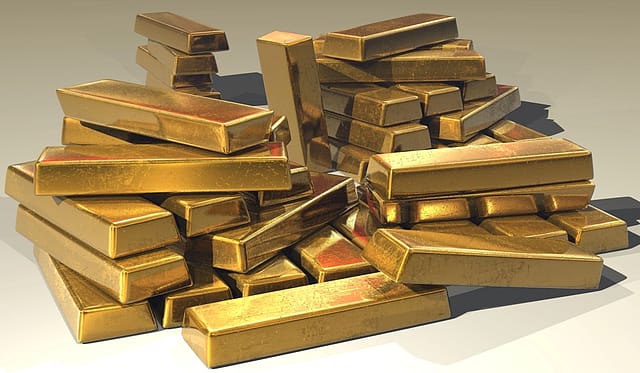
Gold prices remained under pressure in June, with international spot gold falling more than 7% and marking a fourth consecutive monthly decline. Prices are now about 25% below the record highs reached earlier this year as investors reassess their outlook for inflation, interest rates, and global economic growth. In India, however, the decline has been relatively smaller as MCX Gold is currently down around 4% in June and about 17% from its all-time high, due to the government's recent increase in gold import duty and a weaker rupee.
The recent weakness is attributed to changing expectations about U.S. monetary policy. At its first policy meeting under new Federal Reserve Chair Kevin Warsh, the U.S. central bank kept interest rates unchanged at 3.50-3.75%. Still, it adopted a distinctly hawkish tone as they raised their inflation projections, with Core PCE inflation now expected at 3.3%. As a result, financial markets have sharply reduced expectations of interest-rate cuts. They are increasingly pricing in the possibility of a rate hike later this year that generally weakens the appeal of non-yielding assets such as gold by increasing the returns available from bonds and cash instruments. This has pushed U.S. Treasury yields higher and lifted the U.S. Dollar Index above 101, its strongest level in nearly a year, creating a significant headwind for bullion prices.
Geopolitical developments have also played an important role, as optimism surrounding a proposed U.S.-Iran peace deal helped ease concerns about energy supply disruptions that limit the inflation concern and tailwind for gold prices.
However, geopolitical uncertainty has not disappeared as Iran's temporary closure of the Strait of Hormuz, renewed hostilities between Israel and Hezbollah in Lebanon, and the breakdown of recent diplomatic negotiations have highlighted the fragility of the situation. Any escalation in regional tensions or disruption to global energy flows could quickly revive crude oil prices, which are currently down over 25% from the May highs.
Furthermore, the physical demand situations remain mixed as elevated prices, higher import duties, and seasonally weak jewellery demand have encouraged consumers to exchange old jewellery rather than make fresh purchases in India. The Chinese demand has also softened, with weaker wholesale consumption and negative ETF flows. However, a major source of support continues to come from central banks as the official-sector purchases, showing gold's enduring role as a reserve asset. Recent surveys by the World Gold Council show that central banks remain highly optimistic about increasing gold allocations over the coming year.
Looking ahead, gold prices are expected to remain highly sensitive to developments in West Asia and key U.S. economic indicators, particularly the upcoming PCE inflation report and signals from the Federal Reserve. A stronger dollar, persistent inflationary pressures driven by elevated crude oil prices, and expectations of tighter monetary policy could continue to weigh on bullion.
On the other hand, any easing of geopolitical tensions and sustained central-bank purchases are likely to provide underlying support. With these opposing forces at play, gold's outlook remains finely balanced, and investors should be prepared for heightened volatility in the weeks ahead. From a technical perspective, spot gold is trading within a broad range of $4,020-4,370 per ounce and is currently holding above a critical support zone near $4,100-4,075. Sustaining above this region could trigger a move toward $4,350, with further upside targets at $4,500 and $4,700. However, a decisive break below support may open the door to deeper declines toward $3,980 and $3,900.
(The author is AVP Commodity Research, Kotak Securities. Views are personal.)