
How renewable energy is redefining India’s industrial growth
ADVERTISEMENT
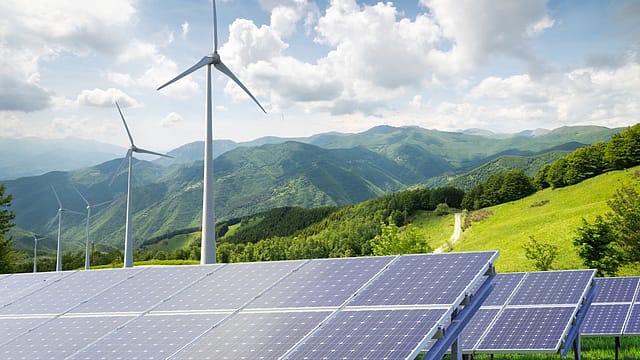
India’s journey towards renewable energy has transitioned from environmental and policy narrative, driven largely by climate commitments and rising energy demands, to reshaping how India produces, competes, and positions itself in global value chains. At the industrial level, fast adoption for clean energy is part of the nation’s commitment to achieving net-zero emissions by 2070.
For decades, industrial growth conversed on the challenges of labour, capital, and logistics. Today, the conversation is getting broader. With electricity demand rising across sectors and industrial growth becoming more energy intensive, the availability, cost and reliability of power are directly influencing economic outcomes. In this sense, energy is no longer a background variable, but a central determinant of industrial expansion.
The scale of this transition is already visible. India’s installed renewable energy capacity has nearly tripled over the past decade, rising from 76.37 GW in 2014 to over 263 GW by early 2026. In 2025, the country achieved a significant milestone, with 50% of its cumulative installed electricity capacity coming from non-fossil fuel sources, five years ahead of its 2030 target. This is not merely a symbolic achievement. It shows a very structural shift in the power mix that is beginning to influence how industries operate and invest.
When Scale Begins to Shape Industry
India’s renewable journey has moved beyond headline numbers to real economic influence. Capacity is still expanding at pace, but what matters now is how that scale is changing the way industry thinks about power. Renewable energy has become significantly more cost-effective, and just as importantly, more reliable. This shift is subtle but powerful. Energy is no longer seen as a volatile cost but as a stable input, allowing businesses to plan with greater certainty, manage risks better and even rethink where they set up operations. Increasingly, access to clean power is beginning to shape industrial decisions, especially for sectors that are linked to global markets.
Furthermore, the push towards green hydrogen is opening up new possibilities for sectors like steel, fertilisers, and refining where decarbonisation has traditionally been challenging. At the same time, decentralised initiatives are spreading this impact beyond large industries. Energy production is gradually moving closer to households and rural regions, making growth more distributed. However, for this transition to fully translate into industrial strength, gaps in areas like upstream manufacturing will need to be addressed. The direction is clear though. Clean energy is no longer just supporting industry. It is beginning to define it.
A New Geography of Jobs and Growth
What often gets missed in the renewable conversation is how quietly it is changing the map of opportunity in India. Growth is no longer tied only to a few industrial pockets. As clean energy becomes more accessible, industries have greater freedom to expand beyond legacy hubs and that naturally brings jobs with it. You begin to see activity in places that earlier had limited industrial presence, not just in large projects but across smaller, supporting ecosystems as well. At the same time, decentralised energy is shifting roles on the ground. Households and farmers are no longer just end users of power. They are starting to participate in the system, sometimes even earning from it. Over time, this creates a more balanced kind of growth, where opportunity is not concentrated but gradually spreads across regions.
In Essence
India’s renewable push is often described as ambitious, but it is starting to look more like direction. What is unfolding goes beyond energy. It is shaping how India will grow, where industries will invest and how competitive the country can be in a world that is steadily moving toward low-carbon production. With over 260 GW of non-fossil capacity already in place and a clear path ahead, the question is no longer about scale. It is about how well this scale is used.
The real opportunity lies in turning this momentum into lasting industrial strength. If supported by stronger grids, storage and deeper manufacturing, clean energy can become more than just a power source. It can become India’s edge. The next phase will decide whether India simply meets its targets or uses this transition to build a more resilient, globally competitive economy.
(The author is CEO, Jindal India Renewable Energy. Views are personal.)