
Powering smarter supply chains: Digital twins are the next frontier of logistics
ADVERTISEMENT
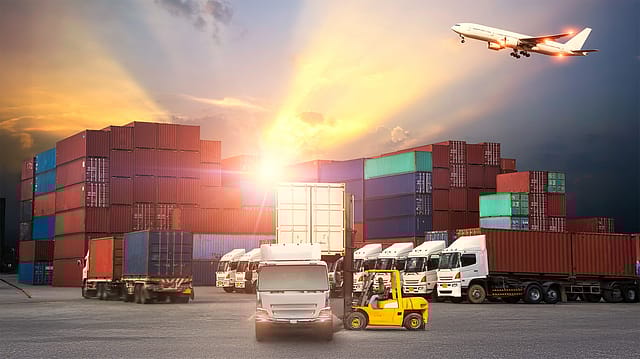
Artificial intelligence is fundamentally reshaping the logistics sector, necessitating practical, business-oriented responses. Volatile demand, geopolitical uncertainty, and climate-related disruptions have rendered reactive logistics models insufficient. In this environment, digital twin technology offers transformative potential by enabling logistics providers to model, simulate, and optimise physical supply chain ecosystems in near real time.
Currently, high inventory and supply chain costs significantly impact their profit margins, while limited visibility into shipments remains a primary concern. Many customers seek comprehensive supply chain management to enable greater focus on delivering value to their end customers, thus supporting margin growth.
As global trade grows more complex, supply chains encounter a dual challenge: they must maintain both exceptional efficiency and robust resilience. Dynamic digital representations of assets, networks, and processes are driving impactful operational improvements across planning, operations, and risk management.
This is a moment to re-imagine supply chain management through digital twins enhanced by artificial intelligence. Envision a scenario in which a customer’s entire end-to-end supply chain is digitally modelled, mirroring real-world conditions through AI-driven simulation. Such models enable comprehensive testing of historical and hypothetical scenarios, enhancing resilience and informing strategic recommendations for inventory positioning and cost reduction.
What is a digital win and why does it matter in logistics
A digital twin is a virtual model of a physical asset or system, such as a warehouse or port terminal, that uses real-time and historical data and predictive analytics. By integrating IoT sensors, cloud computing, AI, and visualisation, digital twins let operators test scenarios and predict issues without disrupting actual operations.
In other words, they don’t just mirror physical systems; they help re-engineer them.
We have built a digital twin capability grounded in real operational data and proven across multiple use cases. Terminal assets are connected through asset digitisation, providing a live view of operations. Combined with data from terminal operating systems and other sources, this feeds into both forward-looking and retrospective digital twin simulation decision-support products.
The data is enriched with booking information from major liners and a detailed virtualisation of terminal layouts, yard strategies, and operational processes. This enables simulation of individual container movements up to one week ahead, allowing planners to proactively identify and mitigate yard clashes, overflows, and bottlenecks.
Beyond detection, the same simulation capability is used to predict equipment requirements and to support resource planning, currently focusing on RTG (Rubber-tyred gantry cranes) deployment.
The underlying simulation engine has also been applied at the network level, where aggregated scenarios were used to validate hub-terminal capacity against increased demand from the new Gemini network, thereby identifying constraints before implementation.
In addition, digital twin simulations combined with advanced data models are used to quantify the impact of reducing operational waste through benchmarking, enabling data-driven target setting and unlocking improvement potential across terminals.
Digital twins are reshaping supply chain decision-making
One of the most powerful benefits of digital twins is the ability to shift from reactive to proactive operations. Logistics decision-makers can now run simulations, for example, testing how a spike in demand or a delayed vessel impacts the network and make informed decisions long before real disruption hits.
This capacity for predictive analytics helps in several critical areas:
· Supply chain planning: Simulate how inventory, transportation, and procurement behave under different conditions (e.g., demand surge or supply shock).
· Warehouse optimisation: Model alternate layouts, test automation deployments, forecast failures, and reduce downtime.
· Transportation efficiency: Simulate routing options, load distribution, and fleet scheduling considering real-world constraints.
By creating vertical digital twins (for individual assets) and linking them, it becomes possible to conceive a horizontal, integrated view of the entire logistics ecosystem.
Such integrated twins can help:
· Predict resource bottlenecks (e.g., crane allocation at ports)
· Reduce buffer times by replacing conservative scheduling with data-driven forecasts
· improve asset utilisation and reduce idle times across operations
The future of digital twins in logistics is industry collaboration. Instead of each company creating its own model, shared digital twins across shipping lines, ports, warehouses, and customers will enable greater visibility and flexibility for global supply chains.
In parallel, rapid advancements in AI and simulation technologies will make these twins smarter, enabling more realistic forecasting, scenario planning, and autonomous decision-making.
Digital twin technology is already transforming logistics. Its main value is in changing decision-making across connected systems, not just digitising assets. Supply chain leaders who invest in technology, change management, interoperability, and alignment will achieve greater resilience, efficiency, and sustainability in global trade.
(The author is Senior Vice President, Technology & Head of Maersk Technology Center, Bangalore, A.P. Moller – Maersk. Views are personal.)