
The hedge that’s quietly breaking
ADVERTISEMENT
For the better part of two decades, India and the Gulf ran a quiet hedge against each other. When oil prices rose, our import bill swelled—but so did the fortunes of the Gulf economies that employ more than 9 million Indians, and the remittances they sent home cushioned the blow to our external accounts. When prices fell, the import bill eased even as those flows softened. No one designed it, but it worked. A war in West Asia is now quietly dismantling it, and the timing could hardly be worse.
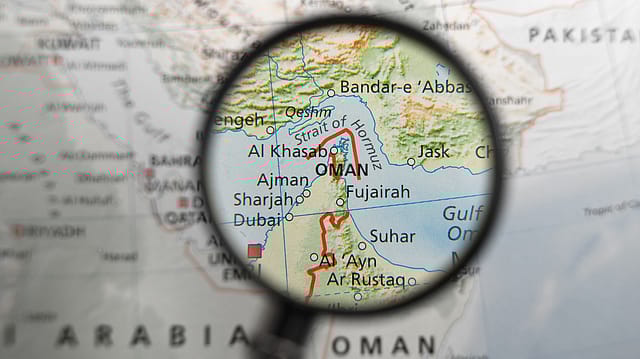
Consider the exposure of India to Middle East. India imports close to 88% of the crude it burns, and although the Middle East’s share has fallen from about 60% to 45% since we began buying more Russian oil, that still means roughly half of all our crude still sails through the Strait of Hormuz. The dependence is starker for the fuels we cannot easily substitute: the region supplies around 60% of our natural-gas imports and more than 90% of the cooking gas we bring in. When tankers stall in that narrow channel, the shock does not stop at the petrol pump. It travels to the fertiliser plant, where gas is feedstock, and to the 330 million households that cook on LPG.
The immigrant labour channel is just as large and far less discussed. India received a record $135 billion in remittances last year, more than it received in foreign direct investment, and close to 38% of it came from the Gulf. These are not abstract flows. They impact individual lives. They are school fees in Kerala, a new roof in eastern Uttar Pradesh, a daughter’s college admission in Bihar. A prolonged conflict that empties Gulf construction sites and thins the pay packets of Indian workers would strike precisely the households that have no other buffer.
What does this crisis in West Asia mean for growth in India? A spike in oil prices is, in the language of economics, a terms-of-trade shock. It makes us temporarily poorer and squeezes the level of output, but theory and evidence agree the effect fades. A $10 rise in crude shaves roughly half a percentage point off growth and widens the current account deficit, yet the economy tends to bounce back. If that were the whole story, we could treat each Gulf crisis as weather: unpleasant, survivable, soon forgotten.
It is not the whole story. The deeper damage is not be the shock once, but the loss of confidence and the fear of its repetition. The uncertainty it causes will increase cost and reduce growth. The mechanism through which that works is investment. A firm deciding whether to build a factory or a port fears not high oil prices so much as unpredictable ones; uncertainty raises the value of waiting, and waiting is the enemy of capital formation. India’s central problem this decade is not demand but private investment that has been slow to take off. A West Asia that lurches from crisis to crisis is a standing tax on exactly the long-horizon investment we most need. And, it arrives just as our demographic window, perhaps 25 years of a young and growing workforce, is open and ticking.
The lesson is the oldest one in finance, and it applies to nations as much as to portfolios: do not concentrate your exposure. On energy, India has sensibly begun. Russian crude, a strategic petroleum reserve, a slowly widening basket of LNG suppliers, and the 500-gigawatt non-fossil target for 2030 are all. This has to be understood as instruments of macroeconomic insurance as much as climate policy. In addition to diversifying sources abroad, every unit of energy we generate at home is a unit insulated from the Strait of Hormuz.
But diversification cannot stop at where we buy our oil. It must extend to the very nature of our engagement with the region. The India-Gulf relationship rests on two pillars built in the 1970s—we buy their oil, they hire our workers. Both are mature, and both are vulnerable; the Gulf’s own drive to nationalise its workforce and automation will squeeze low-skilled Indian labour over the coming decade regardless of any war. Korea and Vietnam grew rich not by exporting low-wage labour but by moving their own workers up the skill ladder at home; that, and not the remittance cheque, is the durable model. The relationship now needs a third pillar. The third is capital: Gulf sovereign wealth funds manage close to $5 trillion, most of it deployed in America and Europe. A stable, reforming India offering them infrastructure and matching returns could turn the Gulf from a supplier of fuel into a financier of growth. Investment in human capital, not just physical infrastructure, will be a bonus.
The uncomfortable truth is that India cannot keep West Asia stable—that lies well beyond our reach. What we can decide is how to capitalise on stability and manage volatility in the Middle East. Stability in the Gulf is not a gift we receive, it is time we are granted, time to build the domestic energy, the human capital, and the diversified ties that make the next crisis matter less than the last. The decade ahead will be shaped less by how the wars over there end than by how quickly we use the calm between them.
(The author is Dean of Academics, Shiv Nadar University, Delhi-NCR. Views are personal.)