
UPI MDR debate heats up: NPCI says consumers won’t bear the cost
ADVERTISEMENT
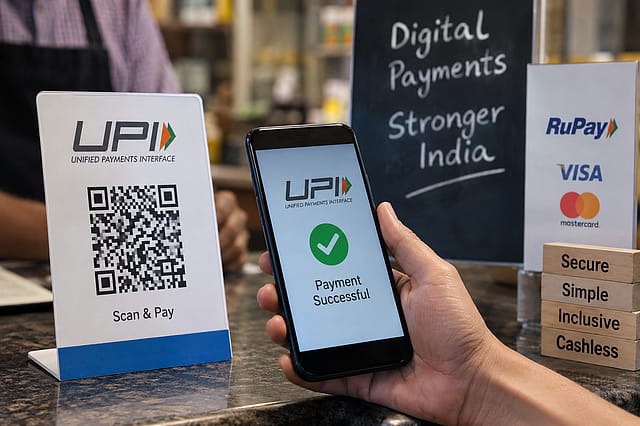
The National Payments Corporation of India (NPCI) has said any move towards introducing a merchant discount rate (MDR) on UPI transactions should not result in additional charges being passed on to consumers, while calling for greater investment from participants across the digital payments ecosystem.
NPCI chief executive Dilip Asbe said the ecosystem has operated with zero MDR on UPI for six years, making any attempt to reinstate the charge a difficult transition. He said participants, regulators, the government and citizens would need to work together to ensure the digital payments system continues to evolve.
“It’s very painful. So if we recognise this fact, I believe the ecosystem, the regulator, the government and all citizens, merchants, kind of help us to navigate for a greater good of tomorrow,” Asbe said.
Large businesses account for bulk of MDR
According to Asbe, around 80% of the MDR is collected from businesses with annual gross merchandise value (GMV) of more than ₹1,000 crore. He noted that these businesses already accept credit card payments and are accustomed to paying charges for digital payment transactions.
At the same time, NPCI said the industry needs to ensure that any charges introduced are not ultimately passed on to consumers. Asbe estimated that the actual risk of consumers bearing the additional cost could be limited to around 10% of the MDR collected.
NPCI also highlighted the relatively limited impact on the majority of UPI merchants. Asbe said the platform has around 60 million unique merchants, of which nearly 75% have not received even a single transaction above ₹2,000 through their QR codes.
“About 75% of these merchants have not received even a single transaction above ₹2,000 through their QR code. So, for 75% of merchants, there is effectively no impact from the policy we are discussing,” he said.
NPCI calls for fresh ecosystem investment
The comments come amid discussions around the sustainability of the UPI payments ecosystem and the need to support investments in technology and infrastructure. Asbe said concerns over UPI volumes should not simply be viewed through transaction numbers, with participants needing to invest in the next phase of the platform’s growth.
“People tell us UPI volumes have dropped. It is here that the participants in the ecosystem need to make fresh investments. I think the ecosystem must hold itself accountable to ensure that we deliver the value back to the ecosystem to improve UPI,” Asbe said.
NPCI is also preparing to expand UPI’s capabilities. Asbe said the organisation plans to launch agentic payments in the coming months, potentially opening up new use cases for digital transactions as the ecosystem evolves.