
Sebi proposes framework for 'Significant Indices' to improve governance of index providers
ADVERTISEMENT
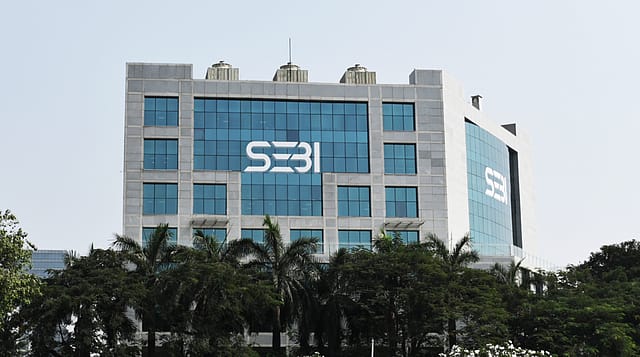
Markets regulator Securities and Exchange Board of India (Sebi) on Monday proposed a comprehensive regulatory framework for “Significant Indices” as part of its effort to strengthen governance standards for index providers in the securities market and enhance the credibility of financial benchmarks.
Significant Indices
In a consultation paper, Sebi defined “Significant Indices” as those administered by an index provider and used as benchmarks by domestic mutual fund schemes with cumulative assets under management (AUM) of more than ₹20,000 crore. The regulator said the threshold would be determined based on the daily average AUM of domestic mutual fund schemes over the preceding six months, calculated separately for two reference periods ending June 30 and December 31 each year.
Sebi clarified that for the purpose of AUM computation, if a mutual fund scheme tracks multiple indices, the scheme’s AUM would be apportioned proportionately among those indices. In the case of an “index of indices”, the AUM of the underlying indices would be considered based on their respective weights.
Proposed framework at a glance
The proposed framework seeks to bring greater transparency, accountability and oversight to financial benchmarks that have a significant influence on investment decisions and capital flows. Sebi noted that indices widely used by mutual funds play a critical role in the securities market and therefore require enhanced governance standards.
Under the proposal, providers of identified Significant Indices would be required to apply for registration as an Index Provider with Sebi within six months from the issuance of the final circular. However, this requirement would not apply to index providers if all their significant indices are already regulated by the Reserve Bank of India (RBI).
The regulator further proposed that the grievance redressal mechanism under Sebi’s framework would apply only to Significant Indices offered by index providers registered with the market watchdog.
Sebi has invited public comments on the consultation paper until January 30, after which it will review feedback before finalising the framework.
Meanwhile, Indian equity benchmarks ended lower on Monday amid broad-based selling pressure, led by heavyweights such as Reliance Industries, Eternal, and ICICI Bank, as investors remained cautious amid global tariff-related uncertainties.
Market sentiment was further weighed down by a weakening rupee and continued foreign portfolio outflows from Indian equities, traders said. The 30-share BSE Sensex declined 324.17 points, or 0.39%, to close at 83,246.18, after falling as much as 672.04 points, or 0.80%, intraday. The NSE Nifty 50 slipped 108.85 points, or 0.42%, to settle at 25,585.50.