
Luxury takes over: Why affordable homes are disappearing from Delhi-NCR
ADVERTISEMENT
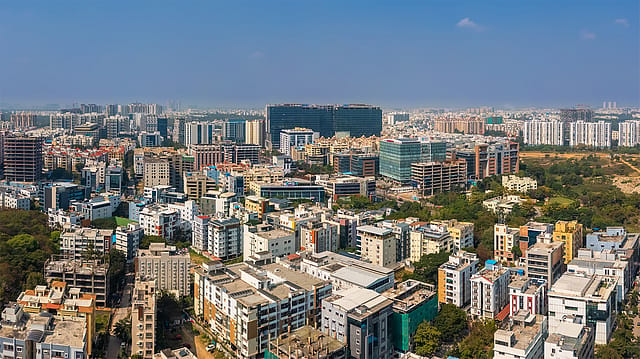
In the last few years, Delhi-NCR’s real estate market has seen a sharp rise in the sale of luxury housing units, driven by robust demand, with more than 4,000 units sold in H1 2025 alone. However, the data also points to a contrasting trend, as the share of affordable housing has declined drastically. In 2020, among all the housing units launched in the region, the affordable housing segment had the largest share at 62%, but by H1 2025, it had reduced to just 5%.
The data shows a sharp decline in the share of affordable housing launches in Delhi-NCR over the past six years. Affordable homes accounted for 62% of all new housing launches in 2020, making them the dominant segment. However, their share fell to 35% in 2021, briefly recovered to 41% in 2022, and then declined steeply to 15% in 2023, 11% in 2024, and just 5% in H1 2025.

Notably, these numbers are not just a reflection of trends in two different housing segments but paint a larger picture, suggesting that developers are investing more in luxury housing projects to attract high-income buyers, while at the same time, it is becoming increasingly difficult for middle-income households to buy an affordable home. According to People Research on India's Consumer Economy (PRICE), the middle class accounts for about 38% of India's population in 2025.
It means that, for many first-time buyers, the challenge is no longer just affordability, but the declining availability of homes within their budget.
“Soaring land, construction, and compliance costs have pushed developers towards higher-end projects. The margins on affordable projects are no higher than 10-12%, while premium homes, for which there is the highest demand now, can bring in profits of 25-30% and more,” Santhosh Kumar, Vice Chairman, ANAROCK Group, told Fortune India.
Kumar also pointed out that the demand among the core customer base for affordable housing has also shrunk as a result of the sharp price rise post-Covid-19.
“Also, demand from unorganised-sector buyers, the target clientele for affordable housing, after the Covid-19 pandemic has waned since prices even for budget housing have shot up. Most disposable income is headed for premium homes, so developers see no sense in addressing less profitable segments,” he explained.
However, on the other hand, the purchasing power of buyers is also increasing, leading to increased investment in luxury housing projects by developers.
For example, Signature Global, a Delhi-NCR-based listed real estate company, when it was founded in 2014, was primarily focused on affordable housing. With time, the company left the segment entirely and now invests only in luxury housing. When asked why, they said demand for luxury housing is rising due to increasing purchasing power among buyers.
“Today, developers are aligning their project mix with the strong demand among discerning buyers for premium homes. We are particularly witnessing a strong demand for homes priced between ₹3 crore and ₹5 crore, where supply is still catching up, particularly in the most sought-after micro-markets like Dwarka Expressway, Southern Peripheral Road, and South of Gurugram (Sohna). The strong demand in this price segment clearly reflects the increasing purchasing power and aspirations of homebuyers,” Pradeep Aggarwal, Founder and Chairman, Signature Global (India) Ltd, said.
What is an affordable home?
For a long time, there has been a debate among developers, policymakers, and buyers about the definition of an affordable home. In 2017, the government described an affordable home as one that falls under the price threshold of ₹40-45 lakh. However, many have called for a new definition, as everything has changed over time, including construction costs, land prices, approval costs, and inflation.
“Affordable housing is currently facing a structural viability challenge. The ₹45 lakh threshold was defined around 2018-19 and, in many urban markets today, it no longer reflects prevailing development economics or home prices. Over this period, inflation has averaged nearly 6% annually, while housing prices in several cities have risen by 8-10% annually. At the same time, land prices, approval costs, raw material costs, and financing expenses have all moved upward steadily,” said Shekhar G Patel, President, CREDAI.
According to Shekhar, affordability pressure is becoming more visible, particularly for first-time homebuyers and salaried middle-income families in larger urban centres.
“The entry barrier to homeownership is considerably steeper today than it was a few years ago. However, the underlying demand itself has not weakened. India continues to witness strong end-user aspiration for homeownership, especially among younger households and urban working families,” he said.
Stakeholders say revisiting the affordable housing definition to align it with current market realities would be an important first step.
“The current cost of land and construction in NCR means that a realistic band for affordable housing today is between ₹60 lakh and ₹85 lakh. To qualify for affordable housing incentives from the government, homes must fit within its strict and outdated ₹40-45 lakh band, a cap that has not been updated since it was set in 2017,” Kumar said.
“A carpet-area-based definition, anchored in the RERA framework, would be fairer, more durable, and far better suited to a country as diverse as India. This is a restoration of the original intent, not an expansion of the benefit,” Patel added.
No early return to affordable housing by developers
Experts say it is unlikely that we will see a meaningful return to affordable housing by developers over the next two to three years, at least, unless there are major structural policy interventions.
“To restore viability, the government must revive the Section 80-IBA tax holiday, redefine qualifying affordable housing price caps city-wise, and expand CLSS subsidy limits under PMAY-Urban 2.0. It will also have to fast-track infrastructure like metros and ring roads to open up currently remote areas where budget housing can come up on cheaper land, and unlock land held by various government agencies expressly for the creation of affordable housing where it is needed the most,” Kumar said.
“If these structural issues are addressed, I am confident developers will increase their participation because the underlying end-user demand remains robust. Affordable housing is fundamentally a viability issue rather than a demand issue, and with the right policy support, the sector can once again become an attractive and sustainable area for investment,” Patel added.