
Artemis II: NASA’s first crewed return to deep space in over 50 years
ADVERTISEMENT
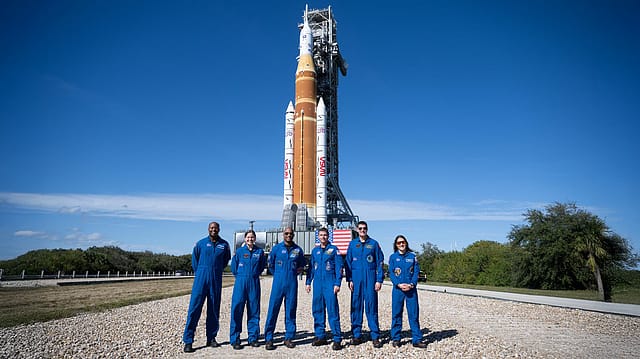
After more than five decades since humans last travelled beyond low Earth orbit, NASA is preparing to launch Artemis II, the first crewed mission of its Artemis programme. Scheduled for April 1 2026, (April 2 as per Indian standard time) the mission will send four astronauts on a 10-day journey around the Moon and back, marking a critical step in the agency’s long-term plans for lunar exploration and future missions to Mars.
Artemis II follows the uncrewed Artemis I mission launched in 2022, which tested the Space Launch System (SLS) rocket and Orion spacecraft. While Artemis I validated the hardware, Artemis II is designed to test these systems with humans on board in a deep space environment.
What is the mission and its objectives
Artemis II will carry four astronauts aboard the Orion spacecraft, launched on NASA’s SLS rocket, on a trajectory that takes them around the Moon without landing. The spacecraft will travel about 685,000 miles in terms of overall distance and will reach 248,655 miles from Earth during flight.
The spacecraft will follow a free-return trajectory, a flight path that uses the Moon’s gravity to bring the crew back to Earth without requiring major propulsion adjustments. This approach is designed as a safety measure for early deep space missions. The mission will end with splashdown in Pacific Ocean.
The primary objective of Artemis II is to validate systems required for human spaceflight beyond Earth orbit. These include life support, navigation, communication, and propulsion systems, as well as the spacecraft’s heat shield during high-speed re-entry into Earth’s atmosphere.
Astronauts will also carry out operational tasks, including manual control tests and system evaluations, to ensure that the spacecraft can be safely operated under real mission conditions. The mission will generate data needed for future crewed lunar landings.
The crew and international collaboration
The Artemis II crew consists of four astronauts representing both NASA and international partnership:
Reid Wiseman, commander
Victor Glover, pilot
Christina Koch, mission specialist
Jeremy Hansen, mission specialist
The mission marks several firsts. Glover is set to become the first Black astronaut to travel beyond low Earth orbit, Koch the first woman, and Hansen the first non-American assigned to a lunar mission.
The inclusion of a Canadian astronaut reflects broader international cooperation within the Artemis programme, which involves multiple space agencies and partners contributing to future lunar exploration systems.
Role in the Artemis programme
Artemis II is a foundational mission within the broader Artemis programme, which aims to establish a sustained human presence on the Moon. Unlike the Apollo missions, which were limited in duration, Artemis is designed as a long-term exploration effort.
The mission serves as a necessary step before Artemis III, which is planned to attempt a crewed lunar landing later in the decade. By validating crewed operations in deep space, Artemis II reduces risks for subsequent missions involving landing systems, surface operations, and extended human presence on the Moon.
In addition to enabling future lunar missions, Artemis II contributes to the development of technologies and operational experience required for longer-duration missions, including potential human exploration of Mars.
“The following studies focused on the health of Artemis II astronauts will provide NASA researchers with an unprecedented glimpse into how deep space travel influences the human body, mind, and behaviour. Results will help the agency build future interventions, protocols, and preventative measures to best protect astronauts on future missions to the lunar surface and to Mars,” NASA stated.
Where to watch Artemis II launch
NASA's Artemis II mission is scheduled to launch on April 1, 2026, at 6:24 p.m. EDT from Kennedy Space Center's Launch Pad 39B in Florida. The streaming will be available on NASA’s YouTube channel, as teams load propellant into the SLS rocket. Full coverage on NASA+ begins at 12:50 p.m. For Indian viewers, it translate to 3:24 IST on 2nd April 2026.