
India’s semiconductor market seen tripling to $200 billion by 2035; imports surge 5X since FY17: EY-IESA report
ADVERTISEMENT
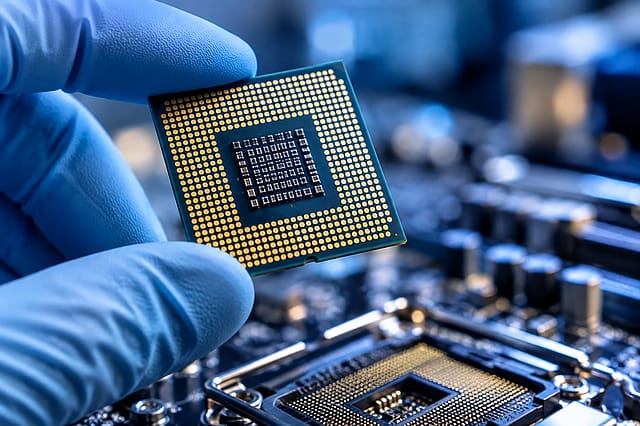
India’s semiconductor market is projected to more than triple from nearly $64 billion in 2026 to $200 billion by 2035, as rising electronics demand, chip design capabilities and emerging manufacturing capacity create an opportunity to deepen the country’s position in the global semiconductor value chain, according to an EY-IESA report.
The report, Semicon India 2.0: From capacity creation to ecosystem leadership, said consumer electronics currently accounts for 30% of India’s semiconductor market, followed by automotive at 16% and industrial applications at 15%. AI, data centres, telecommunications, electric mobility and advanced manufacturing are expected to provide additional demand drivers.
Semiconductor imports rise to $30.3 billion
India’s semiconductor imports have increased more than fivefold, rising from $5.7 billion in FY17 to $30.3 billion in FY25, representing a 23% CAGR, the report said. The sharp increase highlights the scale of domestic demand and the potential to shift a greater share of semiconductor manufacturing and value addition to India.
At the same time, India accounts for nearly 20% of the world’s chip design engineers, giving the country a substantial talent pool as it expands from chip design towards manufacturing, advanced packaging and indigenous semiconductor technologies.
Ashok Chandak, President, India Electronics and Semiconductor Association (IESA), said India now has an opportunity to combine its engineering talent, electronics demand, design capabilities and emerging manufacturing capacity with global supply-chain partnerships. He said the next phase would depend on execution, innovation, technology commercialisation, indigenous intellectual property, specialised talent and greater ecosystem depth.
Electronics production jumps nearly sixfold
The broader electronics ecosystem has also expanded rapidly. Electronics production rose from ₹1.9 lakh crore in FY15 to ₹11.3 lakh crore in FY25, a nearly sixfold increase, while electronics manufacturing and exports grew sevenfold and elevenfold, respectively, over the same period, according to EY.
Aisha Ali Hussaini, Partner and Semiconductor Tax Leader, EY India, said India’s market scale, engineering talent, policy momentum and expanding electronics ecosystem could support deeper semiconductor value addition. She highlighted the need for a predictable fiscal and regulatory environment, stronger Centre-state policy alignment and targeted support for emerging technologies.
Advanced packaging emerges as key opportunity
The report identifies advanced packaging, compound semiconductors, photonics and chip-to-system integration as high-potential areas for India. However, it said investors would assess policy certainty, cluster readiness and implementation speed, while industry would need stronger partnerships with suppliers, academia and technology owners.
The report also calls for integrated semiconductor manufacturing clusters, better alignment of state policies and dedicated talent-certification programmes spanning chip design, fabrication and advanced packaging.