
Why India's noisy streets are shaping the next generation of AI models for Gnani AI
ADVERTISEMENT
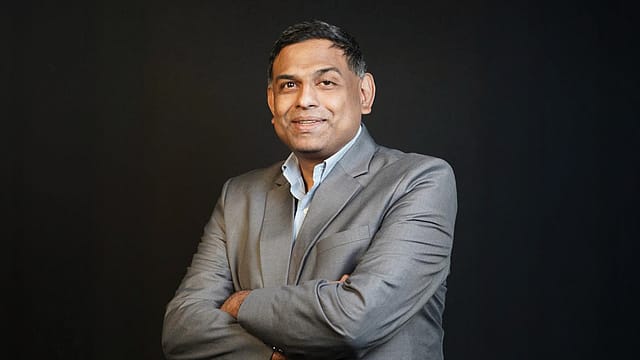
For most speech AI models, background noise is a challenge. In India, it is an everyday reality. That is one of the reasons global speech recognition models often struggle in the country, according to Ganesh Gopalan, co-founder and CEO of Bengaluru-based voice AI company Gnani AI. From busy roads and poor telephony connections to code-mixed conversations that switch between English and regional languages, India presents a unique set of challenges for voice technology.
“In India, environments are extremely noisy,” Gopalan told Fortune India. “We speak a mix of English and Hindi or Tamil and English. Models have to work in those kinds of environments. Then you need very low latency for real-time systems. The other challenge is data sovereignty.”
The comments come at a time when sovereign AI has become a major theme in India's technology ecosystem. While much of the debate has focused on data localisation, Gopalan believes sovereignty extends beyond infrastructure. “AI is probably the most important resource in the world today,” he said. “How do you own your own data and create intelligence out of it and keep it within your borders? The same thing applies to countries and companies.”
According to him, countries around the world are increasingly looking to build AI capabilities tailored to their own needs rather than relying entirely on external providers. He also remains sceptical of companies building solely on top of third-party foundation models. “We don't think wrapper companies have a chance,” he said. “Unless you own the model, you are at the mercy of the people who are developing the core models.”
The new Prisma v2.5 model
Against this backdrop, Gnani AI is launching Prisma v2.5, the latest version of its speech-to-text model designed for Indian languages. The company claims the model delivers 15% lower word error rates (WER) for rural Hindi dialects and 18% lower WER in noisy Dravidian-language environments compared with competing speech recognition models. According to Gnani AI, Prisma v2.5 ranks first in eight out of nine Indian languages on real-world and noisy speech benchmarks, including Gramvaani.
The model has been trained on 14 million hours of proprietary Indic speech data spanning 12 languages, including dialect variations, ambient noise and code-switching patterns common in Indian conversations. The company said the model is aimed at improving transcription accuracy for short utterances, numerals, alphanumeric sequences, named entities and domain-specific vocabulary used across sectors such as banking, insurance and healthcare.
Voice AI beyond enterprises
As voice AI adoption grows, concerns about its impact on jobs, particularly in customer support and business process outsourcing, continue to surface. Gopalan argues that the technology is more likely to augment workers than replace them. “Our business is not about replacing people with AI,” he said.
He pointed to contact centres where real-time translation can help an English-speaking agent in India support customers speaking Japanese or other languages. “The person on the other side hears it in Japanese, and the person in India hears it in English, all in real time,” he said.
Looking ahead, Gopalan believes AI will increasingly move from enterprises to consumers. He expects personalised AI assistants to help users with tasks such as travel planning, research and bookings. “Each of us is going to have our own assistant,” he said. “If I have to plan a vacation or prepare an itinerary, I will just tell my agent what I want and leave it to figure it out.”
The shift may also be driven by changing user behaviour. “You and I are used to touch and type,” Gopalan said. “The next generation is different. They only talk on mobiles.”