
Hormuz crisis: US blockade begins, Trump threatens strikes, Netanyahu warns truce at peril; Iran denies toll on Indian tankers
ADVERTISEMENT
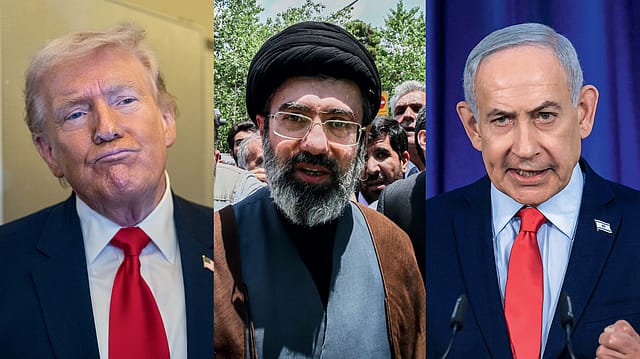
The West Asia crisis continues to stay elevated on Monday after the United States began enforcing a naval blockade on vessels entering and leaving Iranian ports, a move that followed the collapse of weekend peace talks and pushed crude back above $100 a barrel. The US military said the restrictions, effective from 1400 GMT, would apply to ships headed to or from Iranian ports in the Gulf, Gulf of Oman and Arabian Sea, while neutral vessels transiting the Strait of Hormuz to non-Iranian destinations would not be impeded. Reuters reported that the move is designed to choke off roughly 2 million barrels per day of Iranian exports.
Trump raises the temperature
US President Donald Trump coupled the blockade with an explicit military warning. In remarks and a social media post, he said Iran’s navy was “completely obliterated” except for a smaller group of “fast attack ships,” and warned that any such vessels coming near the blockade would be “immediately eliminated.”
"Iran’s navy is laying at the bottom of the sea, completely obliterated - 158 ships. What we have not hit are their small number of, what they call, “Fast attack ships,” because we did not consider them much of a threat. Warning: if any of these ships come anywhere close to our blockade, they will be immediately eliminated, using the same system of kill that we use against the drug dealers on boats at sea. It is quick and brutal. P.S. 98.2% of drugs coming into the U.S. By ocean or sea have stopped! Thank you for your attention to this matter. President DGT"

He has also left the door open to more force, with Reuters reporting that Trump is considering renewed limited military strikes and has not fully ruled out a broader bombing campaign. Trump also reportedly threatened Iran’s desalination plants and power infrastructure, saying the blockade would be “very effective.”
In response, Iran pushed back on Trump’s claims, suggesting that even if Iranian naval losses were as stated, Tehran retained the ability to disrupt traffic in the Strait of Hormuz.
Iran and Israel signal no quick climbdown
The ceasefire is looking increasingly fragile. Israel's Prime Minister Benjamin Netanyahu said it “could end quickly,” while Tehran accused Washington of wrecking the Islamabad talks just as an agreement was within reach.
Iranian Foreign Minister Abbas Araghchi said Iran had engaged “in good faith” and was “just inches away” from an “Islamabad MoU” before encountering “maximalism, shifting goalposts, and blockade.” Iran has called the US move “piracy” and warned that if its own ports are threatened, “no port in the Gulf region will be safe.”
Tehran rejects Trump’s toll claim
One of the more consequential India-specific developments came from Tehran’s envoy in New Delhi. Iran denied charging any toll on Indian tankers transiting the Strait of Hormuz after Trump alleged the US would stop vessels making payments to Tehran. In a media briefing today, Iranian Ambassador Mohammad Fathali said no such toll had been levied and suggested the claim be verified with the Indian government; India has also denied making payments. According to the latest statements from the government of India, nine LPG-carrying ships had exited the strait, though 15 India-flagged vessels remained stranded in the Persian Gulf. The waterway is critical for India because it handles roughly half of its crude and LPG imports.
Crude reacted immediately. Brent and WTI both moved back above $100 a barrel after talks failed and the blockade was announced, and both were trading at around $102 a barrel at the time of publication.
Reuters’ oil-flow analysis, citing Kpler data, said Iran exported 1.84 million barrels per day in March and 1.71 million barrels per day so far in April, compared with a 2025 average of 1.68 million barrels per day, stressing the size of the volume now at risk. Reuters also said more than 180 million barrels of Iranian crude remain afloat and around 187 laden tankers are inside the Gulf.
Street data
Higher oil and the prospect of a prolonged confrontation hit risk assets. Nifty 50 ended down 0.86% at 23,842.65 and the Sensex lost 0.91% to 76,847.57, though both indices recovered from steeper intraday losses. India VIX surged over 14% during the day. US markets also opened lower on Monday; while S&P 500 and Nasdaq have erased early losses and are trading in the green now, Dow Jones and Dow Futures continue to trade in red. GIFT Nifty, however, is trading in the green as of 9:59 pm IST.
India's stock markets will be closed for trading on Tuesday on account of Ambedkar Jayanti although MCX reopens for the evening session.
The next leg of the story hinges on whether the blockade remains a narrowly targeted squeeze on Iranian exports or tips into direct naval confrontation. Tehran has already reportedly threatened retaliation against Gulf ports, while analysts have warned that even without a formal closure of Hormuz, a prolonged attempt to intercept Iranian-bound traffic could be enough to keep oil elevated, freight disrupted and global markets on edge.