
Israel–Iran war update: U.S. joins 'Operation Roaring Lion' in pre-emptive strikes; Tehran vows 'regret-inducing' response
ADVERTISEMENT
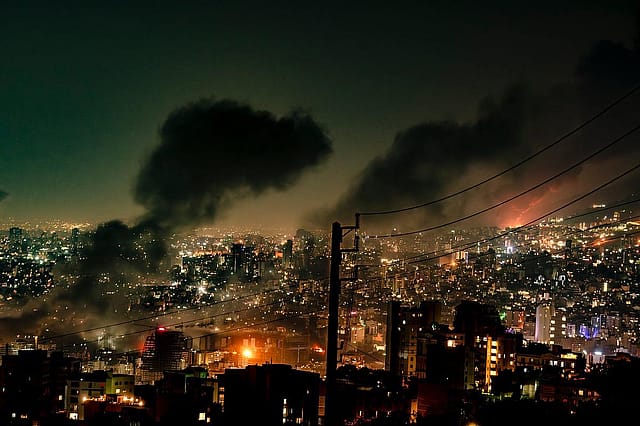
The Middle East was thrown into turmoil on Saturday as Israel launched a massive “pre-emptive” military strike on Iran, with U.S. forces joining in simultaneous attacks. Explosions rocked Tehran, Isfahan, and Qom, and Iranian air defences were activated, indicating a major new phase in the long-running Israel–Iran confrontation. This coordinated offensive – dubbed “Operation Roaring Lion” – marks one of the most major escalations in decades.
Joint Israeli–U.S. strikes
Israeli defence minister Israel Katz announced the action as “pre-emptive,” saying Israel moved to “remove threats” to its security. U.S. president Donald Trump confirmed that “major combat operations” by U.S. forces against Iran are underway, with the goal of destroying Iranian missile and naval capabilities.
U.S. officials told Reuters that the strikes include both air and naval elements. Explosions were reported near sites linked to Iran’s Supreme Leader, although according to the Reuters report, Ayatollah Ali Khamenei was moved to safety shortly before the attack.
Reporters on the ground describe multiple explosions in Tehran, hitting military and alleged nuclear-linked installations. According to Reuters, the strikes follow months of planning and coordination between Washington and Jerusalem.
Initial reports indicate targets included missile launch sites and research facilities; Iran’s official media reported some strikes while blocking airspace and closing major transport routes. In response, Iran’s government has vowed retaliation, warning it will defend itself against any attack.
Earlier this week, the U.S. Secretary of State held last-ditch talks with Iran in Geneva, but Tehran refused to limit its missile program – a key flashpoint in the dispute.
As of now, official casualty figures from the Iranian side are unconfirmed. State media show smoke over parts of Tehran. Israel says it took precautions to protect civilians at home: sirens were sounded, schools and workplaces were closed, and all civilian flights suspended as a precaution. An Indian research student in Israel has confirmed to Fortune India that they have been moved to shelter homes.
Israel’s airspace is sealed; a nationwide alert was in effect on Saturday.
Diplomatic fallout
The strike effectively ends hopes for a negotiated breakthrough. Katz insisted any future U.S.-Iran deal must curb Iran’s missile arsenal in addition to halting nuclear enrichment.
Iran, which has long maintained its nuclear program is peaceful, will almost certainly harden its stance. Western intelligence had briefed allies that Iran has kept advancing its uranium enrichment and ballistic missile development, prompting U.S.-Israeli warnings that led to today’s attack.
India's ministry of external affairs has issued advisories urging Indians in Israel to “exercise utmost caution” and follow local safety instructions. Similarly, the Indian Embassy in Iran advised nationals to stay indoors and avoid unnecessary movement amid the strikes.
Prime Minister Modi, who was in Israel earlier this week, urged calm and said regional stability was paramount (a joint India-Israel statement on Feb 26 stressed partnership and global peace).
Global market impact
The sudden escalation sent shockwaves through world markets. Oil prices spiked on fears of Middle East supply disruptions – Brent crude jumped 2.45% to settle at $72.48 on Friday as nuclear negotiations in Geneva ended in a stalemate and the U.S. warned that "really bad things" would happen if a deal wasn't reached. Safe-haven flows lifted gold and the U.S. dollar, while equities fell.
The jump in oil – already rising over the past week on geopolitical tensions – indicates potential upward pressure on fuel costs worldwide. Investors are bracing for further market volatility until clarity returns.
All eyes now turn to Iran’s response. Tehran’s leaders have vowed retaliation against U.S. and Israeli forces, raising the spectre of a wider regional war. President Trump has warned Iran’s Revolutionary Guard to stand down, even offering clemency to those who lay down arms. However, Iran’s proxy allies in Lebanon, Syria, and elsewhere may also be drawn in. World leaders are urgently calling for de-escalation. The UN Security Council will likely convene for emergency talks.