The FAQs are AI-generated, and Fortune India is not responsible for its content or any associated copyright issues.
E22–E30 petrol standards notified: How India’s next ethanol fuel shift will impact consumers
/ 2 min read
BIS lays the groundwork for E22–E30 fuels, marking the next phase of India’s ethanol blending push
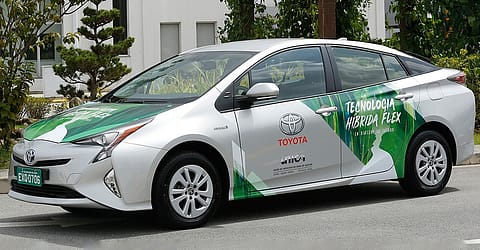
Toyota had earlier revealed its flex-fuel car earlier | Credits: Toyota Kirloskar Motor
India has moved a step ahead in its ethanol-blending roadmap, with the Bureau of Indian Standards (BIS) notifying specifications for higher ethanol-blended petrol such as E22, E25, E27 and E30. These fuels mix ethanol with petrol in rising proportions and reflect the government’s push to cut crude imports and emissions.
India has already transitioned to E20 petrol in several parts of the country. The new BIS standards do not signal an immediate rollout of E22 or E30. Instead, they create the technical blueprint for how these fuels will be produced, tested and labelled when introduced.
What changes for consumers at fuel pumps?
For consumers, the first visible change will be clearer fuel labelling at pumps. Dispensing units will have to display tags such as “E22 Petrol” or “E30 Petrol” once higher blends enter the market.
The move is designed to prevent confusion, as not all vehicles are compatible with higher ethanol blends. In the near term, most consumers will continue to receive E20 or regular petrol based on local availability.
There is no nationwide mandate yet to switch pumps to higher blends.
Will it affect your car or mileage?
The key question is impact on vehicles. Ethanol contains less energy than petrol, which can translate into a marginal drop in mileage at higher blends.
Compatibility matters more. Vehicles designed for E20 are expected to manage gradual increases, but older models may struggle without modifications.
Automakers are likely to issue clearer guidance as higher blends such as E25 and E30 move closer to rollout.
Why India is raising ethanol blends
The policy push is aimed at reducing crude oil imports and boosting domestic fuel alternatives. Ethanol, produced from crops such as sugarcane and maize, also supports farm incomes and rural demand.
Industry groups have welcomed the standards, calling them a structured roadmap for future fuels. Some are already pushing the narrative further—towards E85 and even E100—backed by flex-fuel vehicle adoption.
What happens next?
For now, the BIS notification lays the groundwork rather than triggering a market shift. Actual rollout will depend on alignment between oil companies, automakers and fuel retailers.
{{#most-powerful-women-snapshot-individual.slug}} {{/most-powerful-women-snapshot-individual.slug}} {{^most-powerful-women-snapshot-individual.slug}} {{/most-powerful-women-snapshot-individual.slug}} {{#showRanking}} {{current-rank}} {{/showRanking}} {{#photo.0.url}}
{{name}}
For consumers, the transition will be gradual: clearer labels at pumps, phased introduction of blends, and no sudden disruption to fuel choice.
Frequently Asked Questions
NEXT STORY