JSW MG Motor to scale Halol capacity to 1.6 lakh units by March 2027; expects up to 80% NEV sales this year: MD Anurag Mehrotra
/ 3 min read
Automaker to complete the first phase of Halol plant expansion by March next year as it ramps up localisation, readies four new models and rolls out a multi-energy vehicle platform.
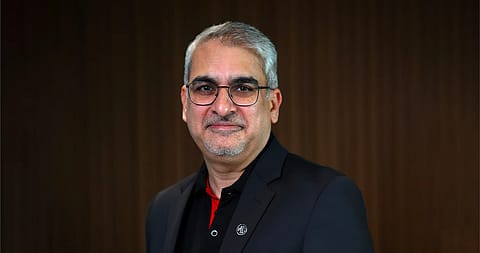
JSW MG Motor India MD Anurag Mehrotra | Credits: JSW MG Motor India
JSW MG Motor India will increase the annual production capacity of its Halol manufacturing facility by a third to 1.6 lakh units by March 2027 as the automaker gears up for its next phase of growth, driven by an expanding product portfolio and rising demand for new energy vehicles (NEVs).
The company's Managing Director Anurag Mehrotra said the company also expects NEVs to contribute 70-80% of its overall sales this year, underscoring the rapid shift in consumer preference towards cleaner mobility.
The company is currently operating at near-full capacity with both general assembly lines running three shifts after increasing plant headcount by nearly 40%. The first phase of the Halol expansion will raise annual production capacity from 1.2 lakh units to 1.6 lakh units, while work on the second phase, which will eventually take capacity to around 3 lakh units, is scheduled to begin next year.
Expansion, localisation and new launches anchor growth roadmap
As part of its expansion strategy, JSW MG Motor has earmarked around Rs 1,400 crore for FY27 towards localisation, new product development and manufacturing expansion. The allocation forms part of the company's previously announced near-term investment plan of Rs 3,000-4,000 crore.
"We are on the verge of completing our phase one expansion which should be ready by March 2027. That will take us from capacity of 120,000 units to 160,000 units," Mehrotra said.
The automaker plans to launch four vehicles this year after introducing three products last year. The recently launched MG Majestor has witnessed robust demand, with Mehrotra noting, "Our plant can't produce enough, which is a good problem to have."
Localisation remains a key focus area. The company has already tripled local content in the Windsor electric vehicle and is on track to achieve around 70% localisation by next year. Similar localisation levels are being targeted for all upcoming products.
ADAPT architecture broadens NEV technology play
Alongside its product roadmap, JSW MG Motor unveiled ADAPT (Advance Drive Architecture Platform Technology), which it described as India's first multi-new-energy vehicle platform capable of supporting Battery Electric vehicles (BEVs), Hybrid Electric Vehicles (HEVs), plug-in hybrid electric vehicles (PHEVs) and Range-Extended Electric Vehicles (REEVs) on a single architecture.
The first vehicle based on the ADAPT platform, a battery electric model, will be launched later this financial year, followed by a plug-in hybrid. All products built on the platform will be longer than four metres.
"It is not going to be one technology that will get us there. We will have to look at multiple technologies that can be brought together," Mehrotra said, adding that integrating four powertrain technologies on a common architecture would reduce capital expenditure by at least half while also improving localisation opportunities.
Fuel price volatility accelerates NEV adoption
Mehrotra said demand for new energy vehicles has strengthened following the West Asia conflict and the resulting increase in fuel prices. Passenger vehicle EV penetration has risen from 3.8% in January to more than 8% in June, reflecting a sharp shift in buying preferences.
{{#most-powerful-women-snapshot-individual.slug}} {{/most-powerful-women-snapshot-individual.slug}} {{^most-powerful-women-snapshot-individual.slug}} {{/most-powerful-women-snapshot-individual.slug}} {{#showRanking}} {{current-rank}} {{/showRanking}} {{#photo.0.url}}
{{name}}
"So it tells you that consumers are coming to the stores and they are wanting to make the choices which are more leaning towards NEVs," he said.
JSW MG Motor has sold nearly 40,000 vehicles so far this year, recording 12-13% year-on-year growth. The company expects NEVs to account for nearly three-fourths of its total sales over the next five years as it expands its product portfolio and manufacturing footprint in India.
NEXT STORY