Mercedes-Benz India FY26 sales rise to 19,363 units; top-end luxury grows 16% even as entry segment contracts
/ 4 min read
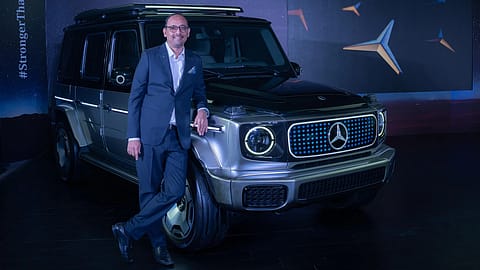
Mercedes-Benz India managing director and CEO Santosh Iyer
Mercedes-Benz India FY26 sales rise to 19,363 units; top-end luxury grows 16% even as entry segment contracts
Mercedes-Benz India closed FY2025–26 with retail sales of 19,363 units, up 2.3% year-on-year, as strong demand for top-end luxury and core models offset an 18% decline in the entry segment. Top-end luxury grew 16% and contributed 27% of sales, with long waits for models like the AMG G63, underscoring a clear shift toward premium vehicles and value-led growth.
This summary is AI-generated, and Fortune India is not responsible for its content or any associated copyright issues.
Top-end vehicles and EVs drive growth mix as entry luxury demand weakens; the market leader sees premiumisation trends gather pace
Mercedes-Benz India managing director and CEO Santosh Iyer
Mercedes-Benz India, which continues to lead the domestic luxury car market, closed FY2025–26 with retail sales of 19,363 units, marking a modest year-on-year increase of about 2.3%, as steady demand for high-end luxury vehicles and core models helped offset a sharp decline in entry-level offerings.
German luxury carmaker Mercedes-Benz on Thursday reported a 7 per cent rise in total sales at 5,131 units in the first quarter of 2026 as compared to 4,775 units sold in the same period last year. The January–March performance underscores continued demand resilience despite a mixed consumption environment.
“Mercedes-Benz remains the most desirable luxury brand in India, buoyed by strong customer loyalty for both our new and existing products,” said Santosh Iyer, Managing Director and CEO, Mercedes-Benz India, pointing to consistent traction across segments. Despite the impact of the West Asia war on market sentiment, he stated that the company is bullish on growth in the Indian market, eyeing another strong fiscal year in 2026–27.
Premiumisation gathers pace, top-end luxury contributes 27%
Growth during the fiscal was led by the top-end luxury segment, which expanded 16% and contributed 27% to overall sales. The segment includes flagship offerings such as the S-Class, Mercedes-Maybach range and AMG performance models.
Demand for these vehicles remained robust, with waiting periods stretching up to 12 months for select models like the AMG G63, underscoring a clear shift in customer preference towards higher-priced, exclusive vehicles.
“We are thrilled with the strong demand for our top-end luxury portfolio that continues to set benchmarks in exclusivity and personalisation,” Iyer said, adding that customer appetite for premium products remains resilient.
Electric mobility within this segment also gained traction. Battery electric vehicles accounted for 20% of top-end sales during FY26, while BEVs priced above ₹1.4 crore registered an 85% growth, led by strong demand for models such as the EQS SUV.
Core models steady volumes as entry segment declines 18%
Alongside premium models, Mercedes-Benz’s core portfolio—comprising the C-Class, long-wheelbase E-Class, GLC and GLE—continued to play a stabilising role in volumes.
The long-wheelbase E-Class remained the highest-selling luxury car in the country, driven by sustained demand across variants, including the E 450.
“A sustained demand for the core segment underlines customer trust for products like the C-Class, LWB E-Class and our SUV portfolio,” Iyer noted, highlighting the importance of this segment in maintaining volume consistency.
However, the entry luxury segment declined 18% during the fiscal, reflecting increased competitive pressure from lower-priced offerings. The company maintained its strategy of prioritising well-equipped, higher-value products over chasing entry-level volumes.
{{#most-powerful-women-snapshot-individual.slug}} {{/most-powerful-women-snapshot-individual.slug}} {{^most-powerful-women-snapshot-individual.slug}} {{/most-powerful-women-snapshot-individual.slug}} {{#showRanking}} {{current-rank}} {{/showRanking}} {{#photo.0.url}}
{{name}}
EV push, network expansion signal next phase of growth
Mercedes-Benz India is sharpening its focus on expanding its retail footprint and product portfolio to sustain growth momentum.
The company plans to add more than 20 luxury outlets in 2026, backed by investments of over ₹450 crore from franchise partners. Expansion will target both metro markets and emerging cities such as Visakhapatnam and Varanasi, while strengthening presence in established hubs including Mumbai and Pune.
On the product side, the company has introduced new AMG models, including the A45 S Aero Track Edition and GLE 53 Coupe Performance Edition, as it looks to tap into rising demand for performance vehicles.
“Our strategy remains firmly anchored on value-led growth, with a sharp focus on superior product content and evolving customer aspirations,” Iyer said.
With premiumisation trends strengthening and electric vehicles gaining share in the higher-end portfolio, the company’s FY26 performance reflects a gradual shift in India’s luxury car market towards higher-value, technology-driven offerings.
Premiumisation gathers pace, top-end luxury contributes 27%
The German luxury carmaker claimed that the growth in volumes during the fiscal was led by the top-end luxury segment, which expanded 16% and contributed 27% to overall sales. The segment includes flagship offerings such as the S-Class, Mercedes-Maybach range and AMG performance models.
Demand for these vehicles remained robust, with waiting periods stretching up to 12 months for select models like the AMG G63, underscoring a clear shift in customer preference towards higher-priced, exclusive vehicles.
“We are thrilled with the strong demand for our top-end luxury portfolio that continues to set benchmarks in exclusivity and personalisation,” Iyer said, adding that customer appetite for premium products remains resilient.
Electric mobility within this segment also gained traction. Battery electric vehicles accounted for 20% of top-end sales during FY26, while BEVs priced above ₹1.4 crore registered an 85% growth, led by strong demand for models such as the EQS battery-driven Sport Utility Vehicle (SUV).
Core models steady volumes as entry segment declines 18%
Alongside premium models, Mercedes-Benz’s core portfolio—comprising the C-Class, long-wheelbase E-Class, GLC and GLE—continued to play a stabilising role in volumes.
The long-wheelbase E-Class remained the highest-selling luxury car in the country, driven by sustained demand across variants, including the E 450.
“A sustained demand for the core segment underlines customer trust for products like the C-Class, LWB E-Class and our SUV portfolio,” Iyer noted, highlighting the importance of this segment in maintaining volume consistency.
However, the entry luxury segment declined 18% during the fiscal, reflecting increased competitive pressure from lower-priced offerings. The company maintained its strategy of prioritising well-equipped, higher-value products over chasing entry-level volumes.
EV push, network expansion signal next phase of growth
Meanwhile, Mercedes-Benz India is sharpening its focus on expanding its retail footprint and product portfolio to sustain growth momentum.
The company is gearing up to add more than 20 luxury outlets in 2026, backed by investments of over ₹450 crore from franchise partners. On the product side, the company has introduced new AMG models, including the A45 S Aero Track Edition and GLE 53 Coupe Performance Edition, as it looks to tap into rising demand for performance vehicles.
“Our strategy remains firmly anchored on value-led growth, with a sharp focus on superior product content and evolving customer aspirations,” Iyer said.
NEXT STORY