The FAQs are AI-generated, and Fortune India is not responsible for its content or any associated copyright issues.
PV growth to slow to 4–6% in FY27 after record FY26; GST cuts, SUV demand to cushion amid monsoon, West Asia risks: ICRA
/ 2 min read
Moderation from a high base likely even as policy support, new launches and export momentum keep the industry on a steady growth path
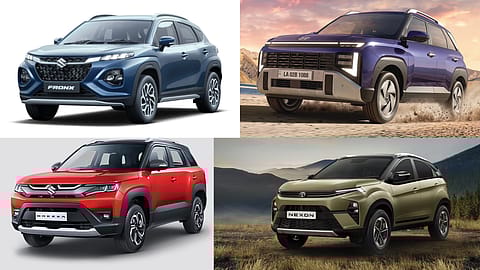
Compact SUVs accounted for 1.47 million units, or about 47% of UV sales, making it the largest sub-segment, even as midsize SUVs gain traction, as per industry observers.
The passenger vehicle (PV) industry is set to shift into a lower gear in FY2027, with growth expected to moderate to 4–6% from a robust 8.6% in FY2026, according to ICRA. The deceleration comes after a record-high base year, even as underlying demand remains resilient, supported by policy tailwinds and fresh product cycles.
The ratings agency said the anticipated growth moderation factors in the elevated base of FY2026 and an uncertain monsoon outlook, which could weigh on rural demand. Additionally, the ongoing West Asia crisis remains a key monitorable, given its potential impact on inflation and consumer sentiment.
Demand stays resilient, March surge underscores momentum
Despite these headwinds, demand fundamentals continue to hold firm. Recent GST rate cuts and a steady pipeline of new model launches are expected to sustain buyer interest. This was evident in March 2026 performance, where wholesale volumes jumped 16% year-on-year to 4.4 lakh units, while retail sales surged 21%, reflecting strong end-consumer traction. On a sequential basis, wholesale dispatches rose 6%.
For the full year, FY2026 marked a milestone, with wholesale volumes rising 8.6% to an all-time high of 4.7 million units, while retail sales grew 11% to 4.6 million units. Notably, the recovery was back-loaded: wholesale volumes dipped marginally by 0.2% in the first half but rebounded sharply with 17% growth in the second half following GST revisions.
SUV dominance, inventory correction and exports shape outlook
Segment trends remain skewed towards Utility Vehicles (UVs), which accounted for 68% of total PV volumes in FY2026. While UVs are expected to retain their dominance, demand for smaller car segments—mini, compact and super-compact—has shown signs of revival post tax cuts.
Channel health has also improved significantly. Dealer inventory levels declined to around 28 days by March 2026, down from 52–53 days a year earlier and 60 days as of September 2025, aided by stronger retail offtake.
On the external front, exports emerged as a bright spot, growing 18% in FY2026, albeit on a moderate base. The rise reflects an increasing supply push by Indian OEMs, with Maruti Suzuki leading exports with a 49% share, followed by Hyundai Motor India.
Overall, while growth is set to normalise, the industry’s medium-term outlook remains stable, underpinned by policy support, improving supply dynamics and sustained consumer interest
Follow Fortune India
Frequently Asked Questions
NEXT STORY