The FAQs are AI-generated, and Fortune India is not responsible for its content or any associated copyright issues.
PV sales rise 27% to about 450,000 units in April; Maruti, Tata, Hyundai clock record monthly volumes
/ 2 min read
GST tailwinds, rate cuts and tax relief sustain demand momentum, while small cars stage a comeback alongside SUVs
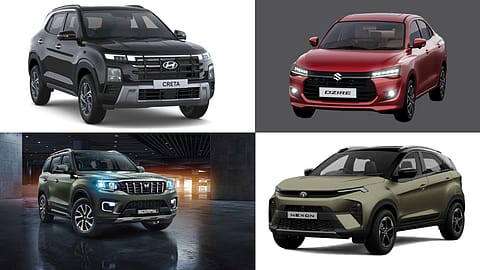
April 2026 volumes were supported by policy tailwinds, sustained SUV demand
Passenger Vehicle (PV) sales kicked off FY2026-27 on a strong note, rising around 27% year-on-year to an estimated 445,000–450,000 units in April, compared with around 354,000 units in the same month last year, signalling sustained demand momentum after record volumes in FY26.
As per industry observers, the growth was broad-based, with most automakers reporting double-digit gains, supported by policy tailwinds carried over from the second half of last fiscal, including GST rate cuts, lower interest rates and income tax relief.
Maruti Suzuki India led the market with record domestic sales of 187,704 units in April, marking a 35.3% year-on-year jump and its highest-ever monthly performance. Total sales stood at 239,646 units, up 33.3%.
“We are starting this year with a big bang. Small cars have contributed significantly to this growth,” said Partho Banerjee, Senior Executive Officer (Marketing & Sales), Maruti Suzuki. He added that the industry’s expansion reflects underlying demand strength, with April volumes expected at around 445,000–450,000 units.
Banerjee attributed the momentum to “three tailwinds—GST 2.0, income tax relief and repo rate cuts,” while cautioning that any sharp increase in fuel prices due to geopolitical "tensions" could impact entry-level demand.
Small cars rebound, SUVs stay dominant
According to Banerjee, a key trend in April was the revival of small cars, alongside continued Sport Utility Vehicle (SUV) dominance. Maruti Suzuki’s mini and compact segments posted sharp growth, with small cars rising nearly 75% year-on-year and mini car sales more than doubling to over 16,000 units. The company also reported strong traction in SUVs, with volumes crossing 55,000 units.
Banerjee pointed to improved production and latent demand, noting that millions of two-wheeler owners remain potential first-time car buyers. He revealed that rural markets also gained importance, with their share in Maruti’s sales rising to over 52%.
At the same time, SUVs continued to anchor industry growth, accounting for a dominant share of overall volumes. This trend supported strong performances across manufacturers, even as entry-level segments showed early signs of recovery.
Broad-based growth across automakers
Tata Motors reported a 30.5% rise in domestic PV sales to 59,000 units, led by strong demand for models such as the Nexon and Punch, both of which clocked over 18,000 and 19,000 units, respectively.
Mahindra & Mahindra (M&M) posted a 7.7% increase to 56,331 units, maintaining steady momentum in its SUV portfolio.
Hyundai Motor India Limited (HMIL) recorded its highest-ever April sales at 51,902 units, up around 17% Year-on-Year (YoY). “We have started the new financial year on a strong note, with domestic sales of 51,902 units in April—our highest-ever for the month—reflecting a 17% year-on-year growth. The response to recent product interventions such as the Exter, Verna, Ioniq 5 and Creta, along with strong traction for the Venue, underscores the competitiveness of our portfolio and our continued focus on safety and innovation,” said Tarun Garg, MD & CEO.
RANK
COMPANY NAME
REVENUE
(INR CR)
(INR CR)
{{#current-rank}} {{current-rank}} {{/current-rank}} {{^current-rank}} {{rank}} {{/current-rank}} {{name}} {{#revenue}} {{revenue}} {{/revenue}} {{^revenue}} {{noi}} {{/revenue}}
Meanwhile, Toyota Kirloskar Motor (TKM) grew 21% to 30,159 units and Kia India rose 15–16% to 27,286 units, reporting its best-ever April performance.
Among smaller players, JSW MG Motor India posted modest growth, while Renault India reported a more than two-fold increase in volumes to 2,413 units.
Despite the ongoing West Asia conflict, automakers indicated limited near-term disruption to production, although rising fuel prices remain a key risk.
Frequently Asked Questions
NEXT STORY