The FAQs are AI-generated, and Fortune India is not responsible for its content or any associated copyright issues.
Adar Poonawalla: How India’s vaccine king is going for a piece of Bollywood and cricket
/ 5 min read
After venturing into finance and Bollywood, Adar Poonawalla has now decided to bet on another of the country’s biggest obsessions: cricket.
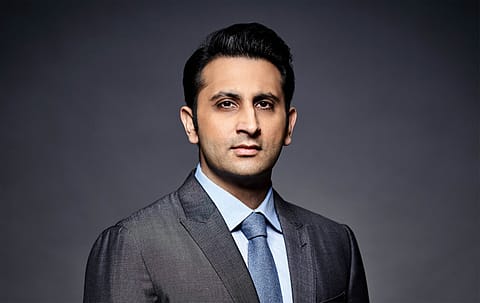
Adar Poonawalla, along with billionaire Lakshmi Mittal, has acquired Rajasthan Royals, the one-time Indian Premier League champion, for $1.65 billion | Credits: Fortune India
For nearly half a century, Serum Institute of India went by one mandate: build India’s largest vaccine company.
It did that, and much more during that time with a steadfast focus, and by the early part of this decade, when the Covid-19 pandemic hit the country, Adar Poonawalla’s Serum Institute was ready with a war chest. Between 2020 and 2022, it delivered Covid-19 vaccines to a billion people in India—albeit in partnership with AstraZeneca—and even sold them in global markets as countries scrambled for vaccines.
In the process, the 45-year-old Poonawalla and the 60-year-old Serum Institute of India, founded by his father, Cyrus Poonawalla, had emerged as something of a household name, with the Covishield vaccine accounting for almost 90 percent of all the Covid-19 vaccines in India. Other global vaccine giants also began knocking on SII’s doors to help them scale, and in the process, Poonawalla’s Serum Institute of India has grown to become a $25 billion company, the largest unlisted company in the country today.
Perhaps it’s on the back of that indomitable strength that Adar Poonawalla has been making a case to diversify his empire over the past few years. After venturing into finance and Bollywood, Poonawalla has now decided to gamble on another of the country’s obsessions: cricket. On May 03, Poonawalla, along with billionaire Lakshmi Mittal, decided to acquire Rajasthan Royals—the one-time Indian Premier League winner—for $1.65 billion.
Poonawalla will own approximately 18% stake in the venture. A few months before that, he had also bid for another team, the Royal Challengers Bangalore, the winner of last year’s men’s and women’s IPL, before it was mopped up by the Aditya Birla Group. That despair seems to have now been settled with the purchase of the Rajasthan Royals.
There is a good reason for the foray into one of the world’s most sought-after sporting events. In under 20 years, the IPL has grown into a sporting ecosystem valued at approximately $18 billion, placing it among the popular commercial leagues globally, according to a report by Kotak Mutual Fund.
More importantly, Kotak reckons that over 70% of franchise revenues are derived from centrally shared media rights and sponsorship pools, with only limited dependence on on-field performance. “The result is a rare construction in sports: predictable, annuity-like cash flows. This reduces earnings volatility and elevates franchises from sporting entities to institutional-grade assets,” Kotak notes. “In financial terms, IPL teams increasingly resemble infrastructure assets more than traditional sports clubs.”
That, in many ways, is also the philosophy that Poonawalla has come to follow and is a strong reminder of how the Pune-born and bred billionaire has built a diversified portfolio, one in which he aims to see profits within two years of his investments and in sectors that are certain to deliver returns.
With his foray into cricket, the Poonawalla empire has also now spread far and wide, and crucially into sectors that often strike a chord with the country’s populace. Apart from cricket, there is Bollywood, with Poonawalla pumping in Rs 1,000 crore for a 50 percent stake in Dharma Productions, one of the country’s best-known production houses. The four-decade-old production house has produced iconic movies such as Kuch Kuch Hota Hai and Kabhi Khushi Kabhi Gham.
“We hope to build and grow Dharma and scale even greater heights in the years to come,” Poonawalla had said during the acquisition.
A wide portfolio
Adar Poonawalla’s first investment outside of the vaccine business came in 2015.
RANK
COMPANY NAME
REVENUE
(INR CR)
(INR CR)
{{#current-rank}} {{current-rank}} {{/current-rank}} {{^current-rank}} {{rank}} {{/current-rank}} {{name}} {{#revenue}} {{revenue}} {{/revenue}} {{^revenue}} {{noi}} {{/revenue}}
At that time, Poonawalla, fresh on the back of Serum Institute of India’s acquisition of Dutch vaccine maker Bilthoven Biologicals, invested in a Mumbai-based omnichannel retail pharmacy chain, Wellness Forever. In 2012, Serum Institute acquired Bilthoven Biologicals to produce injectable polio vaccines, which were then available from only three producers globally. Wellness Forever, in which Poonawalla invested, has close to 400 stores and posted revenues of Rs 1,500 crore last year. It is currently the third-largest pharmacy and retail chain.
The Wellness Forever investment was followed by an investment in Mumbai-based microfinance company Svasti Microfinance. Poonawalla followed up the initial investment in Svasti with numerous rounds of funding, as late as March this year, when the company raised some Rs 47 crore. Svasti provides services to over 2.2 lakh customers through its 150 branches with a loan portfolio of over Rs 469 crore.
The Svasti investment had, in many ways, prodded him to start his own NBFC, Poonawalla Fincorp. In 2019, Poonawallas set up Poonawalla Finance, an NBFC to offer business and personal loans. By 2021, through his company, Rising Sun Holdings
Private Limited, Poonawalla acquired Kolkata-based Magma Fincorp for Rs 3,456 crore and renamed it to Poonawalla Fincorp.
Today, Poonawalla Fincorp serves as Poonawalla’s finance arm and has over 7 million customers across the country, with assets under management exceeding Rs 55,000 crore. The company has a market capitalization of around Rs 40,000 crore, compared to Rs 24,000 crore in 2024 and Rs 16,000 crore in 2021.
“Poonawalla Fincorp has largely moved past its portfolio clean-up and balance sheet repair phase and is now transitioning into a structurally stable growth cycle, supported by a rebuilt operating platform,” brokerage firm Motilal Oswal had said in March this year. “The company has re-architected its business model with deeper AI-led integration across underwriting, fraud detection, risk analytics, collections, and targeted marketing, enabling sharper credit selection, faster turnaround times, and more efficient customer acquisition. As a result, PFL is witnessing strong traction across its newly launched product segments, with disbursement momentum accelerating across all its verticals.”
Last year, Poonawalla also sold an insurance subsidiary, Magma General Insurance Limited (formerly Magma HDI General Insurance Company Ltd), along with Celica Developers and Jaguar Advisory Services, to Patanjali and DS Group for ₹4,500 crore.
Meanwhile, the foray into finance was also followed by an investment into Wakau Interactive Pvt Ltd, a subsidiary of JetSynthesys Pvt Ltd, a digital content and technology company, in December 2021. While that investment remains intact, Poonawalla had also most recently bought a 20 percent stake in auction house AstaGuru earlier this year. Coincidentally, Poonawalla’s father, Cyrus, had in April this year bought the iconic Raja Ravi Varma’s painting of Yashoda and Krishna for a staggering Rs 167.20 crore at Saffronart's Spring Live Auction, marking the highest-value sale of modern Indian art at auction.
All that has meant that the Cyrus Poonawalla group, under which Adar operates, today comprises a diversified business portfolio spanning cricket, Bollywood, arthouse, and finance, among others. Other businesses also include the Villoo Poonawalla Greenfield Farms (formerly Poonawalla Stud Farms), which holds the record for the highest stakes earnings from over 760 horses, 15 champion breeder awards, and 371 classic winners.
The group also runs a clean energy company, Noble Exchange Environment Solutions, founded in 2011, specializing in processing organic food waste into biogas and organic manure, as well as Poonawalla Aviation, a Pune-based non-scheduled operator providing chartered flight services since 2005.
It’s now into this mix that Poonawalla has walked in with his investments in the IPL. “The IPL has shown how a two‑month tournament can become a year‑round sports platform, monetizing attention across broadcast, streaming, sponsorships, and live experiences, not just match outcomes,” Archit Varshney, Senior Manager – Equity Research, Kotak Mahindra AMC, says in a report. “With~$18.5bn in business valuation and a $6.2bn media-rights cycle underpinning its economics, the model now resembles a high-quality media franchise more than a seasonal event amplified by digital scale that delivered 1.37bn views in an opening weekend of IPL 2025 and $600mn in 2025 TV+ digital advertising.”
In the process, though, Poonawalla has also been busy scaling Serum Institute of India into newer frontiers. Last week, the company entered into a license agreement with the University of Oxford, through Oxford University Innovation (OUI), to support the development and manufacture of the new malaria vaccine candidate R78C, based on two Plasmodium falciparum blood-stage antigens (RIPR and CyPRA), for use in clinical settings. Last year, SII also agreed to collaborate and create the world’s largest investigational-ready reserve of a Nipah virus vaccine candidate, in partnership with The Coalition for Epidemic Preparedness Innovations and the University of Oxford.
Clearly, with his decades-old business on a strong footing, the vaccine king has well and truly learned the art of diversifying.
Frequently Asked Questions
NEXT STORY