'Advertising, not subscriptions, will drive OTT growth in India': Ormax Media's Shailesh Kapoor
/ 3 min read
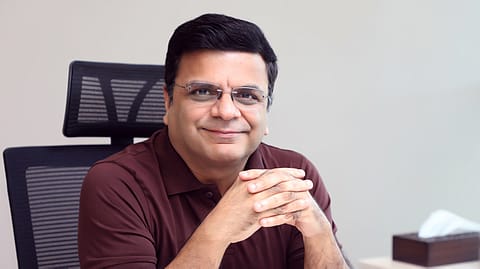
Shailesh Kapoor, Founder and CEO of Ormax Media.
'Advertising, not subscriptions, will drive OTT growth in India': Ormax Media's Shailesh Kapoor
India’s OTT sector is shifting from a subscription-fuelled land grab to a profitability-focused model, says Ormax Media CEO Shailesh Kapoor. With a structurally small paying base and intense price sensitivity, platforms are pivoting to advertising-led and hybrid models, favouring advertiser-friendly formats, theatrical films, and especially cricket, while tightening deal structures and linking payouts to performance.
This summary is AI-generated, and Fortune India is not responsible for its content or any associated copyright issues.
As India’s streaming platforms pivot from subscriber acquisition to profitability, hybrid models, ad-led revenues, and data-driven content bets are reshaping the OTT business playbook.
Shailesh Kapoor, Founder and CEO of Ormax Media.
After years of aggressive expansion fuelled by deep-pocketed investors and a race for scale, India’s OTT industry is undergoing a strategic reset. Subscriber growth—once the defining metric of success—is giving way to a more complex, and arguably more sustainable, goal: profitability.
In an interview with Fortune India, Shailesh Kapoor, Founder and CEO of Ormax Media, outlines how this transition is reshaping the economics of streaming, from monetisation models to content strategy and advertising dynamics.
Why is India’s OTT model shifting away from pure subscriber growth?
For much of the past decade, OTT platforms prioritised rapid subscriber acquisition, often at the cost of profitability. Low pricing, heavy discounts, and bundled offerings were deployed to bring millions of users online.
But Kapoor argues that this strategy has structural limits in a market like India.
“India is not a very subscription-friendly market in general,” he says, pointing to the country’s inherent price sensitivity.
While a premium segment—estimated at 30–40 million users—continues to pay for multiple platforms, the broader market is less inclined to commit to recurring subscriptions. As content costs rise and investor scrutiny tightens, platforms are being forced to rethink this approach.
The result is a clear pivot: from chasing scale at any cost to building viable, revenue-generating businesses.
Are advertising-led and hybrid models becoming the new normal?
If subscriptions alone cannot deliver scale, advertising is emerging as the cornerstone of OTT monetisation in India.
Kapoor believes the future lies in hybrid models that combine subscription revenue with advertising. “From a scalability and growth perspective, advertising is what is going to drive it,” he says.
This shift is already visible across platforms. Global players are introducing ad-supported tiers, while Indian platforms continue to experiment with freemium access. Even premium services are no longer insulated from this transition.
The implications are significant. Advertising opens up a much larger user base, enabling platforms to monetise viewers who would otherwise remain outside the subscription ecosystem.
{{#most-powerful-women-snapshot-individual.slug}} {{/most-powerful-women-snapshot-individual.slug}} {{^most-powerful-women-snapshot-individual.slug}} {{/most-powerful-women-snapshot-individual.slug}} {{#showRanking}} {{current-rank}} {{/showRanking}} {{#photo.0.url}}
{{name}}
How is this shift influencing content strategy on OTT platforms?
As monetisation models evolve, so does content strategy.
Advertiser-friendly formats—particularly reality shows and non-fiction programming—are gaining traction. These formats allow for brand integrations, sponsorships, and repeat engagement, making them more commercially attractive than high-cost scripted series.
“Formats that are more advertiser-friendly will have an advantage,” Kapoor notes.
At the same time, data suggests that theatrical films are outperforming original web series on OTT in terms of reach. Films arrive on platforms with built-in awareness, reducing marketing costs and increasing viewership potential.
“A lot more content is being watched for films that were released in theatres. Web series audiences are more selective,” he explains.
Kapoor adds that the emergence of independent measurement tools such as Ormax StreamView is helping provide a clearer, comparable view of what audiences are watching across OTT platforms, particularly for advertisers and industry stakeholders.
This has reinforced the importance of the theatrical-to-OTT pipeline as a key driver of engagement.
What role do sports and large-scale content play in profitability?
No discussion of OTT economics in India is complete without acknowledging the outsized role of cricket.
Kapoor highlights that weekly OTT viewership for cricket can reach 150–200 million, compared to 10–15 million for even the biggest films or series.
This disparity underscores why live sports rights remain among the most valuable assets for streaming platforms. They deliver mass audiences, drive user acquisition, and attract high-value advertising.
In many ways, cricket has become the anchor of OTT monetisation, much like prime-time programming once was for television.
How are deal structures and platform strategies evolving?
The shift to profitability is also visible in how deals are being structured across the industry.
OTT platforms are becoming more selective and disciplined in their investments. Instead of paying large upfront fees, they are increasingly linking payouts to box office performance and insisting on theatrical releases before streaming.
“Platforms have become more savvy, deals are more performance-linked,” Kapoor says.
Windowing norms have also stabilised, with an eight-week gap between theatrical and OTT releases becoming the standard. These changes are helping align incentives across stakeholders while reducing financial risk.
What lies ahead for India’s OTT ecosystem?
As the industry transitions into its next phase, the focus will be on balancing scale with sustainability.
Advertising-led growth, hybrid monetisation models, and data-driven content decisions are expected to define the future. At the same time, traditional television’s gradual decline is pushing more advertising budgets toward digital platforms, intensifying competition within the OTT space.
For Kapoor, the direction is clear: the OTT business in India is maturing.
The race is no longer about who can acquire the most subscribers, but about who can monetise audiences most effectively—and build a business that lasts.
Follow Fortune India
NEXT STORY