The FAQs are AI-generated, and Fortune India is not responsible for its content or any associated copyright issues.
Akshaya Tritiya 2026: Rising gold prices, digital buying reshape jewellery demand
/ 3 min read
This shift is reflected in buying patterns, with customers increasingly opting for studded jewellery such as earrings and rings over traditional gold coins.
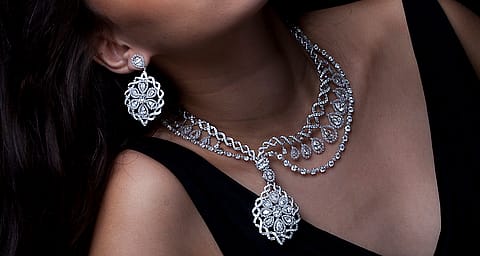
Diamond jewellery | Credits: Fortune India
India’s jewellery market is undergoing a subtle but significant shift this Akshaya Tritiya, as elevated gold prices, evolving consumer preferences, and digital adoption reshape one of the sector’s most important seasonal demand cycles.
At the same time, elevated prices are also prompting more measured buying behaviour. Historical trends show gold has remained a strong wealth creator, delivering a CAGR of around 25–28% over the past five years, but current price levels are leading households to weigh purchases more carefully this festive season.
Is Akshaya Tritiya 2026 marking a shift beyond gold?
While the festival continues to be synonymous with gold buying, industry executives say 2026 is marking a transition year—one where value-conscious consumers are widening their baskets to include lab-grown diamonds, silver, and lightweight, design-led jewellery.
Gold prices, which have crossed ₹1.5 lakh per 10 grams, are at the heart of this behavioural change. “Akshaya Tritiya has traditionally been a gold-centric festival, but this year we are witnessing a definitive shift,” said Ricky Vasandani, CEO and co-founder of Solitario. The company has seen a 25–30% rise in demand compared to last year, driven largely by younger consumers seeking what it describes as “conscious luxury”—products that combine affordability, sustainability, and design appeal.
This shift is reflected in buying patterns, with customers increasingly opting for studded jewellery such as earrings and rings over traditional gold coins. The trend signals a move away from pure bullion purchases towards pieces that offer both aesthetic and functional value.
Legacy retailers, however, maintain that gold’s cultural and emotional relevance remains intact. Malabar Gold & Diamonds expects strong festive traction, supported by new launches such as the ‘Aanika’ and refreshed ‘Tanvika’ collections. Chairman M. P. Ahammad noted that Akshaya Tritiya continues to be a key driver of annual gold demand, underpinned by its association with prosperity and new beginnings.
Adding to this, Suvankar Sen, CEO and MD of Senco Gold LTD, said the company is witnessing strong festive momentum. “As we approach Akshaya Tritiya, we are seeing strong customer response, with a clear preference for lightweight gold, diamond and platinum jewellery for daily wear. There is robust interest across rings, earrings and chains, along with early traction from wedding buyers. Overall, we are seeing growth of around 15–20% compared to last year,” he said.
Even so, consumption within gold is evolving. Retailers report a clear tilt towards lighter, more wearable designs, reflecting changing lifestyle preferences and a shift from investment-heavy purchases to everyday luxury.
How is digital shaping jewellery buying this festive season?
E-commerce is emerging as a powerful enabler in this transition. Amazon India has reported robust pre-festival momentum, with gold jewellery sales growing around 2x year-on-year, silver 2.5x, and coins also doubling. The platform has also seen fine jewellery demand rise sharply, indicating growing consumer comfort with online purchases in traditionally offline categories.
According to Siddharth Bhagat, director, fashion and beauty at Amazon India, jewellery is increasingly being viewed as both an investment and a form of self-expression. He added that features such as BIS hallmarking, purchase protection, and AI-led discovery tools are helping build trust and drive adoption across price segments.
Is silver emerging as the new growth driver?
Silver, in particular, is emerging as a strong alternative in the current pricing environment. Pawan Gupta, chairman of PP Jewellers by Pawan Gupta, said that while gold demand remains steady, a growing number of consumers are turning to silver as a more accessible option. The brand has responded by expanding its offerings across both categories, noting increased traction ahead of the wedding season.
{{#most-powerful-women-snapshot-individual.slug}} {{/most-powerful-women-snapshot-individual.slug}} {{^most-powerful-women-snapshot-individual.slug}} {{/most-powerful-women-snapshot-individual.slug}} {{#showRanking}} {{current-rank}} {{/showRanking}} {{#photo.0.url}}
{{name}}
Industry players expect this diversification to persist beyond the festive period. Abhishek Gupta Co-founder of TrueSilver & Director ACPL Exports, said that value growth is likely to outpace volume growth this season, driven by high metal prices and a preference for smaller-ticket purchases. “Consumers are balancing tradition with practicality,” he noted.
At the premium end, design and storytelling are becoming key differentiators. Mira Gulati, director at Mirari Jewels, highlighted a rising preference for pieces with deeper symbolic meaning. Collections inspired by cultural motifs, such as her brand’s ‘Devi’ line, are resonating with consumers looking for more personalised and emotionally significant purchases.
Echoing the evolving sentiment around the festival, Leshna Shah, founder of Irasva Fine Jewellery, said, “Akshaya Tritiya is a day of infinite beginnings—it’s not just about buying gold, but about creating lasting wealth.”
Taken together, these trends point to a broad-based transformation in India’s jewellery market. While gold continues to anchor demand during Akshaya Tritiya, the category is no longer monolithic. Lab-grown diamonds, silver, and design-led jewellery are expanding the market’s contours, driven by affordability, changing tastes, and digital access.
For the industry, the 2026 festive season underscores a larger shift—from a bullion-driven buying cycle to a more nuanced, consumer-centric market where value is defined not just by price, but by design, purpose, and experience.
Frequently Asked Questions
NEXT STORY