Anand Mahindra takes aim at ‘Performative Purpose’, backs quiet conviction over big-bang bets
/ 2 min read
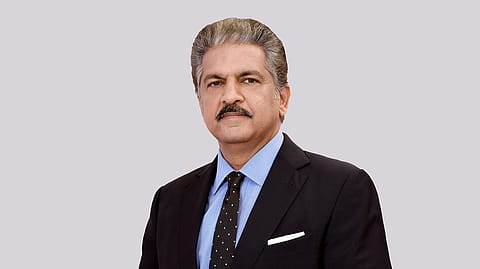
Anand Mahindra, Chairman, Mahindra Group and Tech Mahindra | Credits: Fortune India
Anand Mahindra takes aim at ‘Performative Purpose’, backs quiet conviction over big-bang bets
Anand Mahindra criticizes the trend of 'performative purpose' in corporate India, emphasizing that purpose should guide decision-making rather than serve as a marketing tool. He highlights the Mahindra Group's authentic commitment to India's industrial development and underscores the importance of genuine cultural adoption over superficial branding, advocating for calculated risks with transformative potential.
This summary is AI-generated, and Fortune India is not responsible for its content or any associated copyright issues.
In a McKinsey conversation, the Mahindra Group chairman makes the case for authenticity, calibrated risk-taking, and leadership that builds institutions—not optics
Anand Mahindra, Chairman, Mahindra Group and Tech Mahindra | Credits: Fortune India
For Anand Mahindra, the growing obsession with “Purpose” in corporate India is starting to ring hollow. Too many companies, he suggests, are trying to retrofit meaning into their businesses—often mistaking articulation for action.
“Purpose is not a marketing device; it’s a lens for decision-making. The moment it becomes performative, people see through it,” Mahindra said in a conversation with McKinsey’s Leading Asia series.
That clarity, he points out, comes from inheritance rather than invention. The Mahindra Group was founded with a stated mission to contribute to India’s industrial development—something he sees as a far stronger anchor than a purpose statement crafted decades later.
‘Rise’ as a system, not a slogan
It also shapes how he views the group’s much-publicised credo, “Together We Rise.” Often read as branding, Mahindra insists it was never meant to be that. “‘Together We Rise’ was all about that challenger mentality… for only when others rise, will we rise,” he said.
What convinced him it had taken root wasn’t a campaign metric, but something simpler: employees across the organisation embracing it on their own. “When we saw truck drivers and factory workers wearing Rise badges with pride, that’s when I knew it had become real.”
Big bets, guarded downside
If that philosophy defines the group’s culture, Mahindra’s approach to risk defines its strategy. Some of his decisions—from backing the Scorpio SUV to investing early in electric vehicles—were widely seen as bold, even contrarian. But he draws a clear line between boldness and recklessness.
“I may take risks, but I’ll never bet the company,” he said, favouring bets where the downside is contained but the upside can be transformative.
At a time when leadership is often equated with scale and spectacle, Mahindra’s lens feels deliberately understated. Culture, he says, is built slowly—“conversation by conversation”—and leadership is less about personal legacy than institutional strength.
It’s a philosophy that resists the noise—and, perhaps, that’s precisely the point.
Follow Fortune India
NEXT STORY