Below-normal monsoon forecast by IMD raises risks to farm output, inflation: Icra
/ 2 min read
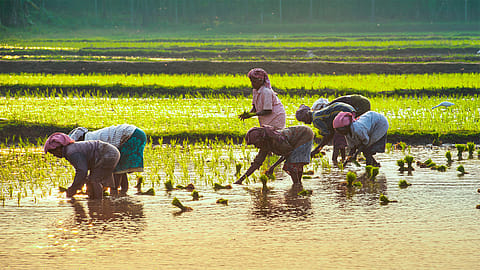
The below-normal rainfall is expected to weigh on kharif sowing and agricultural output, while also limiting the replenishment of reservoir storage. | Credits: Shutterstock
Below-normal monsoon forecast by IMD raises risks to farm output, inflation: Icra
IMD’s first-stage forecast pegs the 2026 southwest monsoon at 92% of the long-period average, the weakest initial projection in at least 25 years. Icra warns that a below-normal, uneven monsoon alongside emerging El Niño conditions could hit kharif sowing, strain reservoir replenishment, lift food inflation above 4.5% in FY27 and dampen rural demand despite a temporary cushion from healthy rabi cash flows.
This summary is AI-generated, and Fortune India is not responsible for its content or any associated copyright issues.
According to Icra, the subdued rainfall outlook coincides with the likely development of El Niño conditions during the monsoon season, which could adversely impact agricultural output regardless of intensity.
The below-normal rainfall is expected to weigh on kharif sowing and agricultural output, while also limiting the replenishment of reservoir storage. | Credits: Shutterstock
The India Meteorological Department (IMD) has projected a below-normal southwest monsoon for 2026, with rainfall estimated at 92% (±5%) of the Long Period Average (LPA), marking the lowest first-stage long-range forecast in at least 25 years. The outlook comes in contrast to the above-normal monsoons recorded in 2024 and 2025, both at 108% of LPA.
According to Icra, the subdued rainfall outlook coincides with the likely development of El Niño conditions during the monsoon season, which could adversely impact agricultural output regardless of intensity.
Kharif output, reservoir levels at risk
The below-normal rainfall is expected to weigh on kharif sowing and agricultural output, while also limiting the replenishment of reservoir storage. As of early April 2026, all-India reservoir levels stood at 47% of live capacity—higher than historical averages—offering some buffer, but insufficient to fully offset weak monsoon conditions.
ICRA noted that uneven rainfall distribution is likely, with several regions expected to receive below-normal precipitation, though parts of the northeast, northwest and southern peninsula may see normal to above-normal rains.
Inflation, rural demand outlook under pressure
A weak monsoon, coupled with potential El Niño conditions, could push food prices higher and drive headline inflation above 4.5% in FY2027, ICRA said. The agency also flagged downside risks to its agri-GVA growth forecast of 3% for the fiscal year.
While rural demand may remain supported in the near term by healthy rabi harvest cash flows, sentiment is likely to weaken in subsequent quarters due to lower farm output and income uncertainty.
Fertiliser supply concerns add to headwinds
The ongoing tensions in West Asia pose additional risks, particularly to fertiliser availability and prices. India’s dependence on imports of key fertilisers such as DAP and MOP leaves it vulnerable to supply disruptions and cost pressures amid geopolitical uncertainties.
Policy support critical
Icra stated that calibrated hikes in minimum support prices (MSPs) for kharif crops will be crucial to support farm incomes and rural sentiment, especially as multiple headwinds—including weak rainfall, rising input costs, and geopolitical risks—threaten the agricultural outlook.
Overall, the monsoon trajectory, evolving climate conditions, and global supply dynamics will remain key determinants of agricultural performance and rural demand in FY27.
NEXT STORY