The FAQs are AI-generated, and Fortune India is not responsible for its content or any associated copyright issues.
Can Section 30A(2) be used retrospectively to disrupt Tata Trusts’ existing board?
/ 3 min read
The controversy stems from petitions filed before the Maharashtra Charity Commissioner by Venu Srinivasan, vice chairman of Tata Trusts, and advocate Katyayani Agrawal.
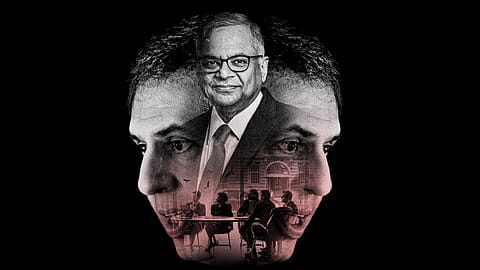
Tata Sons board meeting deferral | Credits: Anirban Ghosh
The Maharashtra Charity Commissioner’s direction to Tata Trusts to defer its board meeting scheduled for May 16 has brought a little-known amendment to the Maharashtra Public Trusts Act into sharp focus, raising a critical legal and governance question: can Section 30A(2), introduced in September 2025, be applied retrospectively to alter the composition of existing trust boards?
The issue has assumed significance because it goes beyond a routine compliance matter. At stake is the governance structure of Tata Trusts, which together hold a controlling interest in Tata Sons and influence strategic decisions across India’s largest business conglomerate.
The controversy stems from petitions filed before the Maharashtra Charity Commissioner by Venu Srinivasan, vice chairman of Tata Trusts, and advocate Katyayani Agrawal. The petitions allege that one of the group’s key philanthropic institutions, the Sir Ratan Tata Trust, is in breach of Section 30A(2) of the Maharashtra Public Trusts Act, which places a cap on the number of perpetual or lifetime trustees where the original trust deed does not specifically provide for such appointments.
The amendment, which came into force eight months back, states that in cases where a trust instrument is silent on perpetual trustees, such appointments cannot exceed one-fourth of the total number of trustees at any given point in time.
The Sir Ratan Tata Trust currently has six trustees. Of these, Noel Tata, Jimmy Tata, and Jehangir Jehangir are understood to be serving as perpetual trustees, taking their combined representation to 50% of the board. The remaining trustees—Venu Srinivasan, Vijay Singh, and Darius Khambata—serve fixed terms.
If the trust deed does not specifically authorise perpetual trustees, the present structure may appear inconsistent with the amended law. However, the legal dispute is not merely about numbers. The more important question is whether the amendment can be applied to appointments made before the law came into force.
According to estimates, there are over eight lakh public religious and charitable organisations registered in the state. A legal expert tracking the matter say the amendment does not expressly state that it has retrospective effect. More importantly, the law does not contain any transitional provision directing trusts registered before September 2025 to immediately reconstitute their boards or alter existing trustee tenures.
Recommended Stories
That absence is expected to be central to the defence likely to be taken by Tata Trusts under the guidance of Noel Tata.
According to legal sources, when a statute seeks to alter vested rights or disturb an existing governance structure, lawmakers usually make that intention explicit. "In the case of Section 30A(2), no such language appears to have been incorporated," said a lawyer. That has led several legal observers to interpret the provision as prospective, meaning it would apply to future appointments made after the amendment came into effect.
The timing of the dispute has added another layer of complexity. The May 16 meeting of Tata Trusts was expected to discuss several strategically important matters, including listing-related issues concerning Tata Sons, continuity of chairman N. Chandrasekaran, and Venu Srinivasan’s extension on the board of Tata Sons. Srinivasan will turn 75 later this year, making him ineligible to continue in the position without an extension.
The events, including the intervention of the Charity Commissioner, have also exposed internal differences within Tata Trusts. It is the first time that concerns raised by Venu Srinivasan (who is also Chairman Emeritus of TVS Motor Company) over governance issues have moved into a formal regulatory forum, a development that many in corporate circles view as an unusual public challenge within the Tata ecosystem.
RANK
COMPANY NAME
REVENUE
(INR CR)
(INR CR)
{{#current-rank}} {{current-rank}} {{/current-rank}} {{^current-rank}} {{rank}} {{/current-rank}} {{name}} {{#revenue}} {{revenue}} {{/revenue}} {{^revenue}} {{noi}} {{/revenue}}
The Sir Ratan Tata Trust is also understood to have taken precautionary legal steps earlier by filing a caveat before the Bombay High Court to ensure its arguments are heard before any adverse order is passed.
For now, the Charity Commissioner’s intervention has paused the immediate board process. But the larger question—whether Section 30A(2) is prospective or retrospective— is expected to be ultimately be defined through judicial interpretation.