Colliers India sees accelerated transformation in India’s industrial, warehousing sector
/ 3 min read
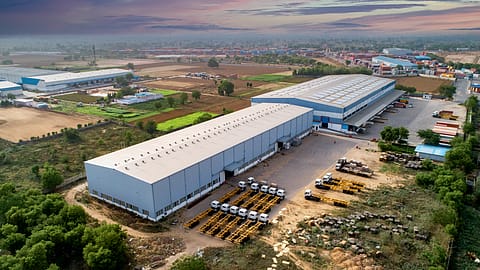
The industrial and warehousing segment is emerging as a high-growth frontier, supported by rising demand for modern, efficient facilities, and sustained institutional investment, says report.
Colliers India sees accelerated transformation in India’s industrial, warehousing sector
Colliers India reports a transformative phase in India's industrial and warehousing sector, driven by policy support, infrastructure expansion, and technology adoption. The manufacturing sector's GDP contribution is expected to rise, with several cities poised to lead growth. The focus on domestic manufacturing and infrastructure will shape future leasing volumes and warehousing stock.
This summary is AI-generated, and Fortune India is not responsible for its content or any associated copyright issues.
According to Colliers’ latest report, several cities are likely to lead industrial and warehousing expansion over the coming decades.
The industrial and warehousing segment is emerging as a high-growth frontier, supported by rising demand for modern, efficient facilities, and sustained institutional investment, says report.
Colliers India on Thursday said India’s industrial and warehousing market is entering a phase of accelerated transformation, driven by policy support, infrastructure expansion, evolving consumer behaviour, supply-chain recalibration, and rapid technology adoption.
India’s manufacturing sector, which currently contributes around 17% to GDP, is projected to raise its share to about 25% by 2035. Against this backdrop, the industrial and warehousing segment is emerging as a high-growth frontier, supported by rising demand for modern, efficient facilities and sustained institutional investment.
According to Colliers’ latest report, India’s Emerging Industrial & Warehousing Corridors: Mapping the Next Growth Frontier, several cities are likely to lead industrial and warehousing expansion over the coming decades. Growth will be underpinned by continued regulatory backing through corridor development programmes, the PM Gati Shakti, the National Logistics Policy and large-scale infrastructure projects, including industrial corridors, smart cities, multimodal logistics and textile parks, and greenfield seaports and airports.
Policy thrust on domestic manufacturing is expected to catalyse real estate growth
The report added that policy thrust on domestic manufacturing and sector-specific initiatives such as the BioPharma SHAKTI Scheme and Semiconductor Mission 2.0 are expected to catalyse real estate growth in smaller industrial hubs.
Colliers identified high-potential cities using an in-house analytical framework built around five key parameters: enhanced connectivity along strategic industrial and freight corridors; upcoming industrial smart cities; proposed Multi-Modal Logistics Parks; expansion of seaport and airport linkages; and development of large integrated textile hubs.
More than 100 cities were assessed for industrial and warehousing attractiveness over the next five to six years, based on factors such as ecosystem maturity, presence of established manufacturing clusters, stage of infrastructure completion, proximity to multimodal infrastructure and availability of Grade A stock. Additional considerations included MSME activity and e-commerce penetration.
30 high-potential cities categorised as Prime, Emerging, and Nascent hubs
The list was subsequently narrowed to 30 high-potential cities, categorised as Prime, Emerging, and Nascent hubs to reflect varying levels of ecosystem maturity and readiness for growth.
The geographical spread of the 30 identified hotspots indicates balanced growth across northern, southern, western, eastern and central India. The eight “Prime hubs” are established demand centres expected to consolidate their lead and absorb new capacity quickly. The 12 “Emerging hubs” are likely to gain momentum as key industrial corridors, logistics parks and multimodal projects near completion, scaling up demand. The 10 “Nascent hubs” are cities where growth is expected to gather pace gradually, contingent on infrastructure adequacy, policy support and investor readiness.
“The next wave of industrial and warehousing growth will be strengthened by expanding industrial and freight corridors, multimodal logistics parks, smart industrial cities, and major sea–airport expansion projects,” said Vijay Ganesh, Managing Director, Industrial & Logistics Services, Colliers India. He added that recent budgetary emphasis on enhancing domestic manufacturing capabilities and the allocation of ₹5,000 crore per City Economic Region (CER), along with targeted interventions in sectors such as life sciences, electronics, semiconductors, chemicals, rare earth minerals and textiles, could boost long-term warehousing growth across established as well as emerging markets.
Vimal Nadar, National Director and Head of Research at Colliers India, said policy-driven focus on domestic manufacturing and infrastructure development will remain pivotal in shaping leasing volumes, stock availability and quality. He projected that India’s Grade A warehousing stock across the top eight cities could cross 500 million sq ft by 2030 and potentially scale up to 2 billion sq ft by 2047, supported by corridor development, manufacturing expansion, and logistics modernisation.
Follow Fortune India
NEXT STORY